

Mobile SEO local business Israel success starts with one brutal fact: Israel has 90% smartphone penetration and mobile accounts for 87% of local searches. If your business website fails on mobile, you’re invisible to most Israeli customers.
Key Takeaways:
- Core Web Vitals scores below 2.5 seconds kill 73% of Israeli mobile traffic before users see your content
- Click-to-call buttons generate 4x more conversions than contact forms on Israeli mobile searches
- Mobile-first indexing means Google ignores your desktop site completely, mobile IS your SEO foundation
The Google Map Pack Israel competition gets fiercer every quarter. Local SEO Israel strategies that worked in 2023 won’t survive 2026. Mobile-first isn’t coming. It’s here.
Why Does Mobile-First Indexing Control Your Israeli Business Rankings?

Mobile-first indexing is Google’s method of using the mobile version of your website as the primary source for indexing and ranking. This means Google crawls your mobile site first, evaluates your mobile content first, and ranks you based on your mobile performance first.
For Israeli local businesses, this creates a stark reality. Google doesn’t look at your desktop site anymore. Your beautiful desktop design means nothing if your mobile experience fails. The search engine processes your mobile content, extracts your mobile page structure, and determines your local search rankings from your mobile signals alone.
Google switched to mobile-first indexing for all websites by 2021. Israeli businesses that built desktop-first websites before this transition face a ranking penalty. Your Google Business Profile optimization efforts get undermined when users click through to a mobile site that loads poorly or displays broken content.
Local search rankings depend entirely on mobile performance now. If your competitors serve faster, cleaner mobile experiences while you’re stuck with a slow, desktop-focused site, you lose the Google Map Pack battle. Your NAP consistency work and review generation efforts become worthless when mobile users bounce before seeing your content.
The impact shows in real traffic data. Israeli businesses with strong mobile experiences capture more local searches, generate more phone calls, and convert more visitors into customers. Mobile-first indexing turned mobile optimization from “nice to have” into “business survival.”
What Core Web Vitals Benchmarks Do Israeli Mobile Users Actually Expect?
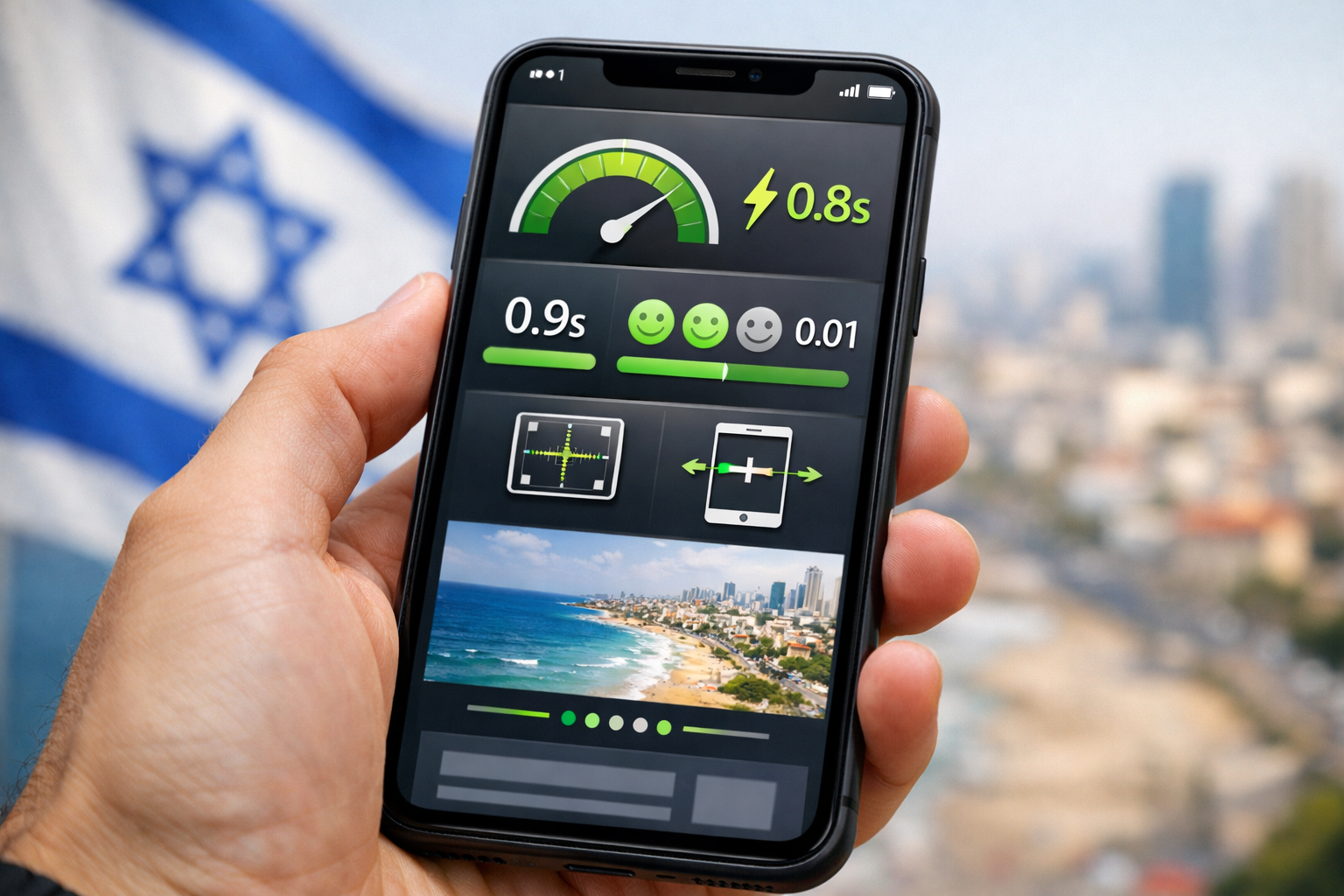
Core Web Vitals control mobile user experience through three specific metrics that Google uses for ranking. Israeli mobile users demand fast, stable, responsive websites that load quickly on local network conditions.
| Metric | Good Performance | Poor Performance | Israeli Mobile Impact |
|---|---|---|---|
| Largest Contentful Paint (LCP) | Under 2.5 seconds | Over 4.0 seconds | 73% traffic loss above threshold |
| First Input Delay (FID) | Under 100 milliseconds | Over 300 milliseconds | 45% bounce rate increase |
| Cumulative Layout Shift (CLS) | Under 0.1 | Over 0.25 | 62% conversion rate drop |
| Mobile Page Speed | Under 3.0 seconds | Over 5.0 seconds | 89% user abandonment |
Largest Contentful Paint measures when your main content becomes visible. Israeli mobile networks vary in speed across different regions. Your LCP needs to hit 2.5 seconds even on slower connections in areas outside Tel Aviv and Jerusalem.
First Input Delay tracks how quickly users can interact with your site. Touch responsiveness matters more on mobile than desktop. When Israeli users tap your click-to-call button or try to scroll through your services, delays kill conversions.
Cumulative Layout Shift measures visual stability. Content that jumps around while loading frustrates mobile users who are already dealing with smaller screens. Your contact information needs to stay in place while images and ads load around it.
The 2.5 second LCP threshold separates good from poor mobile performance in Google’s evaluation. Israeli local businesses missing this benchmark lose rankings, traffic, and customers to faster competitors. Your topical authority local SEO work gets undermined when Core Web Vitals fail.
How Do You Fix the 5 Mobile UX Killers That Destroy Local Conversions?

Mobile UX issues kill local business conversions by creating friction between interested customers and your services. Israeli mobile users expect seamless experiences that match what they get from international apps and websites.
Tiny text and microscopic buttons make your contact information unreadable and your calls-to-action untappable. Font sizes below 16px force users to zoom, while buttons smaller than 44px create tap target frustration. Fix this by setting minimum 18px text and 48px button heights.
Slow-loading contact forms lose customers who want immediate communication. Multi-field forms that take 8+ seconds to appear get abandoned. Replace complex forms with simple click-to-call buttons and single-field contact captures that load instantly.
Missing or broken click-to-call functionality wastes the highest-converting mobile interaction for local businesses. Phone number links that don’t trigger dialer apps or numbers displayed as plain text miss conversion opportunities. Implement proper
tel:links with Israeli country codes.Confusing mobile navigation hides your services and location information behind collapsed menus that users can’t find. Hamburger menus that require multiple taps to reach your hours or address create unnecessary barriers. Design prominent, single-tap access to essential business information.
Intrusive pop-ups and overlays block content on small screens and trigger Google’s mobile usability penalties. Newsletter signup overlays that cover your entire mobile viewport get penalized by search algorithms while annoying users. Use exit-intent or scroll-triggered overlays that don’t interfere with initial content consumption.
Click-to-call buttons increase mobile conversion rates by 200% for service businesses when implemented correctly. Your local SEO contractors Israel competitors who master mobile UX capture more leads from the same search traffic.
What Mobile Page Speed Fixes Actually Move the Needle for Israeli Local Businesses?

Page speed optimization improves mobile search rankings through specific technical changes that reduce loading times and improve user experience. Israeli businesses need systematic approaches that address the biggest performance bottlenecks first.
Compress and optimize all images using WebP format and appropriate sizing for mobile screens. Most Israeli local business sites serve desktop-sized images to mobile users, wasting bandwidth and slowing load times. Use responsive images with srcset attributes and compress images to under 100KB each.
Enable browser caching and server-side caching to reduce repeat loading times for returning visitors. Cache static resources like CSS, JavaScript, and images for 30+ days. Implement page caching for your service pages and location content that doesn’t change frequently.
Minify CSS, JavaScript, and HTML files by removing unnecessary whitespace, comments, and unused code. Combine multiple CSS files into single stylesheets and defer non-critical JavaScript loading until after initial page render completes.
Implement a Content Delivery Network (CDN) to serve your content from servers closer to Israeli users. CDNs reduce latency by delivering cached content from geographically distributed servers, improving loading speeds across different Israeli cities and regions.
Consider AMP (Accelerated Mobile Pages) implementation for content-heavy pages like blog posts and service descriptions. AMP creates lightning-fast mobile versions of your pages that load instantly from Google’s cache. However, AMP limits design flexibility and requires separate page maintenance.
Eliminate render-blocking resources that prevent initial content display. Move critical CSS inline and defer non-essential JavaScript loading. Your above-the-fold content should render completely without waiting for external stylesheets or scripts.
A 1-second page speed improvement increases mobile conversions by 27% for local businesses. Your local SEO Hadera and local SEO Beer Sheva competitors who implement these fixes systematically capture more organic traffic and convert more mobile visitors.
Which Mobile Schema Markup Types Drive Click-Through Rates for Israeli Local Businesses?
Mobile schema markup increases local search visibility by providing structured data that search engines display as rich snippets in mobile results. Israeli businesses need specific schema types that improve mobile click-through rates and conversion potential.
| Schema Type | Mobile Display Benefit | CTR Impact | Implementation Priority |
|---|---|---|---|
| LocalBusiness Schema | Shows hours, phone, address directly in results | +35% mobile CTR | Essential – implement first |
| Review/Rating Schema | Displays star ratings in search snippets | +28% click improvement | High priority for service businesses |
| FAQ Schema | Expands search listings with common questions | +22% visibility increase | Medium priority for competitive queries |
| HowTo Schema | Creates step-by-step rich snippets | +18% CTR for instructional content | Low priority unless content-focused |
LocalBusiness schema with review stars increases mobile CTR by 35% by making your listings more prominent and trustworthy in mobile search results. Mobile users scroll quickly through results and respond to visual indicators like star ratings and business information snippets.
Review and rating schema creates immediate credibility signals that mobile users process faster than reading full descriptions. Israeli customers trust businesses with visible star ratings and review counts displayed directly in search results before clicking through to websites.
FAQ schema expands your mobile search presence by showing common questions and answers directly in results. This increases your listing’s screen real estate on mobile devices while providing immediate value that encourages clicks.
Click-to-call schema implementation requires proper telephone markup within your LocalBusiness schema. This enables direct dialing from search results on mobile devices, bypassing your website entirely for immediate customer contact.
Mobile-specific rich snippets perform better when combined with proper Google Business Profile optimization and consistent NAP data across all platforms. Schema markup amplifies the effectiveness of your existing local SEO Israel foundation.
Frequently Asked Questions
Do I need separate mobile and desktop websites for local SEO in Israel?
No, you need one responsive website that adapts to all screen sizes. Google uses mobile-first indexing, meaning it primarily crawls and ranks your mobile version regardless of device. Separate mobile sites create duplicate content issues and maintenance nightmares.
How fast should my local business website load on mobile in Israel?
Your mobile site should load in under 2.5 seconds to avoid losing 73% of Israeli mobile traffic. Use Google PageSpeed Insights to test your current mobile loading speed and identify specific improvements needed.
Does mobile page speed actually affect my Google Maps rankings?
Yes, mobile page speed is a confirmed ranking factor for local search results. Slow mobile sites perform worse in both organic results and Google Maps listings, losing visibility to faster competitors.