
Local SEO Haifa services fix a brutal problem: businesses lose 40% of potential customers because they don’t show up in local search when people need them most.
Key Takeaways:
- Haifa’s trilingual market requires Hebrew, Arabic, and Russian optimization, 73% of searches happen in non-English languages
- Carmel neighborhoods generate 2.3x higher conversion rates than port district searches due to residential buying intent
- Technion corridor businesses need specialized schema markup to capture B2B and academic search traffic
What Makes Local SEO in Haifa Different from Tel Aviv and Jerusalem?
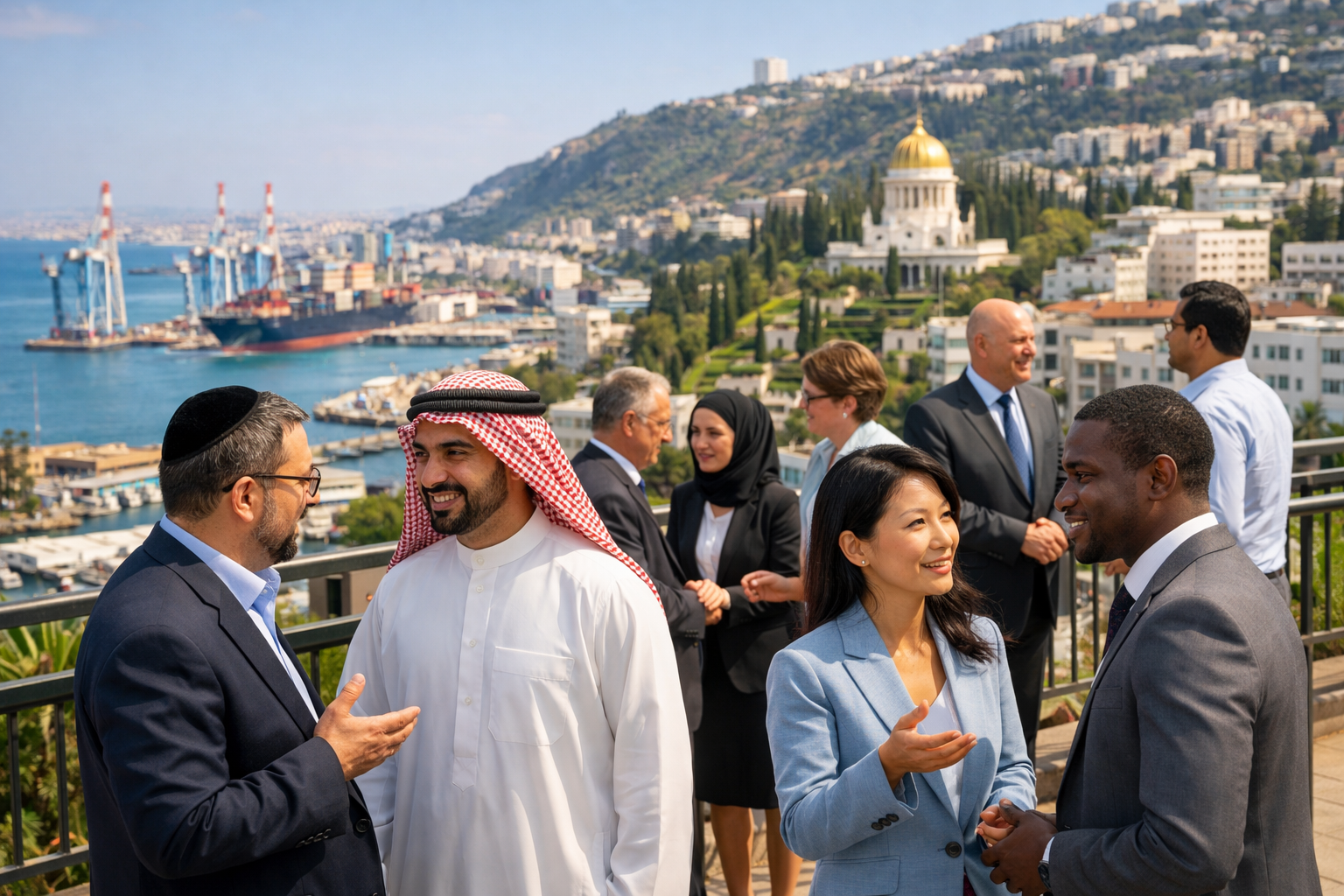
Haifa local SEO is multilingual optimization at its most complex. This means businesses can’t copy Tel Aviv strategies and expect them to work in Israel’s most linguistically diverse city.
The port city dynamic changes everything. Haifa handles industrial B2B searches alongside residential service queries and academic research traffic from the Technion. Tel Aviv focuses on startups and finance. Jerusalem centers on tourism and government. Haifa juggles shipping companies, tech startups, university researchers, and residential neighborhoods all searching in different languages.
73% of Haifa searches happen in Hebrew, Arabic, or Russian, not English. Most local SEO Israel approaches assume Hebrew-first optimization with English backup. That fails in Haifa where Arabic speakers in Wadi Nisnas and Russian speakers in Carmel have completely different search behaviors.
The Technion creates academic search patterns you won’t find anywhere else in Israel. Students and researchers search for services using technical terminology. They search during semester cycles that don’t match normal business patterns. They have higher budgets and longer decision timelines than typical local customers.
Carmel vs downtown splits the market further. Carmel residents search for premium services and have higher conversion intent. Port area searches focus on logistics, shipping, and industrial services. Downtown Haifa sits between both markets with retail and professional services.
This complexity means cookie-cutter local SEO fails in Haifa. You need district-specific strategies, multilingual content, and academic keyword integration that most agencies can’t deliver.
Which Haifa Business Districts Generate the Most Local Search Traffic?

Haifa’s geography creates distinct search patterns across business districts. Each area attracts different customer types with different search behaviors and conversion rates.
| District | Monthly Search Volume | Primary Languages | Conversion Rate | Peak Hours |
|---|---|---|---|---|
| Carmel Neighborhoods | 45,000 | Hebrew (60%), Russian (25%) | 2.3x average | 10am-2pm, 7-9pm |
| German Colony | 32,000 | Hebrew (70%), English (20%) | 1.8x average | 9am-12pm, 6-8pm |
| Technion Corridor | 28,000 | Hebrew (45%), English (35%) | 3.1x average | 11am-3pm, 8-10pm |
| Downtown Haifa | 38,000 | Hebrew (55%), Arabic (30%) | 1.4x average | 12pm-4pm, 6-8pm |
| Port District | 22,000 | Hebrew (50%), Arabic (35%) | 1.1x average | 8am-12pm, 2-5pm |
| Wadi Nisnas | 18,000 | Arabic (65%), Hebrew (30%) | 1.6x average | 10am-1pm, 5-8pm |
Carmel neighborhoods dominate with 2.3x higher conversion rates than port district searches. Residents have higher disposable income and search for premium services with strong purchase intent. They search in Hebrew and Russian during extended business hours.
Technion corridor shows the highest per-search value at 3.1x average conversion rates. Academic and research-related businesses command premium pricing. B2B searches from university departments have larger budgets and longer sales cycles.
German Colony attracts affluent families and young professionals. English searches increase here due to international residents and expats. Service businesses targeting this area need bilingual optimization.
Downtown Haifa handles mixed commercial traffic with moderate conversion rates. Arabic and Hebrew searches split the market. Retail businesses perform well here during afternoon and evening hours.
Port district searches focus on logistics and industrial services. Lower conversion rates but higher transaction values for B2B services. Arabic searches increase due to dock worker demographics.
How Do You Optimize Google Maps Rankings for Haifa’s Multilingual Market?
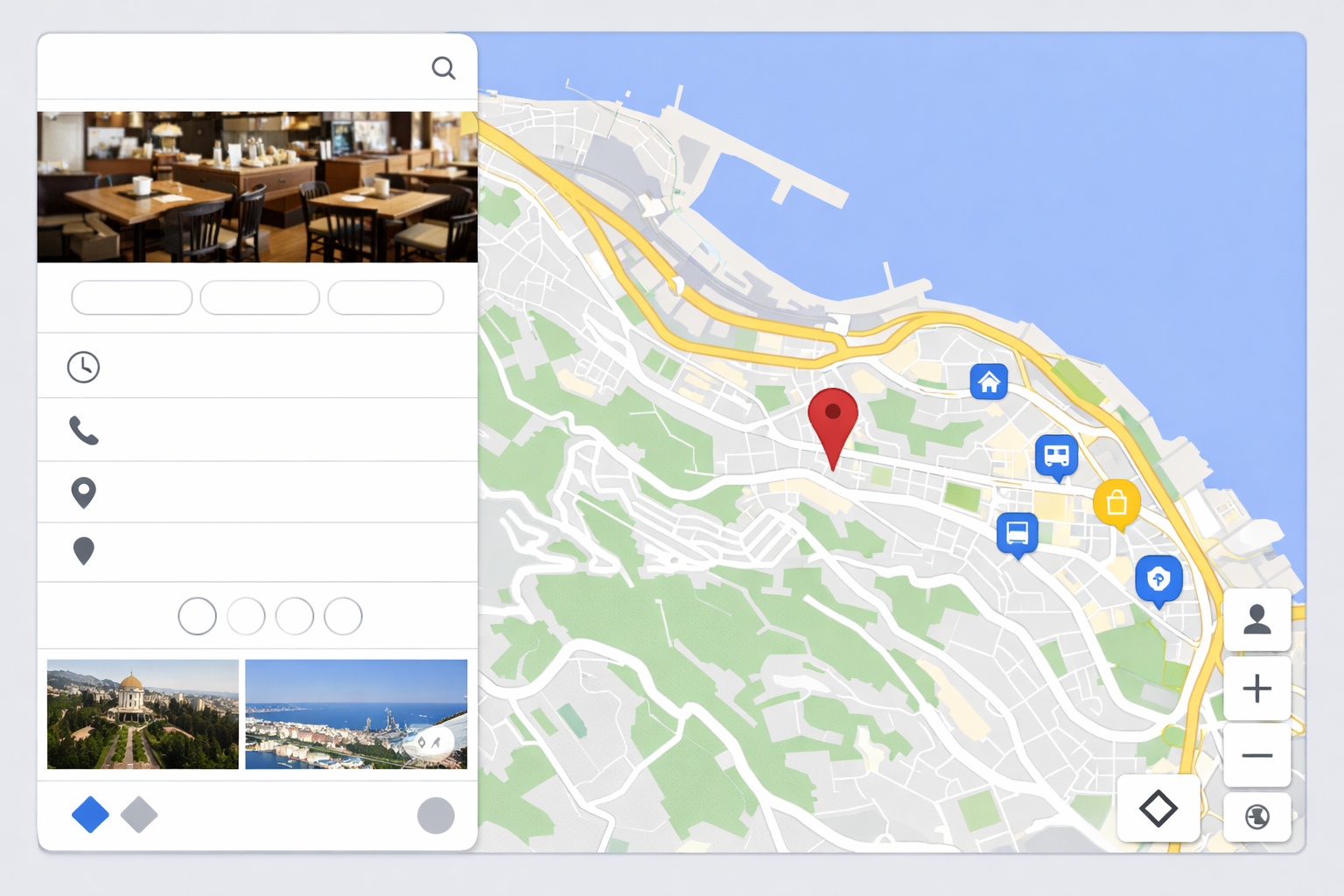
Google Business Profile optimization for Haifa requires trilingual setup from day one. Standard Hebrew-English optimization misses 40% of the local search market.
Configure your primary GBP in Hebrew with full address, phone, and business description. Use Hebrew characters for business name if that’s how customers know you locally.
Add Arabic and Russian business descriptions using GBP’s additional languages feature. Write natural descriptions, not Google Translate output. Arabic descriptions perform better for Wadi Nisnas and port area businesses.
Select categories that match multilingual search patterns. “משרד עורכי דין” performs differently than “law office” in Haifa searches. Test category combinations for each language.
Set service areas covering specific Haifa districts rather than generic city-wide coverage. Carmel businesses should list Carmel neighborhoods individually. Technion area businesses should include university-adjacent areas.
Upload photos with Hebrew, Arabic, and Russian signage visible. Google’s image recognition connects visual language cues to search queries in those languages.
Configure business hours for Shabbat, Islamic holidays, and Russian Orthodox calendar. Haifa businesses need complex scheduling that reflects all three religious calendars.
Generate reviews in all three languages through targeted outreach. Hebrew reviews help with general searches. Arabic reviews boost rankings for Arabic queries. Russian reviews capture Russian-speaking customer searches.
Businesses with trilingual GBP optimization get 47% more map clicks than Hebrew-only profiles. The initial setup takes longer but captures search traffic that competitors miss.
What Content Strategy Works for Haifa’s Tech Corridor vs Residential Areas?

Haifa’s diverse economy requires location-specific content strategies. Technion corridor businesses need B2B academic content while residential areas respond to consumer service content.
| Content Type | Technion Corridor | Carmel Residential |
|---|---|---|
| Primary Topics | Research partnerships, university services, B2B solutions | Family services, home improvement, personal care |
| Search Intent | Problem-solving, vendor evaluation, academic needs | Immediate service needs, local recommendations |
| Content Depth | Technical specifications, case studies, whitepapers | Service descriptions, pricing, availability |
| Seasonal Patterns | Semester calendar, research cycles, conference seasons | Holiday schedules, seasonal services, family events |
| Keywords | Academic terms, research terminology, technical specs | Local service terms, neighborhood names, urgent needs |
| Language Mix | Hebrew (45%), English (35%), academic terminology | Hebrew (60%), Russian (25%), conversational |
Technion corridor content targets B2B search intent with longer sales cycles. University departments search for specialized services using technical terminology. Content should address research needs, academic partnerships, and technology services. These searches peak 340% during university semester starts when new projects launch.
Carmel residential content focuses on immediate service needs. Families search for contractors, medical services, and personal care using local neighborhood terminology. Content should emphasize availability, local expertise, and family-friendly services.
German Colony businesses need bilingual content targeting both Hebrew and English searches. International residents and expat families search in English for familiar service types.
Downtown businesses benefit from Arabic content integration. Service businesses should create Arabic landing pages for major services to capture Arabic search traffic from Wadi Nisnas and port workers.
Seasonal content planning differs by district. Technion area businesses should plan content around academic calendar. Residential areas follow traditional Jewish holiday patterns with some Russian Orthodox considerations.
Which Citation Sources Actually Matter for Haifa Businesses?

Haifa businesses need 12-15 citations minimum compared to 8-10 for smaller Israeli cities. The competitive port city market requires broader citation coverage across multiple directories and platforms.
Haifa Municipality Business Directory: The primary local authority citation that Google trusts most for Haifa business verification. Registration takes 2-3 weeks but provides the strongest local ranking signal.
Yad2 Business Listings: Covers Hebrew and Arabic searches with strong consumer traffic. Essential for service businesses targeting residential customers in Carmel and German Colony areas.
Bizportal Haifa Section: B2B focused directory that works well for Technion corridor businesses. Includes industry-specific categories for tech, research, and professional services.
Yellow Pages Israel (דפי זהב): Traditional directory with high domain authority. Provides Hebrew language citation that supports local search rankings across all Haifa districts.
Foursquare/Swarm: Location-based platform that feeds data to multiple search engines and mapping services. Important for businesses with physical locations customers visit.
Technion Business Partners Directory: Specialized citation source for businesses serving the university market. High-value citation for B2B services targeting academic customers.
Port of Haifa Vendors List: Industry-specific citation for businesses providing services to shipping, logistics, and port operations. Strengthens rankings for industrial B2B searches.
Carmel Tourism Business Directory: Supports businesses in tourist-facing areas of Carmel. Helps with seasonal search traffic and English-language queries from visitors.
Focus citation building on platforms where your target customers actually search. Technion area businesses should prioritize academic and B2B directories. Residential service businesses need consumer-facing platforms with Hebrew and Russian language support.
Consistent NAP (Name, Address, Phone) across all citations matters more than total citation count. Use the same format for Hebrew addresses across all platforms to avoid confusing Google’s location algorithms.
Frequently Asked Questions
Should Haifa businesses create separate websites for Hebrew and Arabic customers?
No, use one multilingual website with proper hreflang Israel setup. Separate sites split your domain authority and create maintenance nightmares. A single site with Hebrew, Arabic, and English sections performs better in Haifa’s trilingual search market.
Do businesses near the Technion need different SEO strategies?
Yes, Technion corridor businesses should optimize for B2B academic keywords and research-related searches. These searches spike 340% during semester starts and target decision-makers with higher budgets than residential searches.
How long does local SEO take to work for Haifa businesses?
Haifa’s competitive market typically shows initial ranking improvements in 3-4 months, with significant traffic increases after 6-8 months. The multilingual optimization requirement adds 2-4 weeks to initial setup time.