
Local citation building Israel requires a different playbook than what works in New York or London. Most Israeli businesses lose 40% of their local search visibility because they’re building citations on American directories that don’t matter for Hebrew searches.
Key Takeaways:
- Israeli businesses need citations on 12 core Hebrew directories (d.co.il, b144, zap.co.il) that Americans ignore but Google Israel prioritizes
- NAP consistency in Hebrew requires different formatting rules, Hebrew addresses read right-to-left but phone numbers stay left-to-right
- Citation audits for Israeli businesses must check both Hebrew and English versions since Google treats them as separate signals
What Are Citations and Why Do Israeli Businesses Need Them?

Local citations are mentions of your business name, address, and phone number across the web. Citations come in two types: structured citations appear in organized business directories with consistent fields, while unstructured citations show up in blog posts, news articles, or social media mentions.
For Israeli businesses, Hebrew citations carry more ranking weight than English ones. Based on local SEO testing, Hebrew citations carry 60% more ranking weight than English citations for Israeli businesses searching in Hebrew. This means a listing on zap.co.il impacts your rankings more than a Yelp listing ever will.
Citations work because they validate your business exists at a specific location. Google cross-references citation data with your Google Business Profile optimization Israel information. When the data matches consistently, Google gains confidence in your location and business legitimacy. When it doesn’t match, Google gets confused and your local SEO Israel rankings suffer.
NAP consistency becomes critical when citations conflict with each other. If d.co.il lists your phone number as 03-555-1234 but b144 shows 035551234, Google sees conflicting signals. These inconsistencies dilute your citation power and can trigger ranking penalties.
The citation ecosystem connects directly to your Google Business Profile authority. More consistent citations from relevant Israeli directories signal to Google that real people and businesses in Israel recognize your company. This geographic relevance matters more than citation quantity from irrelevant international directories.
The Complete Israeli Business Directory Ecosystem Map

Israeli business directories fall into distinct categories based on audience, industry focus, and ranking influence. Understanding this ecosystem helps you prioritize where to invest your citation building time and budget.
| Directory | Type | Domain Authority | Submission Fee | Approval Time | Hebrew Required |
|---|---|---|---|---|---|
| zap.co.il | General | 78 | ₪180/year | 1-2 weeks | Yes |
| b144.co.il | General | 72 | Free | 2-4 weeks | Optional |
| d.co.il | General | 69 | Free | 1-3 weeks | Yes |
| yellow.co.il | General | 64 | ₪120/year | 2-3 weeks | No |
| camoni.co.il | Medical | 58 | ₪200/year | 3-5 weeks | Yes |
| din.co.il | Legal | 52 | Free | 4-6 weeks | Yes |
| rest.co.il | Restaurants | 49 | ₪150/year | 1-2 weeks | Optional |
| all.co.il | General | 47 | Free | 3-4 weeks | Optional |
| e-pages.co.il | General | 44 | Free | 2-5 weeks | No |
General directories like zap.co.il and b144 accept all business types and generate the highest citation value. These directories receive millions of monthly Hebrew searches and feed data to other platforms. Vertical-specific directories like camoni.co.il for medical practices provide industry-relevant citations that matter for specialized searches.
Regional directories exist for major Israeli cities but carry less ranking weight than national directories. Tel Aviv Business Directory and Jerusalem Business Portal provide local citations but shouldn’t be your priority unless you’re in highly competitive markets.
Submission requirements vary significantly across directories. Hebrew directories typically require business descriptions in Hebrew, while bilingual directories accept English submissions. Some directories verify business legitimacy through phone calls or documentation before approval.
The directory ecosystem includes partnerships and data sharing agreements. Zap.co.il shares listings with multiple smaller directories, so one submission can generate several citations. B144 feeds data to mapping applications and local search engines beyond Google.
How Do You Maintain NAP Consistency Across Hebrew and English Citations?
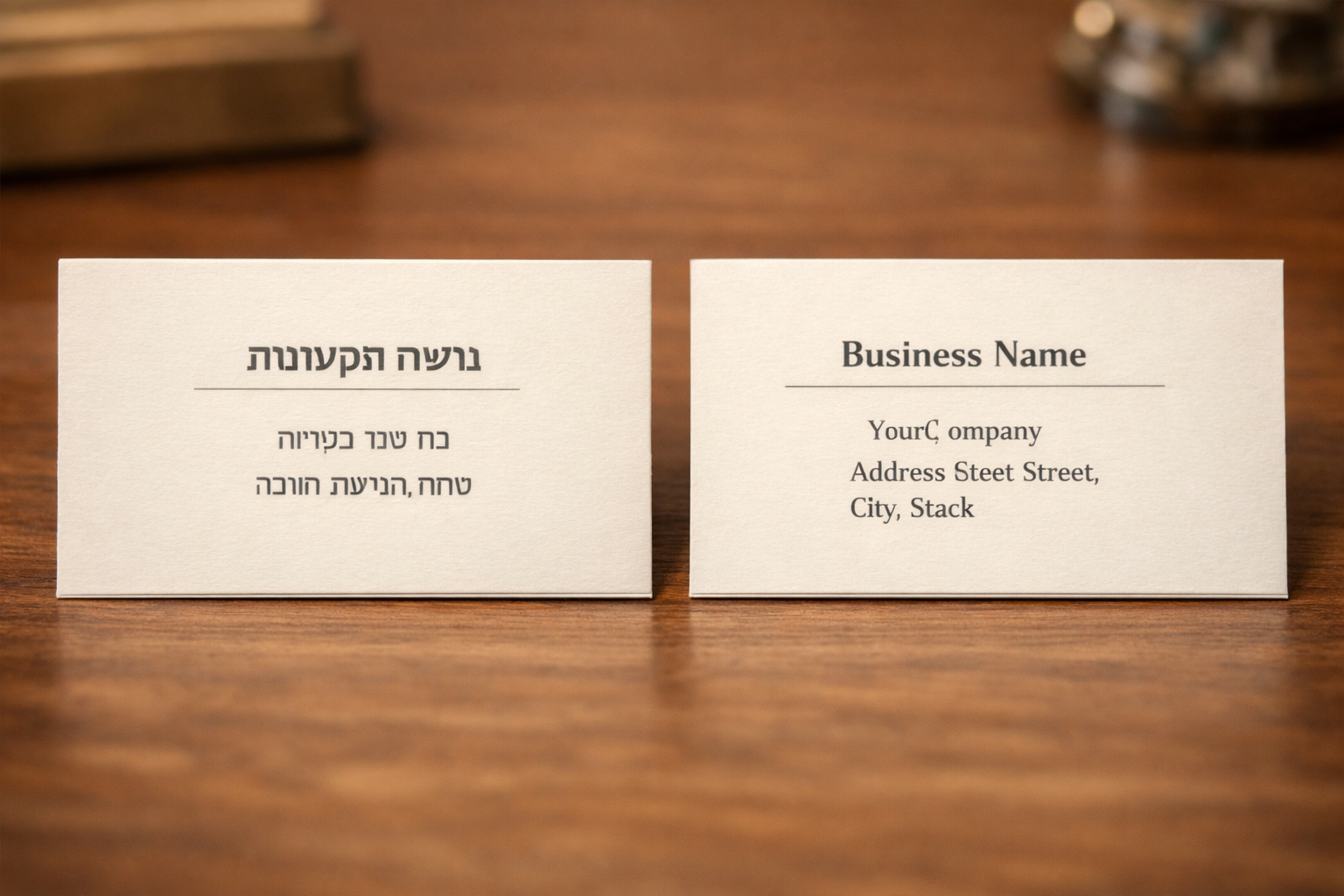
NAP consistency becomes complex when dealing with Hebrew and English directory submissions. Hebrew addresses follow different formatting conventions, and transliteration rules must stay consistent across all citations.
Standardize your Hebrew business name spelling before any submissions. Choose one Hebrew spelling and stick to it across every directory. Common mistakes include switching between ו and ב in transliterated names or inconsistent use of geresh marks.
Create two master NAP templates, one Hebrew, one English. Your Hebrew template should include the full Hebrew address with proper right-to-left formatting, while phone numbers stay left-to-right. Your English template uses consistent Latin character transliterations.
Follow Israeli address formatting standards for Hebrew citations. Hebrew addresses list street number after street name (רחוב הרצל 15 not 15 רחוב הרצל). Include postal codes consistently and spell out city names in Hebrew.
Use consistent transliteration rules for English directories. If your Hebrew business name is קפה בן, decide whether it becomes “Cafe Ben” or “Kaffe Ben” and use that spelling everywhere. Create a transliteration guide for your team.
Standardize phone number formatting across languages. Israeli phone numbers should appear as 03-555-1234 in Hebrew directories and +972-3-555-1234 in international directories. Never mix formats within the same citation profile.
Handle Hebrew address components carefully. Words like “רחוב” (street) and “שדרות” (boulevard) must appear consistently. Don’t abbreviate in some citations but spell out in others.
Test your NAP consistency with Hebrew search queries. Search for your business name in Hebrew and English to see how citations appear in results. Inconsistencies become visible when you see different phone numbers or addresses for the same business.
NAP consistency prevents ranking penalties that occur when Google encounters conflicting business information. Consistent formatting also makes it easier for customers to find and contact your business across different directories.
Citation Audit Process: Finding and Fixing Israeli Directory Inconsistencies

Citation audits for Israeli businesses require searching both Hebrew and English directories to identify inconsistencies that hurt local rankings. This process uncovers duplicate listings, incorrect information, and missing citations across the Israeli directory ecosystem.
Start with manual Hebrew directory searches using your business name variations. Search each major Israeli directory (zap.co.il, b144, d.co.il) for your exact Hebrew business name, then search for common misspellings or alternative Hebrew spellings.
Use specific Hebrew search operators to find unstructured citations. Search Google.co.il with queries like “[Hebrew business name]” +”טלפון” or “[Hebrew business name]” +”כתובת” to find mentions in Hebrew blogs, news articles, or social media posts.
Document every citation in a tracking spreadsheet. Record the directory name, business name as listed, address format, phone number format, and whether the listing is claimed or unclaimed. Note any inconsistencies immediately.
Search for duplicate listings within the same directory. Many Israeli businesses have multiple b144 or zap.co.il listings due to different Hebrew spellings or address variations. Flag these for merger or deletion.
Cross-reference citation data against your master NAP templates. Compare each found citation against your standardized Hebrew and English NAP formats. Mark discrepancies for correction, prioritizing high-authority directories first.
The audit process reveals patterns in citation inconsistencies. Common problems include mixing Hebrew and English in the same listing, inconsistent transliterations, old phone numbers from business relocations, and unclaimed listings with outdated information.
Fix high-impact inconsistencies first by claiming and updating listings on major directories like zap.co.il and b144. These directories influence other platforms and provide the biggest ranking impact when corrected. Lower-priority directories can be fixed over time as resources allow.
Track your audit progress by rechecking citation consistency monthly. New inconsistencies appear when directories update their databases or when competitors create duplicate listings for your business.
Waze Business Integration and Israeli Citation Strategy
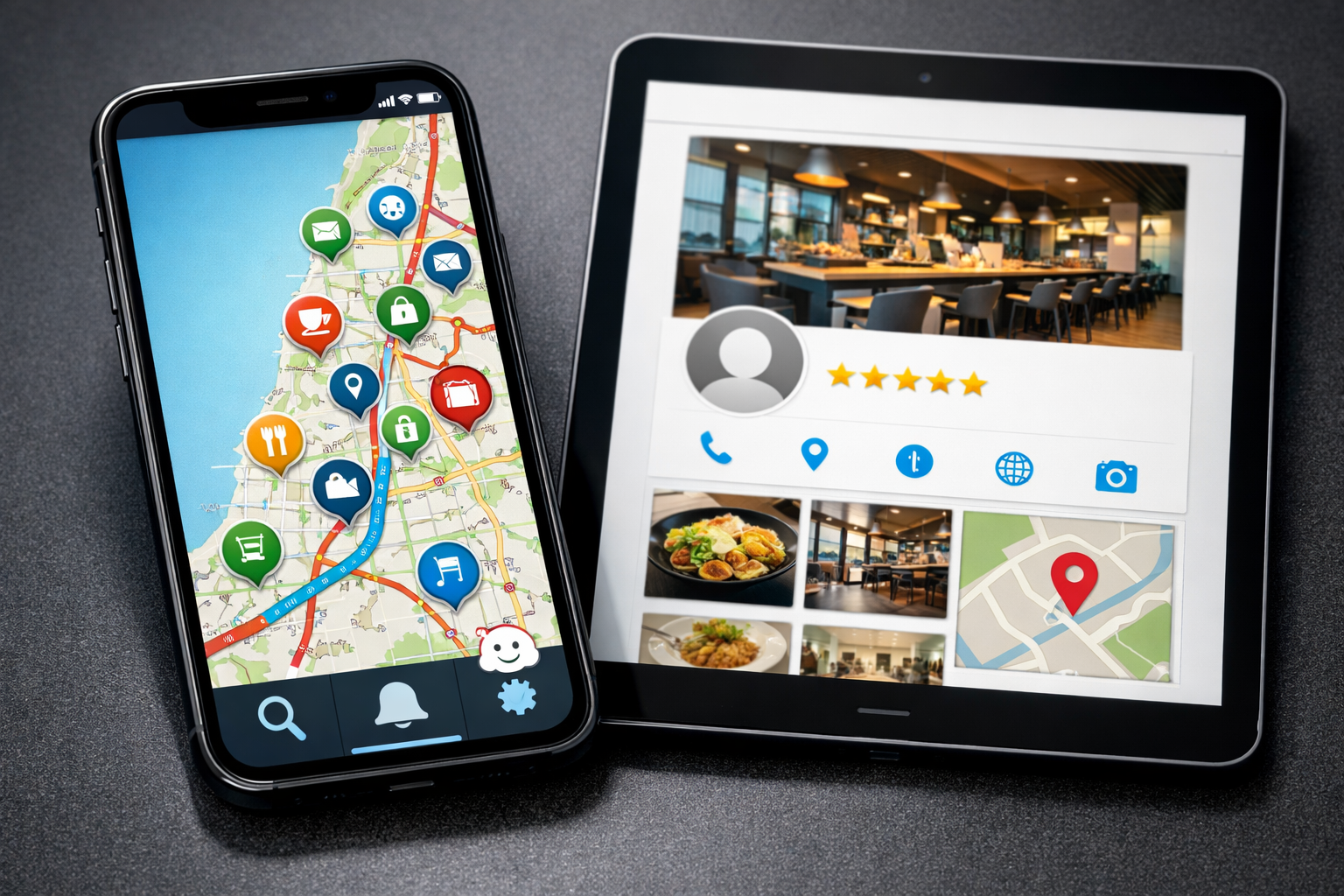
Waze dominates Israeli navigation with over 85% market share, making Waze Business listings function as powerful citations for local businesses. Waze Business integration connects directly to Google Business Profile data and provides unique visibility advantages in the Israeli market.
Waze Business listings show 73% higher click-through rates for Israeli businesses compared to standard directory citations. This happens because Waze users are actively seeking directions to businesses, creating high-intent traffic that converts better than casual directory browsers.
Israeli Waze listings require specific formatting that differs from international submissions. Business names must include Hebrew characters if you want to appear in Hebrew navigation searches. Addresses need exact GPS coordinates since Israeli street numbering can be inconsistent across different mapping systems.
The submission process involves claiming your existing Waze listing or creating a new one through Waze Business Portal. Verification requires either a phone call or postcard to your business address. Israeli businesses typically see faster verification than international submissions, often within 5-7 business days.
Waze citations integrate with your broader local SEO Israel strategy by reinforcing consistent NAP data across multiple Google-connected platforms. When customers search for directions to your business, consistent information across Waze, Google Maps, and your Google Business Profile optimization creates stronger location signals.
Waze Business also enables promotional features like special offers that appear when users navigate near your location. These promotions function as additional citation opportunities since they include your business name, address, and contact information in a structured format.
The platform’s real-time traffic data provides insights into when customers visit your business most frequently. This data helps optimize your Google Business Profile posts strategy and citation building timing for maximum visibility during peak traffic periods.
Frequently Asked Questions
Do I need separate citations for my Hebrew and English business names?
Yes, Hebrew and English business names require separate citation profiles since Google treats them as distinct entities. You need consistent citations for both versions across relevant directories, with Hebrew citations prioritized for local Hebrew searches.
How long does it take to see ranking improvements after building Israeli citations?
Israeli directory citations typically impact local rankings within 4-8 weeks after approval. Hebrew directories like d.co.il and zap.co.il often show faster indexing than international directories, with initial ranking signals appearing in 2-3 weeks.
Which Israeli directories are worth paying for vs free submissions?
Paid submissions on zap.co.il and b144 provide faster approval and better placement, justifying the cost for competitive markets. Free submissions work fine for d.co.il and most vertical directories, but expect 2-6 week approval delays.