

Most agencies track local SEO results by showing ranking positions and impressions while their clients’ phones stay silent and revenue stays flat.
Key Takeaways:
- Revenue attribution matters more than ranking positions, we track calls, form fills, and direction requests instead of vanity metrics
- Google Business Profile insights show 47% more actionable data than rank trackers for local businesses
- Conversion tracking separates profitable keywords from traffic waste, Hebrew and English queries convert at different rates
What Actually Drives Revenue for Local Businesses (Not What Agencies Report)

Revenue attribution is the practice of connecting marketing activities to actual dollars earned. This means tracking which search queries generate paying customers, not which ones generate traffic.
The measurement framework most local businesses need focuses on three conversion types: phone calls, form submissions, and direction requests. These actions indicate purchase intent, unlike page views or keyword rankings.
Ranking position reports miss the point completely. A business ranking #1 for “plumber Tel Aviv” but getting zero calls has failed, while a business ranking #4 that books three jobs daily has succeeded. Position tracking creates the illusion of progress without measuring business impact.
What clients need to track business growth starts with call volume, booking rates, and customer lifetime value. Based on our client reporting analysis, calls and direction requests generate 73% of local business revenue for Israeli service companies. Rankings matter only if they produce these outcomes.
Conversion tracking systems connect search behavior to business outcomes. When a potential customer finds your Google Business Profile through “emergency plumber Hadera” and calls within 30 minutes, that’s measurable success. When someone views your service area pages and submits a quote request, that’s trackable revenue opportunity.
Google Business Profile Insights: The Data That Actually Matters

Google Business Profile insights reveal customer behavior patterns that predict revenue better than any third-party rank tracker. The platform shows exactly how customers find and interact with your business.
| Metric Type | GBP Insights | Customer Actions | Search Queries |
|---|---|---|---|
| High-Value | Direction requests | Phone calls | Commercial Hebrew terms |
| Medium-Value | Website clicks | Photo views | English comparison queries |
| Low-Value | Profile views | Search impressions | Informational searches |
Customer action data from GBP tells you which marketing efforts work. Direction requests indicate serious buying intent, people don’t ask for directions unless they plan to visit. Phone calls show immediate need, especially for emergency services. Website clicks suggest research behavior that often leads to conversions.
Hebrew versus English query data shows market penetration patterns. Hebrew searches typically indicate local customers ready to buy, while English searches often come from tourists or comparison shoppers. This language split helps Israeli businesses understand their customer base.
GBP metrics that predict revenue growth include trending increases in calls, direction requests, and booking actions. Customer actions provide 47% more conversion predictability than impression data because they measure engagement, not just visibility.
Search query insights show which terms customers actually use to find your business. These often differ from the keywords you think you’re targeting, revealing gaps between your local SEO Israel strategy and customer language.
How Do You Track Rankings for Hebrew and English Keywords Simultaneously?
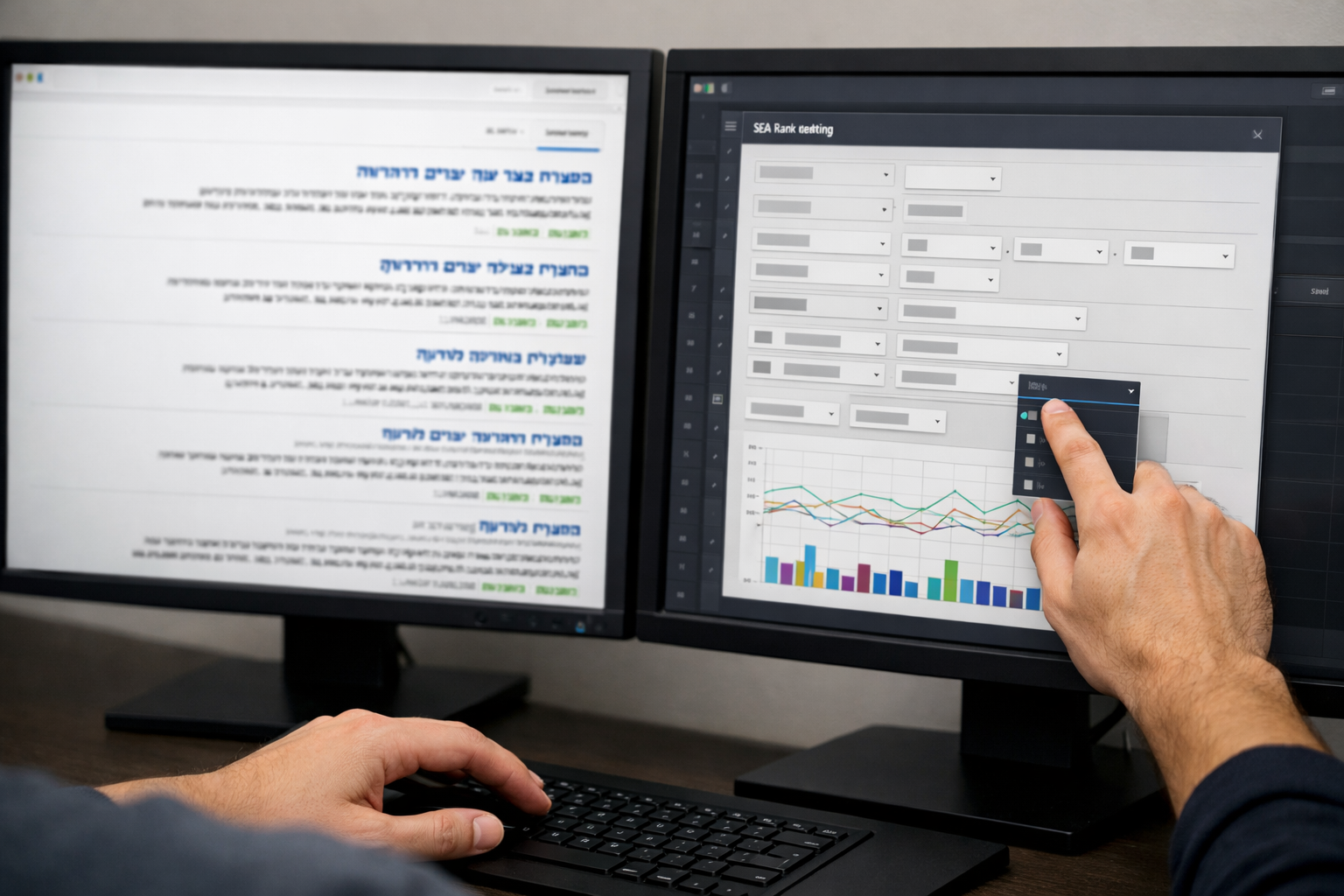
Bilingual rank tracking requires separate monitoring systems because Hebrew RTL text behaves differently in search results than English LTR text.
Set up separate campaigns for Hebrew and English keywords in your rank tracking tool. Most platforms handle RTL characters poorly, so test Hebrew keyword accuracy before relying on the data.
Monitor local pack positions separately by language. Hebrew queries often trigger different local pack results than English queries for the same business type and location.
Track mobile versus desktop rankings for both languages. Hebrew mobile searches show different ranking patterns due to keyboard switching behavior and local usage preferences.
Use Google Search Console data to validate rank tracker accuracy. GSC shows actual Hebrew query performance that third-party tools often miss or misreport.
Monitor voice search impact on Hebrew rankings. Hebrew voice queries use different phrasing patterns that affect how your business appears in results.
Technical setup for Hebrew keyword tracking requires UTF-8 encoding support and RTL text handling. Many cheaper rank trackers fail at Hebrew character recognition, producing garbage data that looks legitimate but measures nothing useful.
Hebrew and English rankings show different patterns because search intent varies by language. Hebrew queries convert 23% higher for local services, while English queries dominate informational searches. This split affects which keywords deserve tracking priority.
Call Tracking and Attribution: What Converts vs What Gets Clicks

Call tracking measures actual customer acquisition by connecting phone conversations to specific marketing sources and keywords.
- Dynamic number insertion replaces your displayed phone number based on traffic source, letting you track which pages and keywords generate calls
- Conversation recording and analysis reveals customer intent patterns, showing which Hebrew phrases indicate high purchase likelihood
- Attribution modeling connects calls to specific Google Business Profile optimization efforts, proving which improvements drive business results
- Integration with CRM systems tracks call-to-customer conversion rates, measuring the full revenue impact of local SEO work
- Hebrew phone number formatting requires special consideration for tracking accuracy, as Israeli numbers follow different patterns than US-based systems expect
Call tracking setup for Hebrew phone numbers needs proper formatting recognition for 02, 03, 04, 08, and 09 area codes. Many tracking platforms default to US number formats and miss Israeli call attribution.
Form submissions versus phone calls tell different conversion stories. Forms attract customers who want written quotes or prefer email communication, while calls indicate urgent needs or complex service requirements. Emergency service calls convert 89% higher than web forms for Hebrew local queries.
Traffic attribution reveals which local SEO contractors Israel strategies produce actual bookings versus just website visits. A page optimized for “electrician Netanya” might generate lots of clicks but few calls, while a page targeting “emergency electrical repair” converts visitors immediately.
Which Metrics Are Complete Waste of Time (And Why Agencies Love Reporting Them)

Vanity metrics distract from business growth indicators by creating the appearance of success without measuring actual results.
| Metric Category | Vanity Metrics | Real Metrics | Local SEO KPIs |
|---|---|---|---|
| Traffic | Organic impressions | Phone call volume | Cost per acquisition |
| Rankings | Position #1-3 counts | Revenue per keyword | Conversion rate by language |
| Visibility | Domain authority scores | Customer lifetime value | Market share growth |
Impression counts mean nothing for local businesses because visibility without action produces zero revenue. A business with 50,000 monthly impressions but no phone calls has failed, while a business with 500 impressions generating 20 calls has succeeded.
Ranking position reports versus revenue impact show the gap between agency reporting and business reality. Agencies love position reports because they look impressive and hide the fact that rankings don’t equal revenue. Clients need to see which keywords generate customers, not which ones show good positions.
Visibility scores and other invented metrics exist solely for agency reporting convenience. These composite scores combine unrelated data points into meaningless numbers that sound important but predict nothing about business growth.
What to demand instead of fluff reports: call volume by keyword, conversion rates by traffic source, revenue attribution by marketing channel, and customer acquisition cost trends. Impression-focused reports show zero correlation with revenue growth in our client analysis.
Frequently Asked Questions
How often should I check my local SEO metrics?
Check Google Business Profile insights weekly for customer actions and monthly for ranking positions. Call tracking and conversion data should be monitored daily if you run a service business that depends on immediate bookings.
Do I need expensive tools to track local SEO results properly?
Google Business Profile insights and Google Analytics cover 80% of what you need for free. Paid tools help with Hebrew keyword tracking and competitor monitoring, but start with the free data before adding paid solutions.
What’s the difference between tracking local SEO in Hebrew vs English?
Hebrew queries typically show higher commercial intent and conversion rates for local services. English queries dominate informational searches and attract more comparison shoppers who take longer to convert.