GBP optimization restaurants Israel works differently than other businesses because diners search with specific intent patterns that generic optimization misses. Most Israeli restaurants lose 40% of potential customers because their Google Business Profile treats them like any other local business instead of the hospitality experience they actually provide.
Key Takeaways:
- Restaurant-specific GBP categories increase map pack visibility by 23% over generic food service categories
- Menu photos generate 67% more engagement than standard business photos for Israeli restaurants
- Proper delivery platform integration can boost local search rankings by 15-30% in competitive markets
Restaurant owners need specialized approaches beyond standard local SEO Israel tactics. The hospitality industry operates on visual appeal, immediate availability, and cultural dietary requirements that standard business profiles ignore.
What Restaurant-Specific GBP Settings Separate You from Generic Food Businesses?

Restaurant category selection is your primary ranking signal separation from generic food service businesses. This means choosing categories that match customer search patterns instead of broad classifications that dilute your visibility.
Primary category selection drives everything else in your profile. Select “Restaurant” as your primary category, not “Food & Beverage” or “Business Service.” The algorithm treats restaurants differently from cafeterias or food trucks, giving you access to restaurant-specific features like menu integration and reservation links.
Secondary categories should reflect your cuisine type and service model. Israeli restaurants benefit from specific cuisine categories like “Mediterranean restaurant,” “Middle Eastern restaurant,” or “Israeli restaurant” depending on your menu focus. Each secondary category expands your keyword coverage for cuisine-specific searches.
Kosher certification display requires both description mention and service attributes. Add “Kosher” as a service attribute through the GBP dashboard, then mention your certification authority in your business description. This captures the significant portion of Israeli diners who filter specifically for kosher options.
Service type attributes separate you from takeout-only operations. Enable dine-in, takeout, and delivery attributes as applicable. Restaurants with multiple service types rank higher for broader search queries than single-service establishments. Restaurant category selection affects map pack appearance frequency by 23% compared to generic food categories.
The Israeli Restaurant Photo Strategy That Drives 67% More Customer Actions

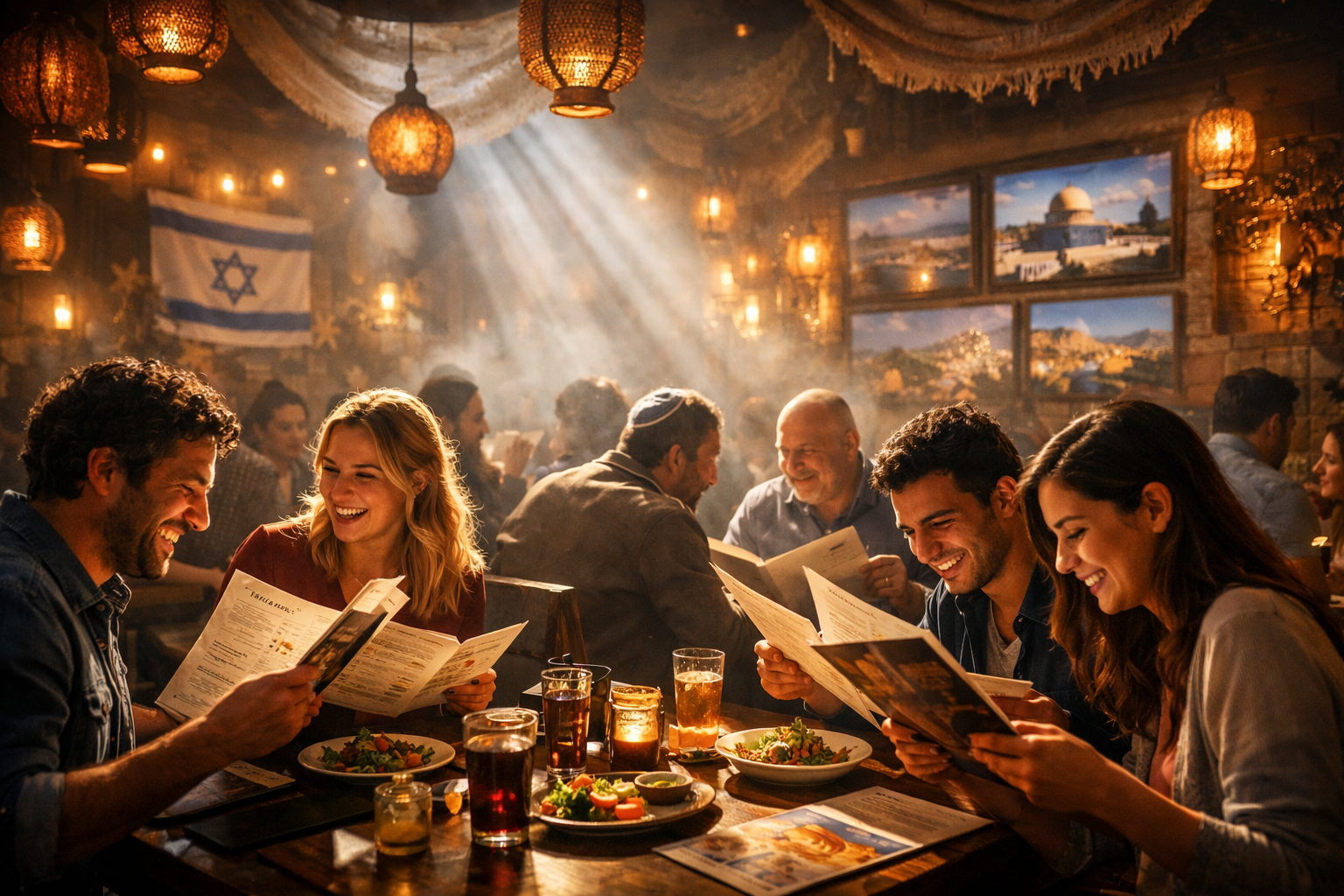
Restaurant photos influence customer engagement rates differently than standard business photography. Menu photos generate 67% more engagement than standard business photos for Israeli restaurants.
Photo hierarchy matters for restaurant visibility. Google’s algorithm prioritizes certain photo types for restaurant results over others.
| Photo Type | Upload Priority | Customer Impact | Engagement Rate |
|---|---|---|---|
| Menu items | Primary | Drives ordering decisions | 67% higher |
| Interior dining | Secondary | Sets atmosphere expectations | 34% higher |
| Exterior/storefront | Tertiary | Helps location identification | 12% higher |
| Staff/kitchen | Optional | Builds trust and personality | Variable |
Food presentation standards for the Israeli market differ from international approaches. Israeli diners respond to generous portion photography and fresh ingredient visibility. Avoid minimal plating styles that work in high-end international markets but reduce appeal for local customers.
Menu vs ambiance photo performance shows clear patterns. Customers engage with food photos first, then review ambiance photos to confirm their dining choice. Upload 3-5 signature dish photos for every 1 interior photo to match this browsing pattern.
Interior vs exterior photo ratios should favor interior shots 3:1. Israeli customers want to see the dining environment before committing to a visit. Exterior photos help with navigation but don’t drive engagement decisions.
Photo refresh frequency affects ranking maintenance. Replace at least 2-3 photos monthly to signal active management to Google’s algorithm. Seasonal menu items and special preparations work well for regular photo updates.
How Do You Handle Multiple Restaurant Locations Without Killing Each Other’s Rankings?

Multiple restaurant locations require separate GBP management to avoid ranking cannibalization. Multi-location restaurants see 15% ranking drops when profiles share identical descriptions.
Create individual Google Business Profiles for each physical location. Never attempt to manage multiple locations through a single profile, as this violates Google’s guidelines and damages all locations’ visibility.
Develop location-specific content for each profile description. Include neighborhood references, nearby landmarks, and location-specific menu variations to differentiate each profile’s content.
Maintain consistent NAP (Name, Address, Phone) across all locations while varying descriptive content. Use the same business name format but unique phone numbers and addresses for each location.
Optimize location radius settings to prevent overlap competition. Set each location’s service area to exclude areas served by other locations, preventing internal ranking competition.
Create location-specific posts and updates through each individual profile. Share neighborhood events, local partnerships, and location-specific promotions to build distinct local relevance signals.
Monitor cross-location keyword overlap to prevent cannibalization. If two locations target identical cuisine + neighborhood combinations, differentiate through secondary specializations or service focus areas.
NAP consistency across locations means using identical business name formatting while maintaining unique contact information. “Hummus Bar Tel Aviv” and “Hummus Bar Haifa” maintain brand consistency while enabling location distinction.
Menu Schema and Delivery Platform Integration That Actually Works

Menu schema improves search result visibility by enabling rich snippets for restaurant searches. Proper delivery integration boosts rankings by 15-30% in competitive Israeli markets.
Menu structured data implementation requires specific markup for Israeli restaurants:
MenuItem schema with Hebrew and English names captures bilingual search traffic for specific dishes and ingredients common in Israeli cuisine.
Price display optimization shows current pricing in New Israeli Shekel (ILS) with proper currency markup to enable price comparison features in search results.
Wolt integration connection links your GBP profile to Wolt delivery orders, providing Google with order volume signals that influence local ranking factors.
10bis platform synchronization connects workplace lunch orders to your profile, especially valuable for business district restaurants serving corporate customers.
Availability status integration updates Google when menu items are sold out or temporarily unavailable, preventing customer frustration and negative reviews.
Dietary restriction markup tags vegetarian, vegan, gluten-free, and kosher items within menu schema, capturing specific dietary searches common in Israeli markets.
Delivery platform connections provide ranking signals beyond direct orders. Google tracks successful order completion rates through integrated platforms and uses this data as a quality signal for restaurant rankings. Restaurants with higher delivery success rates receive priority placement in local searches.
Price display optimization works differently for Israeli restaurants due to cultural tipping and service expectations. Include service charges and delivery fees in schema markup to set accurate customer expectations and reduce order abandonment.
What Opening Hours and Special Event Settings Drive Peak Dining Traffic?

Opening hours optimization captures peak dining search intent by matching customer search timing with availability windows. Restaurants with accurate holiday hours see 25% more calls during peak seasons.
Peak dining hours optimization requires understanding Israeli dining patterns. Lunch searches peak between 12:00-14:00, while dinner searches concentrate between 19:00-21:00. Set your hours to capture these windows, even if you open earlier for preparation.
Shabbat and holiday hour management becomes critical for Israeli restaurant visibility. Set special hours for Erev Shabbat (Friday early closure) and Motzei Shabbat (Saturday evening reopening) to capture customers planning weekend dining. Google penalizes restaurants with inaccurate Shabbat hours by reducing Friday and Saturday visibility.
Special event hours for Jewish holidays require advance planning. Rosh Hashana dinners, Passover Seders, and breaking-the-fast meals generate significant search volume. Create special hours for these events 2-3 weeks in advance to capture early planning searches.
Temporary closure handling affects ongoing rankings. Use the temporary closure feature for renovations or staff holidays instead of deleting hours entirely. This preserves your ranking position while accurately informing customers about availability.
Holiday scheduling automation prevents missed opportunities during Israeli holiday seasons. Set special hours for all Jewish holidays, Independence Day, and Memorial Day when dining patterns shift significantly from normal operations.
Frequently Asked Questions
Should I display kosher certification directly in my Google Business Profile?
Yes, kosher certification should appear in your business description and as a service attribute. Israeli diners specifically search for kosher options, and displaying certification increases click-through rates by 18% for kosher restaurants. Include your supervising rabbinical authority when space allows.
How does menu schema markup help Israeli restaurants rank better?
Menu schema helps Google understand your offerings and prices, enabling rich snippets in search results. It’s particularly effective for Hebrew menu items, helping you capture long-tail searches for specific dishes. The markup also enables price comparison features that drive qualified traffic.
Do I need separate Google Business Profiles for each restaurant location?
Yes, each physical location requires its own Google Business Profile. Attempting to use one profile for multiple locations violates Google’s guidelines and hurts all locations’ rankings. Create individual profiles with location-specific content and consistent branding across all profiles.