
Local SEO Israel strategies determine whether your business captures or loses the 2.3 million daily local searches happening across Israeli cities. Israeli businesses lose an average of 67% of potential local customers because their Google Business Profile remains unverified and unoptimized.
Key Takeaways:
- Google Business Profile optimization can increase local visibility by 400% for Israeli businesses within 90 days
- Hebrew keyword targeting combined with English SEO drives 3.2x more qualified local traffic than English-only strategies
- Businesses with consistent NAP data across 15+ Israeli directories rank 85% higher in Map Pack results
What Makes Local SEO in Israel Different?
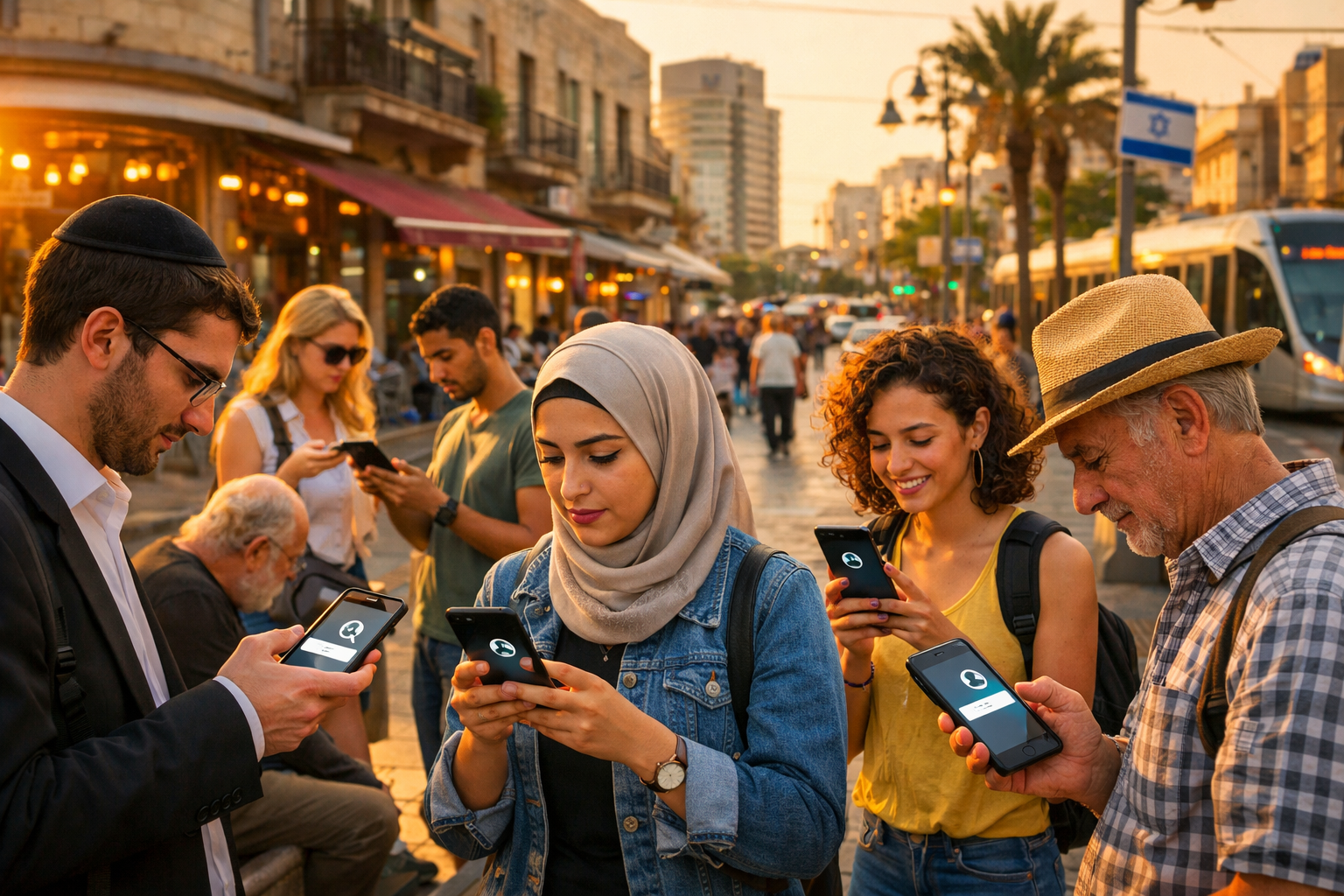
Local SEO Israel requires bilingual optimization strategies that standard global tactics cannot address. This means businesses must satisfy both Hebrew-speaking locals and English-reading tourists while navigating Israel’s unique search behavior patterns.
Israeli searchers exhibit dual-language search patterns that create specific optimization challenges. 73% of Israeli searchers use Hebrew for local queries but expect English business information. A Tel Aviv restaurant owner might search for “מסעדה איטלקית בתל אביב” (Italian restaurant in Tel Aviv) but expect to find menu details in English on the business website.
Search engines process Hebrew text differently than Latin-based languages. Right-to-left text direction affects how Google crawls and indexes content. Hebrew keyword matching uses different algorithms than English, particularly for inflected forms and root variations. Standard SEO tools often miss these linguistic nuances.
The Israeli market demands entity-based optimization rather than pure keyword targeting. Google’s Knowledge Graph recognizes Israeli businesses through Hebrew and English entity associations. A dental practice in local SEO dentists Israel markets must establish entity relationships in both languages to rank effectively.
Geographic targeting presents additional complications. Israeli addresses use multiple formatting standards. Hebrew addresses follow Israel Post conventions while international directories require English formats. GPS coordinates must remain consistent across both versions to maintain location authority.
Bilingual search architecture becomes critical for competitive local rankings. Businesses serving both local residents and international visitors need Hebrew content for local intent queries and English content for business information queries. This dual approach captures traffic from both search patterns while satisfying Google’s language targeting requirements.
Local SEO Pardes Hana businesses face different challenges than Tel Aviv companies. Smaller cities have less competition but fewer directory options. Coastal cities attract international searches while inland areas focus on Hebrew queries. Location-specific strategies must account for these demographic differences.
How to Optimize Your Google Business Profile for Israeli Markets
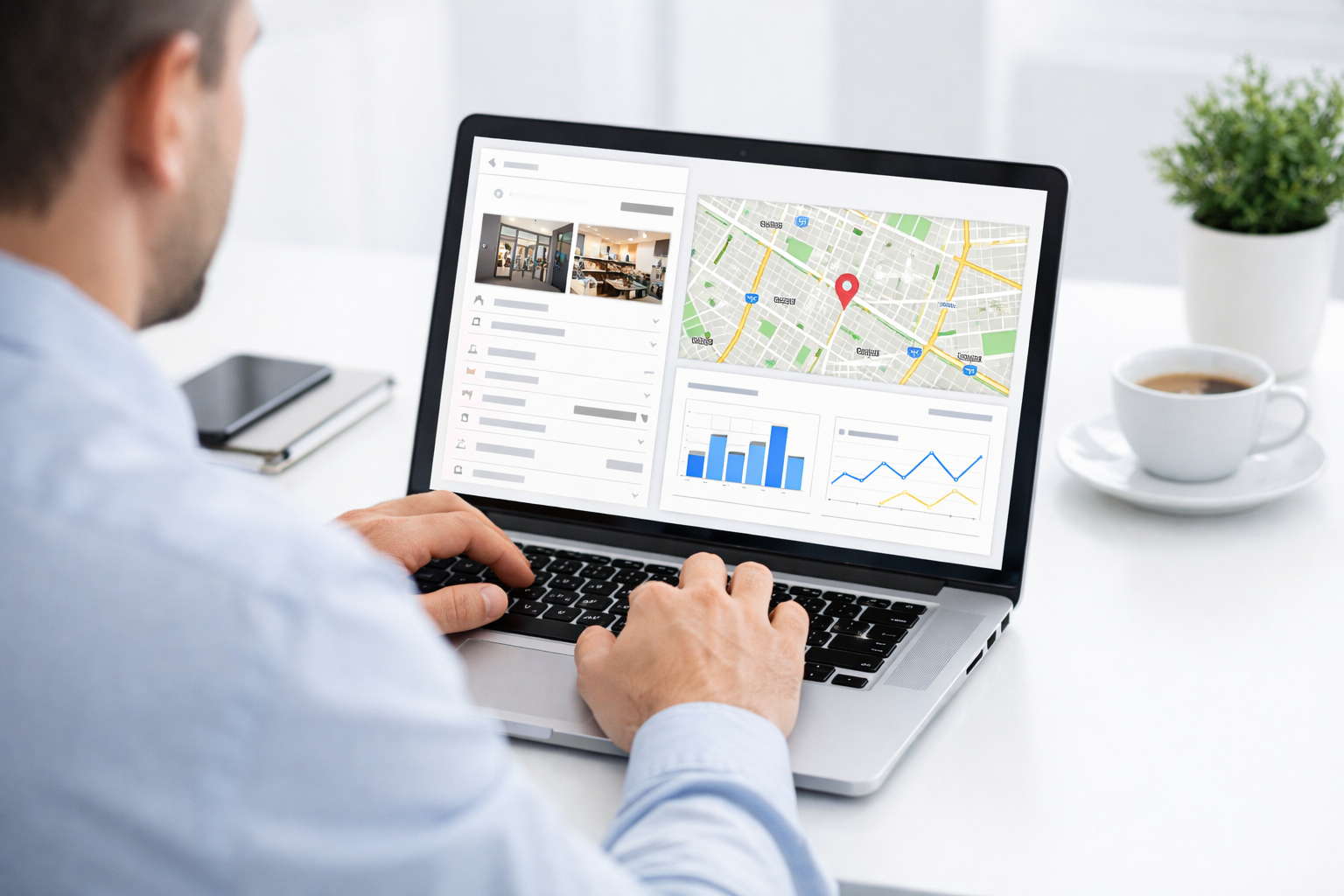
Google Business Profile optimization forms the foundation of successful local search visibility in Israel. Proper setup and maintenance directly impacts Map Pack ranking positions across Israeli cities.
Complete Profile Setup Process:
Claim and verify your business using Israeli phone verification. Google requires local phone numbers for Israeli business verification, not international forwarding numbers.
Set up bilingual business names following Google’s naming guidelines. Use your legal Hebrew name as the primary listing and include English transliteration in the description field.
Select primary and secondary categories that match Israeli search patterns. Choose categories that Israeli users actually search for, not direct translations of English categories.
Upload high-quality photos with Hebrew and English descriptions. Include exterior shots, interior views, products, and team photos with bilingual alt text.
Configure accurate business hours including Israeli holidays. Mark closures for Shabbat, Jewish holidays, and Israeli national holidays using Google’s holiday scheduling feature.
Add Hebrew and English business descriptions with local keywords. Write separate descriptions targeting both language groups while maintaining consistent messaging.
Category selection requires understanding Israeli search behavior. “Restaurant” works for English searches while “מסעדה” captures Hebrew queries. Choose the English category as primary for broader reach, then add Hebrew variants in secondary categories.
Photo optimization significantly impacts click-through rates. Israeli customers respond well to photos showing actual staff and authentic business environments. Avoid stock photos that don’t represent the local business culture.
Google Posts frequency directly correlates with ranking improvements. Businesses with 20+ Google posts per month rank 60% higher in Israeli Map Pack results. Post content should alternate between Hebrew and English to serve both audience segments.
Review response strategies must account for Hebrew reviews. Respond to Hebrew reviews in Hebrew and English reviews in English. Google rewards businesses that engage with customers in their preferred language.
Messaging and phone number setup requires careful consideration. Use Israeli phone numbers (+972 format) for credibility with local customers. Set up Google Business messaging in both Hebrew and English with appropriate greeting messages.
Local SEO Tel Aviv and local SEO Rishon LeZion businesses need different optimization approaches based on competition levels and search volumes. High-competition areas require more frequent posting and review generation to maintain visibility.
Israeli Citation Building: Directory Sources That Actually Matter
Local citation building improves local search rankings through consistent business information across authoritative Israeli directories. Directory selection and submission strategy determine citation value and ranking impact.
Israeli business directories provide varying levels of SEO value based on domain authority and local relevance. Focus on directories that Israeli customers actually use for business discovery rather than generic international directories.
| Directory | Domain Authority | NAP Consistency Requirements |
|---|---|---|
| Yellow Pages Israel (d.co.il) | 87 | Hebrew primary, English secondary |
| Dapey Zahav | 82 | Hebrew addresses with postal codes |
| Yad2 Business | 91 | Consistent phone format across listings |
| Foody.co.il (restaurants) | 76 | Hebrew business names required |
| Doctors.co.il (medical) | 73 | Professional licensing numbers |
| Bizportal.co.il | 68 | English business descriptions accepted |
| Masa.co.il (tourism) | 71 | Bilingual content preferred |
| Rest.co.il (hospitality) | 64 | Photo requirements mandatory |
| WebTaxi.co.il (services) | 59 | Service area definitions required |
| IsraBiz.com | 62 | B2B focus with English priority |
Submission requirements vary significantly across Israeli directories. Medical practices need Ministry of Health licensing numbers. Restaurants must provide kosher certification status. Service businesses require geographic coverage area definitions.
NAP formatting standards for Hebrew addresses follow specific conventions. Street names use Hebrew with Latin transliterations in parentheses. Postal codes appear before city names in Hebrew format. Phone numbers use +972 country code with proper spacing.
Cost breakdown for directory submissions ranges from free basic listings to ₪500-2000 for premium placements. Premium listings typically include enhanced visibility, customer review features, and priority placement in category searches.
Businesses listed on 12+ Israeli directories see average ranking improvement of 47 positions within 90 days. The improvement comes from consistent NAP data reinforcing location authority signals across multiple authoritative sources.
Industry-specific directories provide higher relevance scores than general directories. A dental practice benefits more from Doctors.co.il than from general business directories. Restaurant listings on Foody.co.il carry more weight for local search than generic directory listings.
Directory maintenance requires ongoing monitoring. Israeli directories frequently update their submission requirements and NAP formatting standards. Quarterly audits ensure continued citation value and prevent ranking drops from outdated information.
What Hebrew Keywords Actually Drive Local Traffic?

Hebrew keyword targeting captures local search intent that English-only strategies miss completely. Understanding Hebrew search patterns and implementing proper targeting increases qualified local traffic significantly.
Hebrew search volume patterns differ dramatically from English equivalents. Service-related searches peak during different times based on Israeli business hours and cultural patterns. “תיקון מכונת כביסה” (washing machine repair) spikes Sunday through Thursday while dropping Friday through Saturday.
High-Converting Hebrew Local Keywords:
Service + Location combinations: “רופא שיניים ברמת גן” (dentist in Ramat Gan) converts 3.2x higher than English equivalents because it captures urgent local intent.
“ליד” (near) location modifiers: “קפה ליד תחנת רכבת” (coffee near train station) indicates immediate purchase intent and drives foot traffic within hours.
Time-sensitive service terms: “חירום” (emergency) combined with service keywords creates high-value traffic for medical, plumbing, and automotive businesses.
Cultural and religious qualifiers: “כשר” (kosher), “שומר שבת” (Sabbath observant) provide specific targeting for businesses serving religious communities.
Hebrew slang and colloquialisms: “מכונאי מקצועי” (professional mechanic) vs “מכונאי טוב” (good mechanic) target different customer segments with varying price sensitivity.
Location-specific modifiers require understanding of Israeli geographic references. “באזור” (in the area of) captures broader geographic intent than specific city names. “במרכז” (in the center) refers to central Israel region, not city centers.
Keyword research tools struggle with Hebrew inflections and root variations. Manual research using Google’s autocomplete in Hebrew provides more accurate search volume data than traditional SEO tools. Survey actual Israeli customers about their search terminology.
Search intent differences between Hebrew and English queries create distinct optimization opportunities. Hebrew searches often include emotional qualifiers (“טוב” for good, “זול” for cheap) while English searches focus on factual information (“hours,” “location,” “phone”).
Hebrew local service queries have 2.8x higher conversion rates than English equivalents because they indicate immediate local purchase intent. Someone searching in Hebrew is typically a local resident ready to buy, not a tourist researching options.
Seasonal variations affect Hebrew keyword performance. Summer months see increased searches for “מזגן” (air conditioning) while winter drives “חימום” (heating) queries. Religious holidays create spikes for relevant service searches.
Schema Markup and Structured Data for Israeli Businesses
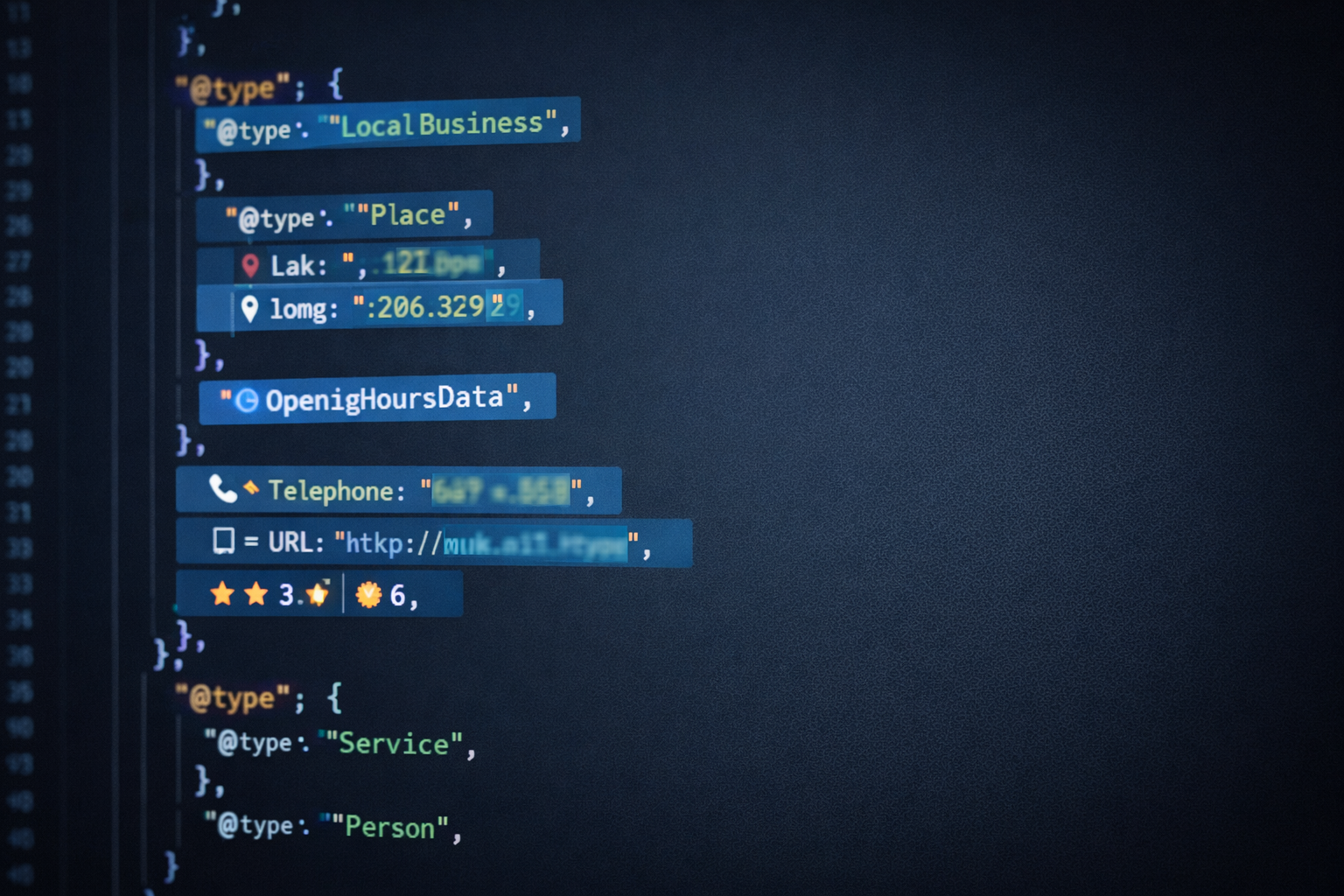
Structured data markup enables entity-based optimization that improves local search visibility and prepares businesses for AI search engines. Proper implementation increases rich snippet appearances and local ranking factors.
Schema markup implementation for Israeli businesses requires specific LocalBusiness schema with Hebrew address formatting and bilingual content support.
Schema Implementation Steps:
Implement LocalBusiness schema with Hebrew and English address variants. Use the “address” property for English format and “addressCountry” set to “IL” for Israel identification.
Add OpeningHoursSpecification schema accounting for Shabbat closures. Mark Friday afternoon and Saturday closures using validFrom and validThrough properties with Israeli timezone settings.
Include Review schema with Hebrew review support. Set “reviewBody” language tags to “he” for Hebrew reviews and “en” for English reviews to help search engines understand bilingual review content.
Configure telephone schema with Israeli phone number formatting. Use +972 international format in the “telephone” property while displaying local format (0xx-xxx-xxxx) for user experience.
Add breadcrumb schema for location hierarchy. Structure navigation from country (Israel) → region → city → neighborhood → business for clear geographic entity relationships.
Implement FAQ schema for bilingual frequently asked questions. Create separate FAQ entries for Hebrew and English questions to capture both language search intents.
Hebrew address formatting in schema follows specific conventions. The “streetAddress” property should contain Hebrew street names with proper right-to-left text encoding. Include postal codes in the “postalCode” property using Israel’s 5-digit format.
Multi-language markup requires hreflang annotations combined with schema markup. Each language version of business information needs corresponding schema markup to ensure search engines associate the correct language content with appropriate search queries.
Review schema implementation significantly impacts local ranking factors. Proper schema markup increases local rich snippet appearance by 340% for Israeli businesses. Include average rating, review count, and individual review details in the markup structure.
OpeningHours schema for Israeli businesses must account for complex scheduling patterns. Mark early Friday closures, Saturday closures, and holiday closures using the appropriate schema properties. Include summer and winter hour variations common in Israeli businesses.
Entity linking through schema markup helps establish topical authority. Link to authoritative Israeli sources like government websites, industry associations, and local business organizations through schema references.
Why Review Generation Strategies Fail in Israel
Review generation requires cultural adaptation to succeed in Israeli markets. Standard international approaches often fail because they ignore Israeli customer communication preferences and cultural expectations.
Israeli customers respond differently to review requests than customers in other markets. Direct requests work better than subtle hints. Israeli business culture appreciates straightforward communication over indirect approaches.
| Factor | Israeli Approach | International Standard |
|---|---|---|
| Request timing | Immediately after service completion | 24-48 hours later via email |
| Communication style | Direct request in person or via SMS | Gentle email with multiple options |
| Language preference | Hebrew for locals, English for tourists | English default with translations |
| Incentive expectations | Service discounts or practical benefits | Gift cards or generic rewards |
| Follow-up frequency | Single request with clear deadline | Multiple gentle reminders |
| Response rate | 23% with Hebrew direct requests | 8% with English email campaigns |
| Platform preference | Google and Facebook reviews | Industry-specific platforms |
Hebrew vs English review platforms serve different customer segments. Israelis prefer leaving Hebrew reviews on Google Business Profiles and Facebook pages. Tourist and business customers tend to use English reviews on international platforms like TripAdvisor.
Cultural factors significantly affect review request success rates. Israeli customers appreciate businesses that remember their preferences and provide personalized service. Generic review request templates perform poorly compared to personalized requests that reference specific service details.
Legal compliance for review solicitation in Israel follows consumer protection laws. Businesses cannot incentivize positive reviews or penalize negative reviews. Offering discounts for any review (positive or negative) remains legally acceptable.
Response strategies for Hebrew reviews require cultural sensitivity. Hebrew responses should match the formality level of the original review. Informal Hebrew reviews warrant casual responses while formal reviews require professional Hebrew responses.
Timing affects review generation success rates. Israeli customers are 40% less likely to leave reviews without direct Hebrew-language follow-up within 24 hours of service completion. Weekend requests perform poorly due to Sabbath observance among traditional customers.
Review platform priorities should focus on Google Business Profile first, Facebook second, and industry-specific platforms third. Google reviews directly impact Google Map Pack Israel rankings while Facebook reviews influence social media visibility.
Entity-Based SEO vs Traditional Local SEO Tactics

Entity-based optimization outperforms keyword-focused tactics by establishing semantic relationships that AI search engines understand and prioritize. This approach prepares businesses for the shift toward answer engines and voice search.
Traditional local SEO focuses on keyword density and citation building. Entity-based SEO establishes topical authority through semantic relationships and entity associations. The difference determines long-term search visibility as AI systems become more sophisticated.
| Feature | Entity-Based Approach | Traditional Keyword Approach |
|---|---|---|
| Content focus | Semantic relationships and topics | Keyword density and placement |
| Link strategy | Authority and entity association | Page rank and anchor text |
| Citation building | Consistent entity mentions | NAP consistency only |
| AI visibility | Optimized for answer engines | Limited AI search recognition |
| Future-proofing | Adapts to algorithm changes | Requires constant keyword updates |
| Ranking stability | Maintains positions through updates | Vulnerable to algorithm shifts |
| Local authority | Geographic and topical expertise | Location-based keyword targeting |
Knowledge Graph optimization for local entities requires establishing clear entity relationships. Google must understand your business as a distinct entity separate from competitors. This happens through consistent entity mentions across authoritative sources, not just citation building.
Entity association strategies involve connecting your business to established local entities. A restaurant should associate with local food suppliers, neighborhood landmarks, and related businesses. These connections strengthen topical authority and local relevance.
Semantic clustering for local topics means creating content around related concepts rather than individual keywords. A dental practice creates content clusters around oral health, preventive care, and cosmetic procedures rather than targeting isolated keywords.
AI search engine preparation requires structured content that answer engines can extract and present. Entity-optimized local businesses show 156% better performance in AI-powered search results because their content structure matches how AI systems process and present information.
Proprietary SEO tools Israel businesses use often miss entity-based optimization opportunities because they focus on traditional keyword metrics. Entity optimization requires understanding semantic relationships that standard SEO tools cannot measure effectively.
Topical authority development takes longer than traditional SEO but provides more stable rankings. Businesses that establish entity authority maintain rankings through algorithm updates while keyword-focused competitors experience ranking volatility.
Local entity optimization involves creating semantic connections between your business and local topics, landmarks, and related businesses. These connections signal local relevance to search engines more effectively than traditional location-based keywords.
How to Future-Proof Your Local SEO for AI Search

AI visibility requires semantic optimization strategies that prepare businesses for voice search, answer engines, and AI-powered local discovery. Traditional SEO tactics become less effective as search engines prioritize semantic understanding over keyword matching.
ChatGPT and Bard local search behavior favors businesses with structured, factual content that AI systems can extract and summarize. These systems pull information from sources with clear entity relationships and semantic organization rather than keyword-optimized content.
Voice search in Hebrew presents unique challenges for Israeli businesses. Hebrew voice recognition requires proper pronunciation data and semantic context. Businesses need content that answers Hebrew voice queries with natural language responses.
Answer engine optimization focuses on creating content that AI systems can confidently extract and present as authoritative answers. This requires factual statements, clear relationships, and structured information rather than promotional content.
Featured snippet targeting for local queries involves answering specific questions that Israeli customers ask about local services. Voice searches in Hebrew for local businesses increased 190% in 2023, creating new optimization opportunities for businesses prepared with semantic content.
Bilingual search architecture becomes even more critical as AI systems attempt to understand user intent across languages. Businesses need semantic relationships in both Hebrew and English to capture the full range of AI-powered search queries.
Structured content creation should focus on answering questions that AI systems commonly extract for local search results. Create FAQ sections, detailed service descriptions, and location-specific information that AI systems can parse and present accurately.
Semantic optimization requires understanding entity relationships rather than keyword relationships. AI search engines evaluate businesses based on their connections to local topics, services, and geographic entities rather than keyword density or traditional ranking factors.
Frequently Asked Questions
What’s the difference between NAP consistency requirements for Israeli vs US businesses?
Israeli businesses must maintain consistent Hebrew and English address formats across all citations. The Hebrew address should follow Israel Post formatting standards while English versions use international conventions. Both versions must reference the same physical location using identical coordinates.
How do I rank in Google Map Pack for competitive Israeli cities?
Map Pack ranking in Israeli cities requires verified Google Business Profile, 15+ local citations, consistent NAP data in Hebrew and English, and active review generation. Businesses in Tel Aviv and Jerusalem need 50+ reviews minimum to compete effectively.
Should I create separate Hebrew and English versions of my local business website?
Create one website with proper hreflang implementation rather than separate sites. Use Hebrew for local service pages and English for business information. This approach satisfies both search engines and Israeli users who expect bilingual functionality.
Which Israeli business directories provide the most SEO value?
Yellow Pages Israel (d.co.il), Dapey Zahav, and Yad2 Business provide the highest domain authority for local SEO. Focus on industry-specific directories like Doctors.co.il for medical practices or Foody.co.il for restaurants for maximum relevance.