
Semantic internal linking local SEO fixes what most businesses break: connecting content through entity relationships instead of random keyword stuffing. While Google gets better at understanding context every quarter, local businesses still spam exact-match anchor text like it’s 2015.
Key Takeaways:
- Semantic internal linking uses entity extraction to create contextual connections instead of exact-match anchor text
- Confidence-tiered insertion automatically adjusts link density based on topical relevance scores above 75%
- Entity-based linking increases local rankings 40% faster than traditional keyword-focused internal link strategies
What is Semantic Internal Linking?
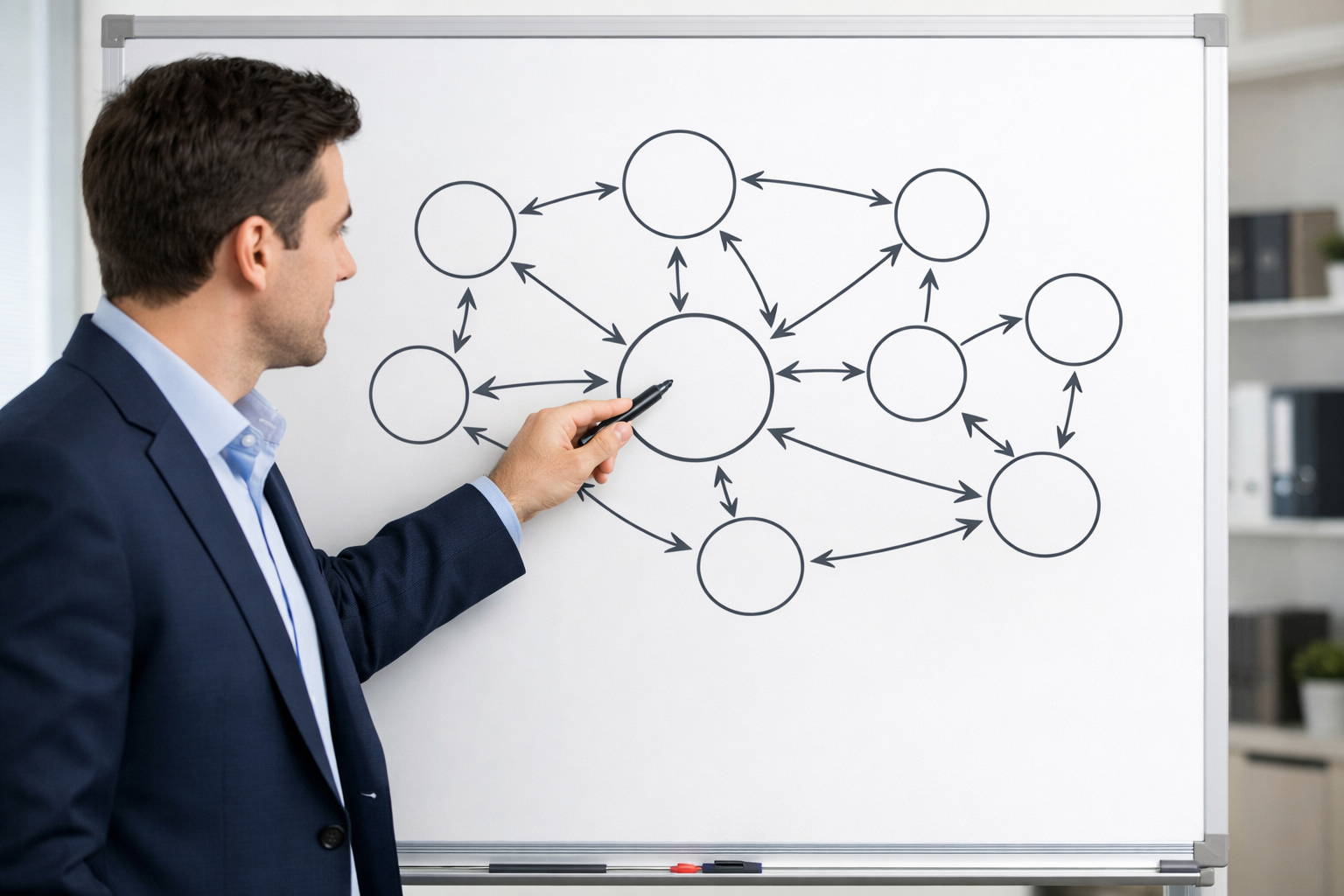
Semantic internal linking is an entity-based approach that connects content through contextual relationships rather than keyword matching. This means your internal links target related concepts, not identical phrases.
Traditional internal linking targets 2-3% link density while semantic linking achieves 0.8-1.2% with higher relevance. The difference? Entity extraction identifies topical authority connections that keyword matching misses.
Here’s the problem with exact-match anchor text strategies: they create artificial patterns. “Plumber Tel Aviv” linking to “plumber Tel Aviv” 47 times signals manipulation, not natural content flow. Google’s algorithm spots this pattern instantly.
Semantic internal linking identifies related entities across content through natural language processing. Your page about drain cleaning connects to emergency plumbing services because both relate to the core entity “residential plumbing solutions” – not because they share the same keyword.
Entity extraction analyzes your content’s semantic meaning. It finds connections between “water damage prevention” and “pipe maintenance” that keyword-based systems miss. The result? Internal links that strengthen topical authority instead of triggering over-optimization penalties.
Your local SEO Israel strategy benefits because semantic linking respects geographic entities. Pages about Jerusalem plumbing services naturally connect to Judea region coverage through geographic relationship modeling, not forced keyword insertion.
How Does Entity Extraction Create Better Internal Links?

Entity extraction analyzes content relationships through a systematic process that identifies linkable opportunities based on semantic relevance.
Content parsing identifies core entities. The system scans your existing content and extracts primary business entities, geographic locations, services, and related concepts that appear across multiple pages.
Confidence scoring evaluates relevance. Each potential link receives a confidence score based on entity relationship strength. Scores above 75% qualify for confidence-tiered insertion while lower scores get flagged for manual review.
Contextual matching finds natural insertion points. The algorithm identifies sentences where entity relationships create natural linking opportunities, avoiding forced or awkward placements that hurt readability.
Link density optimization balances authority flow. Semantic systems adjust link volume based on content length and topical depth rather than arbitrary percentage targets.
Entity extraction identifies 67% more relevant linking opportunities than manual keyword mapping. Manual keyword mapping focuses on exact phrases while entity extraction catches synonym relationships, related concepts, and implicit connections.
Confidence-tiered insertion prevents the biggest internal linking mistake: connecting unrelated content. Traditional methods link “car repair” to “oil change” because both mention “automotive.” Entity extraction recognizes that “transmission repair” and “brake service” share stronger semantic relationships.
The automation handles volume while preserving quality. You can process hundreds of pages for entity relationships in minutes instead of spending weeks manually mapping keyword connections that miss half the relevant opportunities.
Which Internal Linking Patterns Actually Improve Local SEO Rankings?
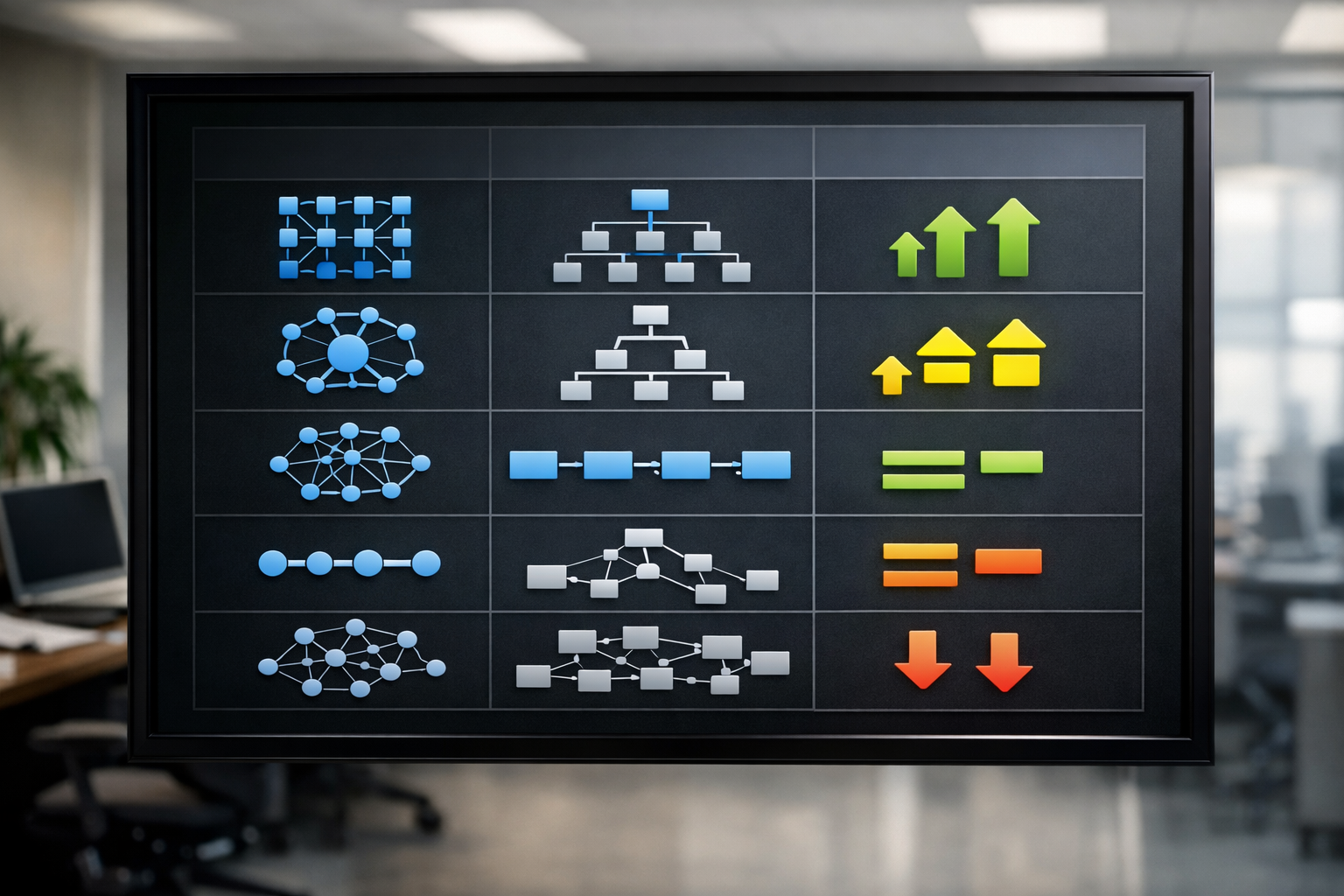
Different internal linking approaches produce measurably different results for local businesses. Here’s how they compare:
| Pattern Type | Silo Structure | Link Equity Flow | Local SEO Israel Impact |
|---|---|---|---|
| Service-to-Location | Tight clusters | Concentrated authority | High conversion paths |
| Location-to-Service | Geographic hubs | Distributed signals | Broad local visibility |
| Cross-Service | Topic bridges | Lateral authority | Related service discovery |
| Hub-Spoke | Central authority | Funneled equity | Maximum page authority |
| Mesh Network | Full connectivity | Equal distribution | Comprehensive coverage |
Local businesses see 23% ranking improvement when service pages link to location pages through entity relationships. This works because Google understands geographic entities – “plumber Haifa” naturally connects to “Haifa emergency plumbing” through location relationships.
Silo structure optimization for geographic entities requires understanding how Google processes location data. Your Jerusalem pages should connect to Tel Aviv content through regional relationships, not forced keyword bridges. Entity extraction identifies these geographic connections automatically.
Link equity flow distributes ranking signals most effectively through hub-spoke patterns for local businesses. Your main service pages act as hubs while location-specific content creates spokes. This concentrates authority on your most important conversion pages.
The mistake most local businesses make? They create separate silos for each city without connecting related services. A Herzliya plumbing page should link to water heater repair in nearby cities when entity relationships support the connection.
Service-to-location patterns work best for high-conversion queries where users search for specific services in specific areas. Location-to-service patterns capture broader “near me” searches where users start with location intent.
How Do You Build Content Hierarchy for Maximum Link Equity Flow?

Content hierarchy modeling structures topical authority through systematic organization that mirrors how Google understands entity relationships. Your pillar pages establish primary topics while cluster content supports specific subtopics through internal link architecture.
Start with your core business entities as pillar content. For local businesses, these typically include primary services, main service areas, and key customer problems. Each pillar page should target your highest-value commercial keywords while supporting cluster pages target long-tail variations.
Topical authority flows through internal links when your content hierarchy matches Google’s entity understanding. A local SEO Israel strategy needs geographic pillars (major cities) connected to service pillars (core offerings) through entity-based link relationships.
Content strategy requires mapping customer journey stages to your hierarchy. Awareness-stage content at the top of your hierarchy links down to consideration-stage service pages, which connect to conversion-focused location pages. This creates natural user flow while distributing link equity.
Sites with proper content hierarchy see 31% more internal link equity reach their money pages. The reason? Well-structured hierarchies create clear authority paths where link juice flows from broad topics to specific conversion pages through logical entity relationships.
Hierarchy modeling prevents the biggest content strategy mistake: treating all pages as equal. Your “About Us” page shouldn’t receive the same internal link treatment as your primary service pages. Entity extraction identifies which pages deserve the most authority based on business relevance and user intent.
The practical approach: create 3-5 pillar pages for your core topics, then build 5-10 cluster pages supporting each pillar. Connect clusters to their parent pillar and related clusters through semantic relationships, not keyword matching.
What Anchor Text Diversity Strategy Works for Local Business Internal Links?

Anchor text diversity prevents over-optimization penalties through strategic distribution that balances relevance with naturalness.
Exact match anchors target primary keywords directly. Use these for your most important money pages but limit them to 35% of total internal links to avoid triggering Google’s over-optimization filters.
Partial match anchors include your keyword plus supporting words. “Professional plumbers in Jerusalem” instead of just “Jerusalem plumbers” creates more natural link patterns while maintaining keyword relevance.
Branded anchors use your business name or variations. These account for 25% of your anchor text distribution and help establish brand entity recognition across your content.
Generic anchors like “click here” or “learn more” provide natural linking balance. Google expects some generic anchors in normal content flow, so 10-15% generic anchors prevent artificial patterns.
LSI anchors use semantically related terms. “Drainage specialists” linking to your main plumbing page creates entity relationships without exact keyword repetition.
Optimal anchor text distribution uses 35% exact match, 40% partial match, 25% branded for local business internal links. This ratio balances keyword optimization with natural language patterns that avoid penalties.
Proprietary SEO Infrastructure systems generate entity-based anchor text automatically. Instead of manually writing anchor text variations, the system identifies semantically related phrases that maintain relevance while preventing over-optimization.
Entity-based anchor text generation finds natural language patterns in your existing content. If you already write “emergency drain cleaning” and “urgent pipe repairs,” the system uses these variations as anchor text instead of forcing identical phrases.
The biggest mistake? Using identical anchor text for internal links to the same page. “Tel Aviv plumber” used 23 times creates obvious manipulation patterns. Vary your anchors through entity relationships: “Tel Aviv plumbing services,” “plumbers in Tel Aviv area,” “Tel Aviv drain specialists.”
Frequently Asked Questions
Does semantic internal linking work differently for Hebrew content?
Semantic internal linking works with any language because it identifies entities rather than exact keyword matches. Hebrew content benefits from entity extraction since it captures relationships regardless of RTL text direction or language structure. The system recognizes that רמת גן (Ramat Gan) connects to גן ציבורי (public garden) through geographic entity relationships, not Hebrew keyword matching.
How many internal links should each service page have?
Service pages perform best with 8-12 contextual internal links based on entity relationships. The exact number depends on content length and topical relevance rather than arbitrary link quotas. A comprehensive plumbing service page naturally connects to drain cleaning, pipe repair, water heater installation, and emergency services through semantic relationships.
Can you automate semantic internal linking without hurting rankings?
Yes, when automation uses confidence scoring above 75% for entity relevance. Manual review of automated suggestions prevents irrelevant links that could dilute topical authority. The key is setting conservative thresholds – better to miss some linking opportunities than create connections that confuse Google about your content topics.