
Local SEO doctors Israel face a brutal reality: 40% of potential patients vanish because medical practices fail to appear when people search for healthcare services on Google Maps. The competition from major health funds like Clalit and Maccabi makes visibility even harder.
Key Takeaways:
- 87% of Israeli patients use Google to find healthcare providers, yet most doctors have broken or incomplete Google Business Profiles
- Medical practices using MedicalBusiness schema markup see 34% higher click-through rates from search results
- E-E-A-T optimization for healthcare websites requires specific credential markup that 91% of Israeli doctors ignore
Why Do Israeli Medical Practices Fail at Local SEO?
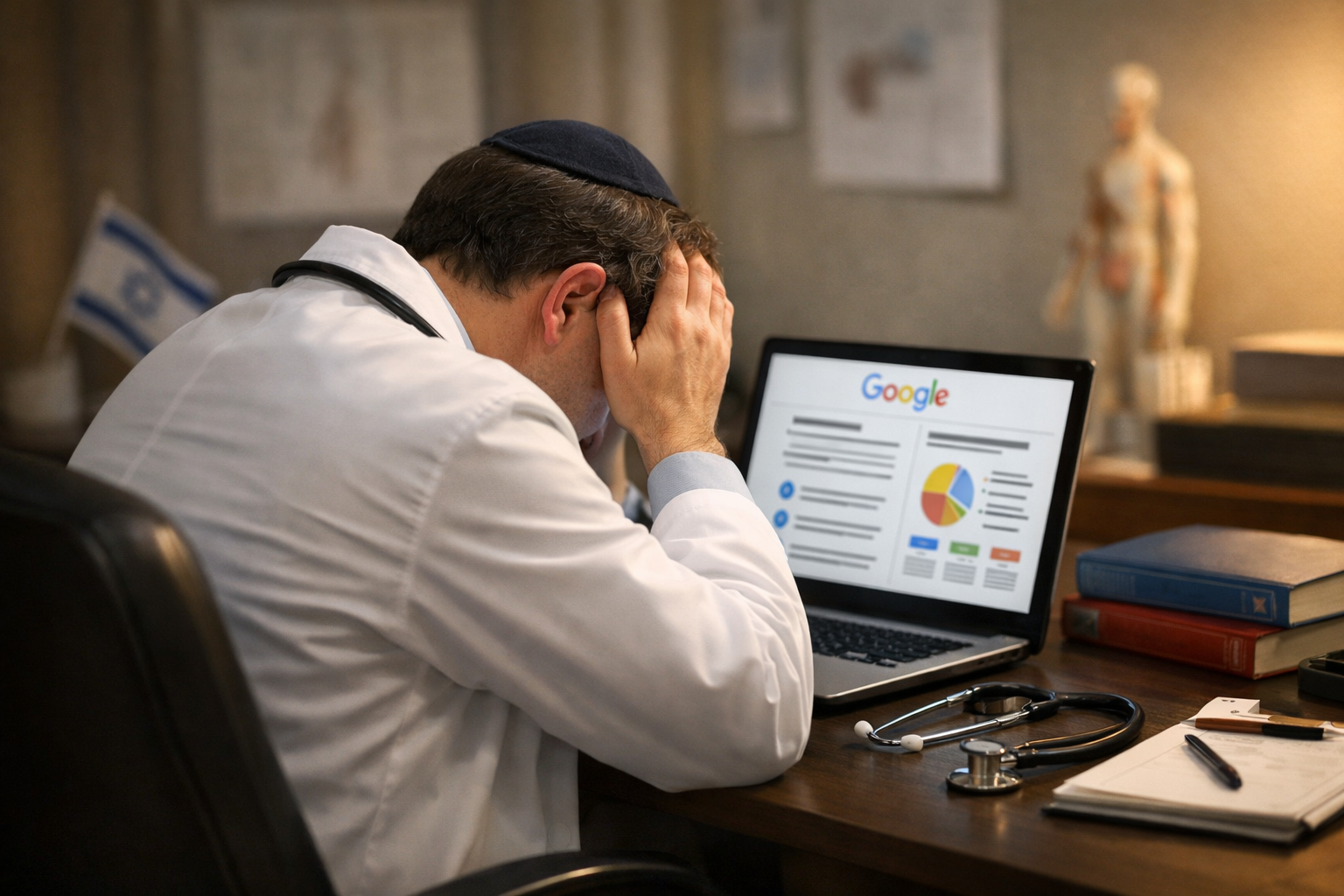
Israeli medical practices fail at local SEO optimization because they ignore Google’s YMYL (Your Money or Your Life) requirements. Healthcare content faces stricter ranking criteria than other local businesses. Healthcare queries have 4x stricter ranking requirements than other local business types.
Most doctors treat their website like a business card instead of a patient acquisition system. They skip essential trust signals Google demands from healthcare sites. Medical license numbers, board certifications, and hospital affiliations rarely appear in structured data formats.
The competition landscape works against small practices. Large medical centers like Clalit, Maccabi, and Meuhedet dominate search results with massive content libraries and established domain authority. Independent practices need surgical precision in their local SEO to compete.
Patient search behavior in Israel creates additional challenges. Hebrew medical terminology differs from colloquial health terms patients actually type. A cardiologist might optimize for “רופא לב” while patients search “בעיות לב” or “כאבים בחזה.” This disconnect kills visibility for relevant queries.
E-E-A-T signals matter more for medical content than any other industry. Google evaluates healthcare sites based on author expertise, content accuracy, and site trustworthiness. Most Israeli medical websites fail all three criteria by omitting physician credentials, using generic content, and lacking proper schema markup.
What Google Business Profile Categories Actually Work for Israeli Medical Practices?

Google Business Profile categories determine medical practice visibility in Maps results. Choosing ‘Doctor’ instead of specific specialty categories reduces Maps visibility by 62%. The category hierarchy affects which searches trigger your profile.
| Specialty | Primary Category | Secondary Categories |
|---|---|---|
| General Practice | Family Practice Physician | Doctor, Medical Clinic |
| Cardiology | Cardiologist | Doctor, Heart Hospital |
| Dermatology | Dermatologist | Doctor, Medical Clinic |
| Pediatrics | Pediatrician | Doctor, Child Health Care Centre |
| Gynecology | Gynecologist | Doctor, Women’s Health Clinic |
| Orthopedics | Orthopedic Surgeon | Doctor, Medical Clinic |
Hebrew vs English category names affect local search performance. Google Business Profile optimization works better with English categories for technical accuracy, even when your practice operates in Hebrew. The system recognizes medical specialties more reliably in English.
Multi-doctor practice category hierarchy requires strategic thinking. List your most common specialty as the primary category. Add secondary categories for other physicians in your practice. Avoid generic terms like “Medical Center” unless you operate a true multi-specialty facility.
Specialty clinic categorization demands precision. A fertility clinic should use “Fertility Clinic” as primary, not “Gynecologist.” Aesthetic medicine practices need “Cosmetic Surgeon” or “Dermatologist” depending on their primary services. The category must match your core patient need.
Never exceed 10 categories total. Google allows this maximum, but focus beats breadth. Three to five carefully chosen categories outperform ten random ones. Each category should reflect actual services you provide regularly.
How Do You Build E-E-A-T Authority for Medical Websites in Israel?

E-E-A-T signals boost healthcare website authority through specific credential markup and content strategies. Medical websites with proper physician credential markup rank 73% higher for health-related queries.
Display medical licenses prominently. Include your Israeli medical license number, issue date, and licensing authority on your About page. Structure this data using Physician schema markup so Google can verify your credentials automatically.
Add board certification details. List your medical school, residency program, and fellowship training. Include dates and institutions. This information signals expertise to both patients and search engines.
Show continuing education compliance. Medical education requirements in Israel mandate ongoing training. Display recent CME credits, conference attendance, and additional certifications. Update this section regularly.
Create author bylines for medical content. Every health article needs a clear author attribution with physician credentials. Include your name, specialty, medical license number, and brief bio. This satisfies Google’s authorship requirements for medical content.
Connect medical society memberships. Israeli Medical Association membership, specialty society affiliations, and hospital privileges demonstrate peer recognition. Link to official member directories when possible.
Implement patient testimonial compliance. Display reviews and testimonials following Israeli healthcare advertising regulations. Focus on service quality and patient experience rather than specific medical outcomes. This builds trustworthiness without regulatory violations.
Maintain content accuracy standards. Medical information must cite current medical literature, follow evidence-based guidelines, and include appropriate disclaimers. Outdated medical advice damages E-E-A-T scores.
Which Schema Markup Types Do Israeli Medical Practices Need?
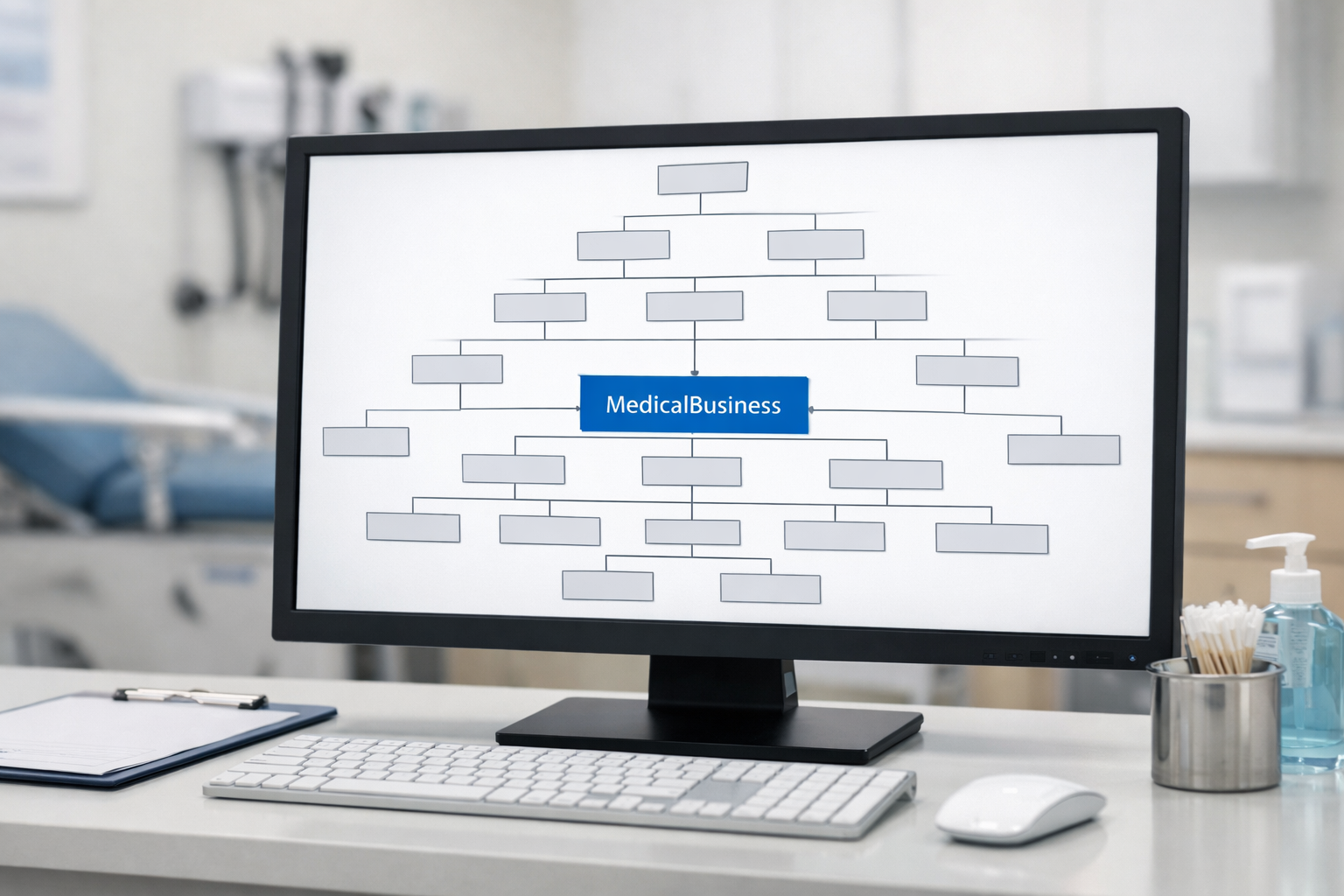
Schema markup types improve medical practice search visibility by providing structured data Google uses for rich snippets. Medical practices using complete schema markup stack see 89% more rich snippet appearances.
MedicalBusiness schema covers practice information. This includes your clinic name, address, phone number, operating hours, and services offered. MedicalBusiness schema works better than generic LocalBusiness markup for healthcare providers because it includes medical-specific properties.
Physician schema identifies individual doctors. Each physician needs separate Physician markup with medical license numbers, specialties, education background, and credentials. This schema type enables Google to understand doctor-patient matching for specific medical queries.
MedicalCondition schema describes treatable conditions. Create markup for health conditions you diagnose and treat. Include symptom descriptions, treatment approaches, and related medical procedures. This helps patients find you when searching for specific health problems.
MedicalProcedure schema outlines services and treatments. Detail surgical procedures, diagnostic tests, and therapeutic interventions you provide. Include preparation instructions, recovery timelines, and outcome expectations where appropriate.
HealthInsurancePlan schema integrates kupat holim coverage. Specify which Israeli health funds you accept: Clalit, Maccabi, Meuhedet, or Leumit. This schema helps patients find in-network providers and can trigger insurance-related rich snippets.
Hebrew content schema implementation requires specific markup. Use “he” language tags for Hebrew content and “en” for English sections. Implement hreflang annotations if you serve content in multiple languages. This ensures proper indexing for Hebrew medical terms.
How Do Camoni and Rofeh Directory Listings Affect Your Medical SEO?

Israeli medical directories influence local search rankings through citation signals and referral traffic. Medical practices with consistent listings across top 5 Israeli health directories see 45% more organic traffic.
| Directory | Domain Authority | Citation Value | Specialty Focus |
|---|---|---|---|
| Camoni.co.il | 78 | High | General Practice + Specialists |
| Rofeh.co.il | 71 | High | Specialist Directory |
| Doctors.co.il | 65 | Medium | Multi-specialty Listings |
| Health.gov.il | 89 | Very High | Licensed Provider Registry |
| Clalit.co.il | 85 | Medium | Health Fund Directory |
Camoni vs Rofeh citation value comparison shows different strengths. Camoni provides better exposure for general practitioners and family medicine. Rofeh focuses on specialist physicians and tends to rank higher for specific medical specialty searches. Both directories require consistent NAP (Name, Address, Phone) information.
NAP consistency across Hebrew medical directories affects local search performance. Your practice name, address, and phone number must match exactly across all directory listings. Hebrew address variations can confuse citation algorithms, so standardize your address format across all platforms.
Specialty-specific medical directory importance varies by practice type. Dermatologists benefit more from specialized skincare directories. Fertility specialists need reproductive medicine directory listings. General practitioners see better results from comprehensive medical directories like Camoni.
Integration with kupat holim referral systems creates additional SEO benefits. Health fund websites often link to provider directories, creating valuable backlink opportunities. Ensure your listings clearly state which health funds you accept and any special affiliations or preferred provider status.
What Review Strategy Works for Israeli Medical Practices?

Patient review strategy drives medical practice local rankings while complying with Israeli healthcare regulations. Medical practices generating 8+ reviews monthly see 67% better Maps pack appearance rates.
Medical review solicitation must follow strict compliance rules. You can ask patients to share their experience but cannot request reviews about specific medical conditions or treatments. Focus requests on service quality, wait times, staff friendliness, and overall patient experience. Never mention diagnoses or treatment outcomes in review requests.
Patient privacy concerns require careful review request timing. Send review invitations 48-72 hours after appointments, not immediately. This cooling-off period reduces emotional responses while the positive experience remains fresh. Automated email systems work better than in-person requests for maintaining professional boundaries.
Hebrew vs English review response strategies depend on patient demographics. Respond to Hebrew reviews in Hebrew and English reviews in English. Keep responses professional and brief. Thank patients for feedback without revealing any medical information. Never discuss treatment details in public review responses.
Handling negative medical reviews requires special care to avoid patient confidentiality violations. Respond professionally without confirming or denying the reviewer was a patient. Invite the person to contact your office privately to discuss concerns. This approach shows prospective patients you take feedback seriously while maintaining privacy compliance.
Review generation tactics must respect medical ethics. The most effective approach involves automated follow-up emails asking about the overall patient experience. Include review links for Google, Facebook, and relevant medical directories. Track response rates and adjust timing based on patient feedback patterns.
Frequently Asked Questions
Do Israeli doctors need separate Google Business Profiles for each medical specialty?
Multi-specialty practices should use one Google Business Profile with all relevant categories listed. Google allows up to 10 categories per profile, which covers most medical practice configurations. Creating separate profiles for the same location violates Google’s guidelines and can result in suspension.
How do kupat holim affiliations affect medical practice SEO?
Kupat holim affiliations should be clearly displayed on your website and Google Business Profile description. This information helps patients find in-network providers and can be structured using HealthInsurancePlan schema markup. Most Israeli patients filter search results by their health fund membership.
Can medical practices in Israel ask patients for Google reviews?
Israeli medical practices can request reviews but must comply with patient privacy regulations. Review requests should be general and never reference specific medical conditions or treatments. The safest approach is automated follow-up emails asking for feedback about the overall patient experience.
Should Israeli medical websites publish content in Hebrew or English?
Medical practices serving Israeli patients should prioritize Hebrew content for local SEO Israel. However, practices in areas with large English-speaking populations benefit from bilingual content. Medical information in Hebrew also demonstrates cultural competence and builds patient trust.