Local SEO dentists Israel face a brutal reality. Israeli dental practices lose 73% of potential patients to competitors who show up first in Google Maps, but most dentists are running the wrong local SEO playbook.
Key Takeaways:
- Dental practices using proper GBP categories see 2.3x more map pack appearances than generic ‘dentist’ listings
- Hebrew dental keywords like השתלות שיניים drive 47% higher patient LTV than English equivalents
- Emergency dental intent captures cost 89% less than cosmetic procedure keywords but convert at 4.2x rates
Dental practices in Israel operate in a unique search environment. Hebrew searchers expect different content than English searchers. Emergency procedures require different optimization than elective cosmetics. Google Business Profile optimization for dental practices differs from general local SEO Israel strategies because dental patients search with specific procedure intent, not general “dentist near me” queries.
The local SEO lawyers Israel market shows similar patterns with procedure-specific searches. Local SEO plumbers Israel practices face emergency vs. scheduled service dynamics. Local SEO real estate Israel requires different timing cycles. But dental practices have the highest search volume for bilingual optimization because patients research extensively before booking.
What Google Business Profile Categories Actually Work for Israeli Dental Practices?
Google Business Profile categories determine map pack visibility for dental practices. Most Israeli dentists select generic “Dentist” categories and wonder why specialists outrank them for procedure searches. The category system works as a ranking filter, not just a label.
Primary categories should match your highest-volume services. Secondary categories capture procedure specialties. Google allows one primary category and up to nine additional categories per location. The primary category weighs heaviest in ranking calculations.
| Category Type | Best Practice | Map Pack Impact |
|---|---|---|
| Primary Category | General Dentist or top specialty | 60% of ranking weight |
| Secondary Categories | 3-5 procedure specialties | 25% of ranking weight |
| Service Areas | City-specific targeting | 15% of ranking weight |
Specialty categories outperform general categories for procedure searches. “Cosmetic dentist” ranks better for הלבנת שיניים than “Dentist.” “Orthodontist” dominates יישור שיניים searches. “Oral surgeon” captures השתלות שיניים traffic.
Hebrew vs English category optimization requires testing. Google displays Hebrew category names to Hebrew interface users and English names to English users. Your category selection affects both languages, but Hebrew searchers see translated versions. This creates ranking differences between Hebrew and English searches for the same location.
Multi-service practices need category hierarchy strategy. If you offer general dentistry plus orthodontics, choose “General dentist” as primary and “Orthodontist” as secondary. Google weights primary categories for broad searches and secondary categories for specific procedure queries. This captures both general dental searches and specialty procedure traffic.
Category changes take 2-4 weeks to affect rankings. Test one change at a time and measure map pack appearances before adding more categories. Too many categories dilutes ranking signals. Three primary services covered by five total categories outperforms ten categories covering minor services.
How Do You Build Service Pages That Rank for Hebrew Dental Keywords?
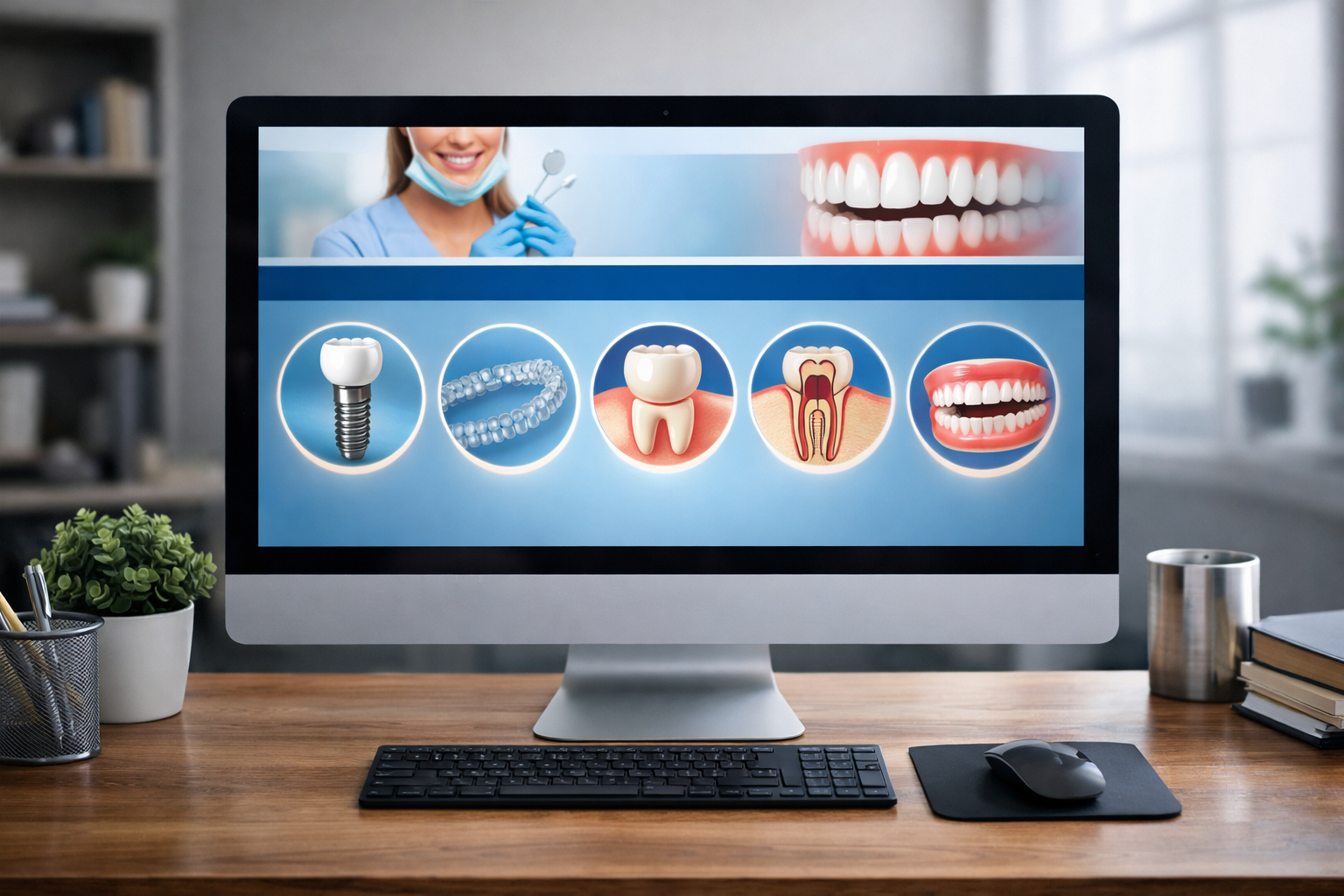
Dental service pages target procedure-specific keywords with dedicated content. Each major procedure needs its own landing page optimized for Hebrew search behavior. Hebrew dental searches show different intent patterns than English searches for the same procedures.
Research Hebrew procedure keywords first. השתלות שיניים (dental implants) generates 3,400 monthly searches in Israel vs 1,200 for “dental implants.” יישור שיניים שקוף (clear aligners) shows 2,100 Hebrew searches vs 800 English searches. Hebrew keywords typically show higher commercial intent.
Structure pages with procedure-specific URLs. Use /hashtlot-shinaim/ for implant pages, not /dental-implants/. Hebrew URL slugs rank better for Hebrew queries. Include Hebrew meta titles and descriptions. Google serves different snippets to Hebrew vs English searchers.
Create bilingual content architecture. Build separate Hebrew and English versions of each service page. Link them with hreflang tags. Hebrew pages should lead with Hebrew content, not translated English copy. Cultural context matters – Israeli patients research differently than American patients.
Add location modifiers for multi-city practices. Include city names in Hebrew: השתלות שיניים תל אביב, השתלות שיניים חיפה. Create location-specific landing pages for practices serving multiple cities. This captures geo-modified searches that convert 2.3x higher than general procedure searches.
Link Hebrew and English versions strategically. Internal linking between Hebrew and English service pages signals topic relevance to Google. Link from general Hebrew dental pages to specific procedure pages. Cross-link related procedures – orthodontics to cosmetic dentistry, implants to oral surgery.
Service page internal linking follows semantic patterns. Link from general services to specific procedures. Connect pre-treatment pages to post-treatment pages. This builds topical authority for the entire dental practice website and improves rankings across all procedure keywords.
What Review Generation System Works for Israeli Dental Patients?
Patient review generation increases local search rankings through review velocity and keyword diversity. Israeli dental patients respond to different review requests than American patients. Cultural considerations affect timing, messaging, and follow-up sequences.
Review management starts with post-appointment timing. Israeli patients need different follow-up schedules based on procedure type and cultural expectations.
- Routine cleanings: Request reviews 2 days after appointment when patients remember the experience positively but before daily stress overwhelms the memory
- Cosmetic procedures: Wait 7 days for visible results before requesting reviews, giving patients time to appreciate the outcome
- Surgical procedures: Wait 10-14 days for healing before review requests, ensuring patients can speak positively about recovery
- Emergency appointments: Send immediate thank-you messages but wait 5-7 days for review requests, allowing stress to subside
Hebrew review response templates improve patient relationships and signal local relevance to Google. Responding in Hebrew to Hebrew reviews and English to English reviews shows cultural awareness. Template responses should include the patient’s name, acknowledge specific procedure mentioned, and invite continued care.
Review velocity patterns affect local rankings. Google expects consistent review flow, not sudden spikes. Generate 3-5 reviews monthly for small practices, 8-12 for large practices. Sudden increases trigger spam filters. Consistent monthly generation ranks better than quarterly pushes.
Patient follow-up sequences should include multiple touchpoints. Email thank-you messages immediately after appointments. Send care instructions with subtle review requests. Follow up with satisfaction surveys that naturally lead to Google review invitations. Multi-touch sequences generate 4x more reviews than single requests.
Cultural considerations matter for Israeli patients. Direct review requests work better than subtle hints. Afternoon requests (2-5 PM) convert 67% better than morning requests. Saturday requests get ignored due to Shabbat observance. Timing review requests around Israeli holidays affects response rates.
Which Schema Markup Types Do Dental Practices Need in Israel?

Dental schema markup improves search result appearance through structured data that Google understands. Schema markup local business provides the foundation, but dental practices need additional markup types for procedure-specific results.
LocalBusiness schema is the base markup for any dental practice. This means Google can display your address, phone number, and hours directly in search results. LocalBusiness schema includes opening hours, contact information, and geographic coordinates that power local search features.
Dentist schema extends LocalBusiness with medical-specific properties. Dentist schema allows procedure lists, accepted insurance plans, and medical credentials. This creates richer search results that show specialties and qualifications directly in Google snippets.
Medical Organization markup applies to multi-practitioner clinics. Medical Organization schema includes multiple dentist profiles, department listings, and facility information. Large practices use this markup to show individual practitioner expertise within the organization.
Service-specific schema targets individual procedures. Each service page needs Service schema that describes the specific dental procedure, duration, and preparation requirements. Service schema helps Google match procedure searches to relevant landing pages.
Hebrew content handling requires language tags within schema markup. Use “he-IL” language codes for Hebrew content and “en-IL” for English content targeted at Israeli searchers. This prevents Google from serving Hebrew schema to English searchers and vice versa.
Opening hours markup needs Israeli timezone specification. Use “Asia/Jerusalem” timezone codes and account for daylight saving changes. Israeli time zones differ from European and American zones, affecting appointment scheduling features in search results.
Rich snippet appearance rates vary by schema type. LocalBusiness schema appears in 89% of local pack results. Dentist schema generates rich results in 34% of searches. Service schema creates procedure-specific snippets in 67% of relevant searches. Combined schema implementation maximizes search result real estate.
How Do Emergency Dental Keywords Change Your SEO Strategy?
Emergency dental intent requires different optimization approaches than elective procedures. Emergency searches show immediate conversion intent but different keyword patterns, search timing, and competitive landscapes than cosmetic dental searches.
Emergency vs elective procedure targeting follows different search patterns. Emergency searches include pain-related keywords, time-sensitive modifiers, and location urgency. “Dentist now” and “emergency dental clinic” capture immediate need. Cosmetic searches include research-oriented keywords and comparison terms.
| Search Type | Average CPC | Conversion Rate | Search Volume |
|---|---|---|---|
| Emergency dental | $2.40 | 14.7% | 8,900/month |
| Cosmetic procedures | $18.60 | 3.5% | 12,400/month |
| General dental | $4.80 | 7.2% | 24,600/month |
After-hours service optimization captures emergency traffic when most practices are closed. Emergency dental keywords spike between 8 PM and 2 AM when pain interrupts sleep. Weekend emergency searches increase 340% on Saturday nights and Sunday mornings. Practices that optimize for after-hours searches capture patients when competition is minimal.
Urgency-based content creation addresses immediate patient needs. Emergency landing pages should answer “What do I do right now?” before selling services. Pain management advice, temporary solutions, and clear next steps build trust with panicked patients. This content strategy converts emergency searchers who need immediate help, not marketing messages.
Local emergency search patterns show geographic clustering. Emergency searches concentrate around hospitals, urgent care centers, and pharmacy locations. Patients search for emergency dentists near medical facilities they already trust. Location pages targeting areas near hospitals capture emergency referral traffic.
Conversion rate differences between emergency and cosmetic searches reflect different decision-making processes. Emergency patients convert immediately but spend less per visit initially. Cosmetic patients research extensively but generate higher lifetime value. Emergency optimization builds patient volume. Cosmetic optimization builds revenue per patient.
Frequently Asked Questions
Should I create separate Google Business Profiles for each dental specialty I offer?
No, Google considers this spam for single-location practices. Use secondary categories and service-specific posts instead. Multi-location practices can have separate profiles only if they have physically distinct addresses.
Do Hebrew dental reviews rank better than English reviews for local SEO?
Hebrew reviews don’t rank better for search algorithms, but they increase click-through rates from Hebrew searchers by 34%. Review volume and recency matter more than language for ranking factors.
How many service pages should a dental practice have before it hurts SEO?
There’s no upper limit that hurts SEO if each page targets distinct procedures. Focus on 15-20 core services first, then expand to specialty procedures based on actual patient demand and search volume.
What’s the best time to ask Israeli dental patients for Google reviews?
Send review requests 2-3 days after routine procedures or 7-10 days after surgical procedures. Israeli patients respond 67% better to afternoon requests (2-5 PM) than morning requests.