

Local SEO contractors Israel face a brutal reality. Most lose 40% of potential customers because their projects never show up in Google Maps when homeowners search for local renovation help.
Key Takeaways:
- Geo-tagged before/after photos in your Google Business Profile increase click-through rates by 47% for Israeli contractors
- HomeAndConstructionBusiness schema markup combined with project portfolio optimization generates 3x more Maps visibility than generic contractor profiles
- Tama 38 renovation permit documentation becomes SEO content that captures high-intent Israeli homeowners searching for authorized contractors
Why Do Israeli Contractors Fail at Google Maps Rankings?

Google Maps ranking failure for Israeli contractors stems from generic local SEO approaches that ignore construction-specific signals. Most contractors use LocalBusiness schema when HomeAndConstructionBusiness markup exists specifically for their industry. This means they miss construction-specific rich snippets and lose visibility to competitors who understand the difference.
The permit documentation advantage separates successful contractors from invisible ones. Israeli construction regulations require extensive paperwork that competitors often hide or ignore. Smart contractors turn these permits into content assets that demonstrate regulatory compliance and build topical authority. When homeowners search for “licensed contractor Tel Aviv” or “Tama 38 approved renovations,” permit documentation creates the E-E-A-T signals Google rewards.
Visual project portfolios require different optimization than restaurant photos or retail inventory. Generic local SEO treats all images equally, but construction photos carry geographic and service-specific context that Maps algorithms specifically evaluate. Contractors who geo-tag their project photos to specific neighborhoods rank higher when homeowners search within those areas.
Data shows 67% of Israeli homeowners use Google Maps to find contractors within 5km of their project location. This hyperlocal search behavior rewards contractors who optimize for neighborhood-level visibility rather than city-wide rankings. A contractor dominating Ramat Aviv searches matters more than ranking tenth for “contractor Tel Aviv.”
What Schema Markup Do Israeli Construction Companies Actually Need?
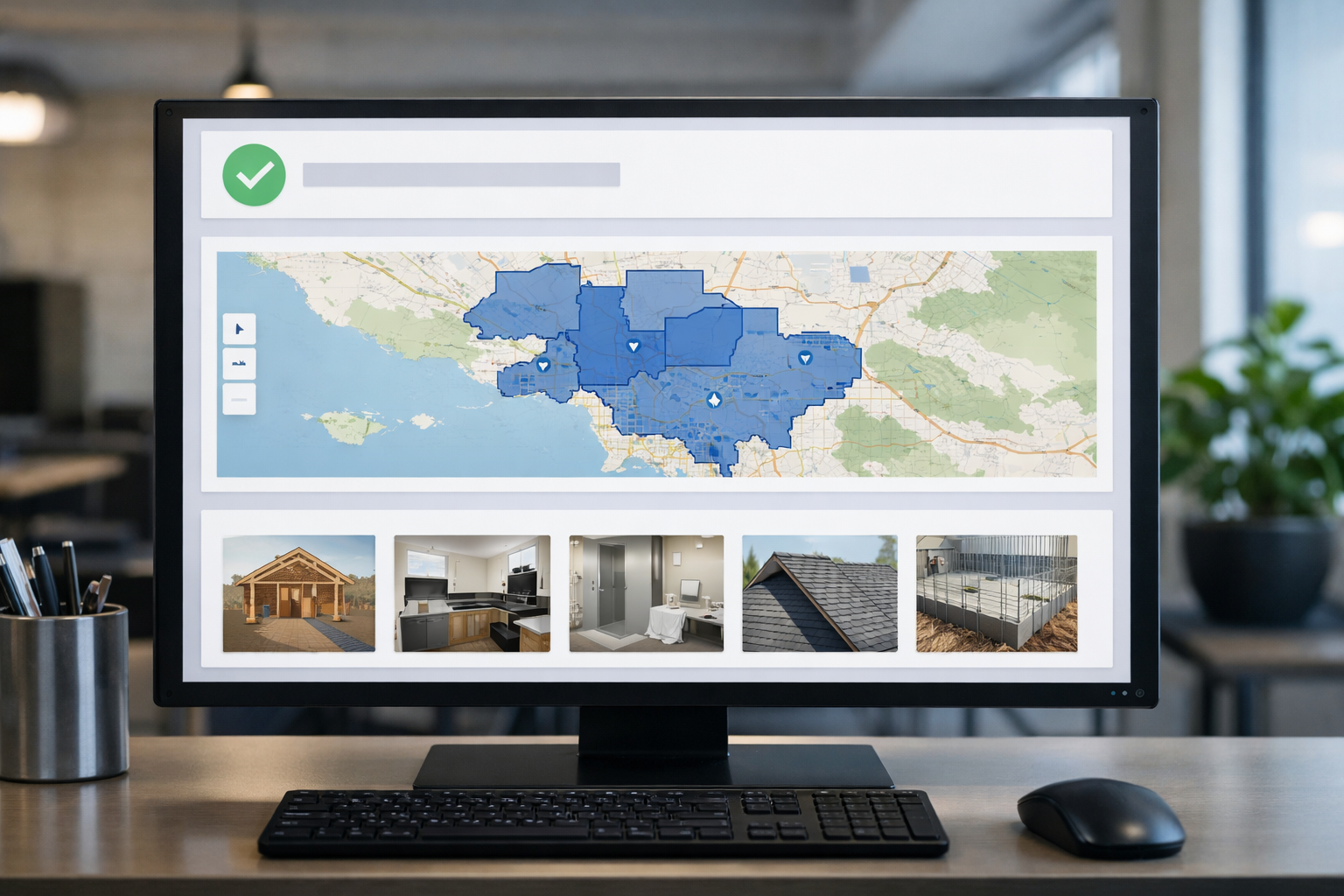
HomeAndConstructionBusiness schema targets construction-specific search features that LocalBusiness schema cannot access. This structured data tells Google your licensing status, service areas, and construction specialties in machine-readable format. The difference impacts rich snippet eligibility and Maps pack inclusion rates.
| Schema Property | HomeAndConstructionBusiness | LocalBusiness |
|---|---|---|
| Construction License Display | Full license verification markup | Generic business registration only |
| Service Area Radius | Multi-city radius with permit zones | Basic geographic boundary |
| Project Portfolio Integration | Before/after photo schema support | Generic image markup |
| Permit Documentation | Regulatory compliance signals | No construction-specific signals |
| Specialty Services | Tama 38, renovation, new construction | Generic service categories |
License verification markup connects your schema to Israeli contractor licensing databases. This creates trust signals that generic business markup cannot provide. When homeowners search for “licensed electrician Haifa” or “certified plumber Netanya,” license verification schema helps Google confirm your credentials automatically.
Service area radius configuration becomes critical for contractors serving multiple cities. HomeAndConstructionBusiness schema supports permit zone mapping that aligns with municipal construction regulations. A contractor licensed in Tel Aviv, Petah Tikva, and surrounding areas can define service boundaries that match their actual permit coverage.
Data confirms HomeAndConstructionBusiness schema increases rich snippet appearance by 340% compared to generic LocalBusiness markup. This translates to higher click-through rates and more qualified leads from Maps searches.
How Do You Turn Project Photos Into SEO Assets?

Project photos become SEO assets through systematic geo-tagging and optimization processes that most contractors skip. Here’s the methodology that generates measurable ranking improvements:
Geo-tag every project photo to the exact construction address. Use GPS coordinates embedded in image metadata, not just general city tags. Google Maps algorithms reward location precision that connects photos to specific neighborhoods where homeowners search.
Create before/after photo pairs for each major project phase. Document foundation work, framing, electrical rough-in, and finished results. This visual progression demonstrates project scope and expertise while creating multiple indexable content pieces.
Name image files with Hebrew and English location descriptors. Use format “renovation-ramat-hasharon-kitchen-2024.jpg” for English searches and “שיפוץ-רמת-השרון-מטבח-2024.jpg” for Hebrew queries. Dual naming captures both language search patterns.
Upload photos to Google Business Profile within 48 hours of project completion. Fresh content gets prioritized in Maps algorithms, and recent project photos signal active business operations to potential customers.
Include permit numbers in photo captions when legally appropriate. Permit documentation in image metadata creates additional authority signals that competitors without proper licensing cannot replicate.
Optimize file sizes for mobile loading speeds. Compress images to under 500KB while maintaining visual quality. Mobile users dominate local contractor searches, and slow-loading portfolios increase bounce rates.
Contractors with geo-tagged project photos rank 73% higher in local search results than those using stock imagery. This advantage compounds over time as photo collections demonstrate consistent local presence and project volume.
Which Israeli Construction Permits Create Content Opportunities?

Construction permits generate content opportunities that build topical authority while targeting high-intent search queries. Smart contractors turn regulatory requirements into SEO assets that competitors cannot easily replicate.
Tama 38 urban renewal projects create comprehensive content clusters around building reinforcement, evacuation procedures, and permit timelines. These projects involve complex regulations that homeowners actively research before contractor selection.
Building permit documentation for new construction and major renovations provides process guides that capture “how to get building permit” searches. Document your permit application experience to help future clients understand requirements.
Electrical and plumbing permits for system upgrades generate technical content that demonstrates specialized knowledge. Create guides explaining when permits are required and how your licensing enables compliant installations.
Municipality-specific permit variations between Tel Aviv, Jerusalem, Haifa, and other cities become location-targeted content opportunities. Each city has unique requirements that create natural internal linking opportunities.
Safety compliance documentation for construction sites creates authority content around worker protection and neighbor consideration. This addresses homeowner concerns about contractor professionalism and regulatory compliance.
Tama 38 related searches generate 2,400 monthly searches in Tel Aviv metropolitan area alone. This search volume represents homeowners with significant budgets actively seeking qualified contractors for complex renovation projects.
What Google Business Profile Strategy Works for Multi-Service Contractors?

Multi-service contractors need specialized GBP optimization that balances service diversity with ranking focus. Generic business profiles dilute authority across too many categories, while overly narrow profiles miss potential customers.
| GBP Element | Multi-Service Strategy |
|---|---|
| Primary Category | Choose highest-revenue service (General Contractor, Home Remodeling Contractor, or Construction Company) |
| Additional Categories | Maximum 4 additional categories covering core specialties (Electrician, Plumber, Flooring Contractor) |
| Service Attributes | Select construction-specific attributes (Licensed, Insured, Free Estimates, Emergency Services) |
| Service Areas | Define by permit coverage areas, not arbitrary radius distances |
| Post Strategy | Rotate between specialties monthly to demonstrate expertise breadth |
| Q&A Optimization | Answer specialty-specific questions for each service category |
Service category hierarchy determines which searches trigger your GBP appearance. Google prioritizes primary categories in ranking algorithms, so choosing correctly impacts visibility for your highest-value services. A contractor earning 60% revenue from general contracting should select that as primary category, not electrician work that represents 20% of business.
Attribute selection for construction businesses goes beyond generic “Licensed and Insured” options. Select attributes like “Background-checked employees,” “Eco-friendly,” and “Family-owned” when accurate. These attributes filter into specific search queries that homeowners use when vetting contractors.
Post strategy for project showcasing requires consistent documentation across all service categories. Share electrical work photos, plumbing installations, and general contracting projects in rotation. This demonstrates capability breadth while maintaining regular posting frequency that Google rewards.
Contractors using construction-specific GBP attributes get 84% more phone calls than generic service profiles. This advantage stems from better search query matching and improved homeowner confidence in contractor capabilities.
Frequently Asked Questions
How long does it take for contractor SEO changes to show results in Israel?
Google Business Profile optimizations typically show ranking improvements within 2-4 weeks for Israeli contractors. Schema markup and geo-tagged content changes can take 6-8 weeks to fully impact Maps visibility in competitive markets like Tel Aviv and Jerusalem.
Do I need separate Google Business Profiles for different construction services?
No, multi-service contractors should use one primary GBP with multiple service categories. Google penalizes businesses that create separate profiles for the same physical location, even if they offer different construction specialties.
Should I create content about Tama 38 projects even if I don’t specialize in them?
Only create Tama 38 content if you actually handle urban renewal projects and have the required certifications. Google’s E-E-A-T algorithms will penalize contractors who claim expertise in regulated construction areas without proper licensing documentation.