
Internal linking local business success stories don’t get more dramatic than this. A Tel Aviv restaurant went from 200 monthly organic visitors to 600 in four months using nothing but strategic internal links.
Key Takeaways:
- Internal linking can triple local organic traffic within 4-6 months when structured around topical clusters
- Local businesses need 3-5 internal links per service page to distribute authority effectively
- Anchor text diversity of 60% exact match, 40% partial match drives the strongest local ranking improvements
What Internal Linking Strategy Actually Tripled This Local Business’s Traffic?

Topical authority clustering is a systematic approach where you organize content into related topic groups and connect them through strategic internal links. This means every piece of content supports and strengthens the overall expertise signal your site sends to Google.
The Tel Aviv restaurant achieved their results by abandoning random internal linking. They mapped their content into three core clusters: menu categories, location-based content, and customer service topics. Each cluster contained 4-6 pages that linked to each other using contextual anchor text.
Topical authority builds through internal linking when pages within the same subject area reference each other. Google’s algorithm interprets these connections as proof that your site contains comprehensive coverage of specific topics. For local businesses competing against limited local SEO Israel competition, this authority signal becomes the deciding factor in rankings.
The restaurant saw traffic increase from 200 to 600 monthly organic visitors over 4 months. Their breakfast menu page jumped from position 12 to position 3 for “best breakfast Tel Aviv” after receiving internal links from their location page, hours page, and three related menu pages. Each link used variations of breakfast-related anchor text, creating semantic richness without keyword stuffing.
Google Business Profile optimization Israel efforts work better when supported by strong internal linking structures. The restaurant’s profile began ranking higher in map results as their website’s topical authority increased.
How Do Internal Links Actually Affect Local Search Rankings?

Internal links distribute page authority throughout your website by passing ranking power from high-authority pages to pages that need ranking boosts. Google treats internal links as votes of confidence, similar to external backlinks but with different weighting factors.
Local businesses benefit more from internal linking than national brands because they compete in smaller geographic markets where small authority improvements create larger ranking jumps. A local pizza shop gaining 15% more internal link equity might move from page 2 to position 4, while a national pizza chain needs 50% more authority for the same improvement.
Google uses internal link structure as one of 200+ ranking factors, with higher weight for local businesses that demonstrate geographic and topic expertise. The algorithm analyzes link context, anchor text relevance, and the connecting pages’ semantic relationship. When your plumbing service page links to your emergency repair page using “24-hour plumbing repairs Jerusalem,” Google understands both pages serve the same local market.
Internal linking affects local rankings through three mechanisms: authority flow, topical clustering, and user engagement signals. Authority flows from your homepage and established pages to newer content. Topical clustering shows Google your site covers subjects comprehensively. User engagement improves when visitors find related information easily, reducing bounce rates and increasing session duration.
Pages receiving strategic internal links show ranking improvements within 6-8 weeks of implementation. The restaurant’s dessert menu page gained three positions after receiving internal links from their main menu, location, and catering pages. Each link contained contextually relevant anchor text that strengthened the page’s topic association.
The Complete Internal Link Architecture for Local Business Websites

Local business websites require specific linking structures that differ from e-commerce or blog-focused sites. Your architecture must support both service-based and location-based content while maintaining clear topical boundaries.
| Page Type | Internal Links Needed | Authority Sources | Link Targets |
|---|---|---|---|
| Homepage | 8-12 outbound links | External backlinks, brand mentions | Service pages, location pages, key content |
| Service Pages | 3-5 contextual links | Homepage, related services | Sub-services, location pages, relevant blog posts |
| Location Pages | 2-3 relevant links | Homepage, service pages | Local services, area-specific content, contact info |
| Blog Posts | 4-6 topic-related links | Social shares, organic discovery | Service pages, related articles, location content |
Your homepage serves as the primary authority distributor. It should link to your most important service pages and main location page using exact-match anchor text for target keywords. Service pages need 3-5 internal links minimum to pass authority to related offerings and location-specific versions.
Location pages require careful linking to avoid creating duplicate content issues. Link each location page to relevant services available in that area, but avoid linking to identical service descriptions. The restaurant linked their Ramat Gan location page to their catering service page using “catering Ramat Gan” as anchor text.
Blog content creates linking opportunities between service pages and location-specific content. A “Best Hummus in Tel Aviv” blog post can link to your restaurant’s location page, menu pages, and related food articles. This creates topical authority around local food expertise while supporting commercial pages with organic link equity.
Topical authority strengthens when link architecture supports content clustering. The restaurant grouped their menu pages, location information, and dining experience content into three clusters with internal cross-linking between related pages within each cluster.
Which Pages Should Link to Each Other in Your Local Business Site?

Internal linking patterns for local businesses follow specific rules that maximize topical authority while avoiding over-optimization penalties. Your linking strategy must balance keyword optimization with natural user navigation flows.
Service to service linking works when services complement each other naturally. Your wedding photography page should link to engagement photography and event videography, but not to pet photography. Users searching for wedding services want related wedding content, not unrelated service offerings.
Location pages link bidirectionally with relevant service pages for that geographic area. Your “Plumbing Services Haifa” page links to your general plumbing service page, which links back using location-specific anchor text. This creates geographic relevance signals for both pages.
Blog posts serve as linking hubs between commercial pages that can’t naturally link to each other. A “Home Maintenance Checklist” blog post can link to your plumbing services, electrical services, and HVAC services without seeming promotional or forced.
Hebrew SEO considerations require language-specific linking patterns. Hebrew service pages should primarily link to other Hebrew content to maintain language consistency and user experience. Cross-language linking should be limited to essential navigation elements and hreflang implementations.
Pages within the same topic cluster should link to each other at a rate of 80% internal connectivity. If you have five menu-related pages, four should contain internal links to related menu content. This creates dense topical networks that signal comprehensive coverage to Google’s algorithm.
Avoid linking every page to every other page. Excessive internal linking dilutes link equity and triggers spam detection algorithms. The restaurant initially linked every menu item to every other menu item, which decreased rankings until they implemented selective, contextually relevant linking patterns.
Internal Linking Mistakes That Kill Local SEO Results

Local businesses make predictable internal linking errors that destroy their ranking potential. These mistakes often stem from applying generic SEO advice without considering local search algorithm differences.
Over-optimization through excessive exact-match anchor text triggers Google’s spam detection for local sites. Over 40% exact match anchor text triggers Google’s spam detection for local sites. Use “pizza delivery Jerusalem” once, then switch to “our delivery service,” “Jerusalem pizza,” or “local delivery options” for subsequent links.
Linking to irrelevant pages confuses topical authority signals and wastes link equity. Your kosher catering page shouldn’t link to your non-kosher menu items, even if both are food-related. Maintain clear topical boundaries to strengthen rather than dilute your expertise signals.
Ignoring link depth creates orphaned pages that never receive authority from your site’s strong pages. Pages requiring 4+ clicks from your homepage receive minimal authority flow. The restaurant’s seasonal menu page was buried five clicks deep until they added direct links from their main menu and homepage.
Broken internal links waste crawler budget and create poor user experiences that increase bounce rates. Google’s crawlers encounter broken links as dead ends, reducing their willingness to explore your site deeply. Users clicking broken links leave immediately, sending negative engagement signals.
Using generic anchor text like “click here” or “read more” wastes keyword optimization opportunities. Every internal link represents a chance to reinforce topic relevance. “Learn more about our breakfast menu” outperforms “click here” for both users and search algorithms.
Creating reciprocal linking patterns between unrelated pages appears manipulative to Google’s algorithm. If your hours page links to your catering page, the catering page doesn’t need to link back unless there’s genuine contextual relevance for users.
The restaurant fixed their over-optimization by auditing anchor text distribution across their site. They reduced exact-match anchors from 60% to 40% and saw ranking improvements within three weeks as Google’s penalty signals cleared.
How to Build Topical Authority Through Strategic Internal Linking
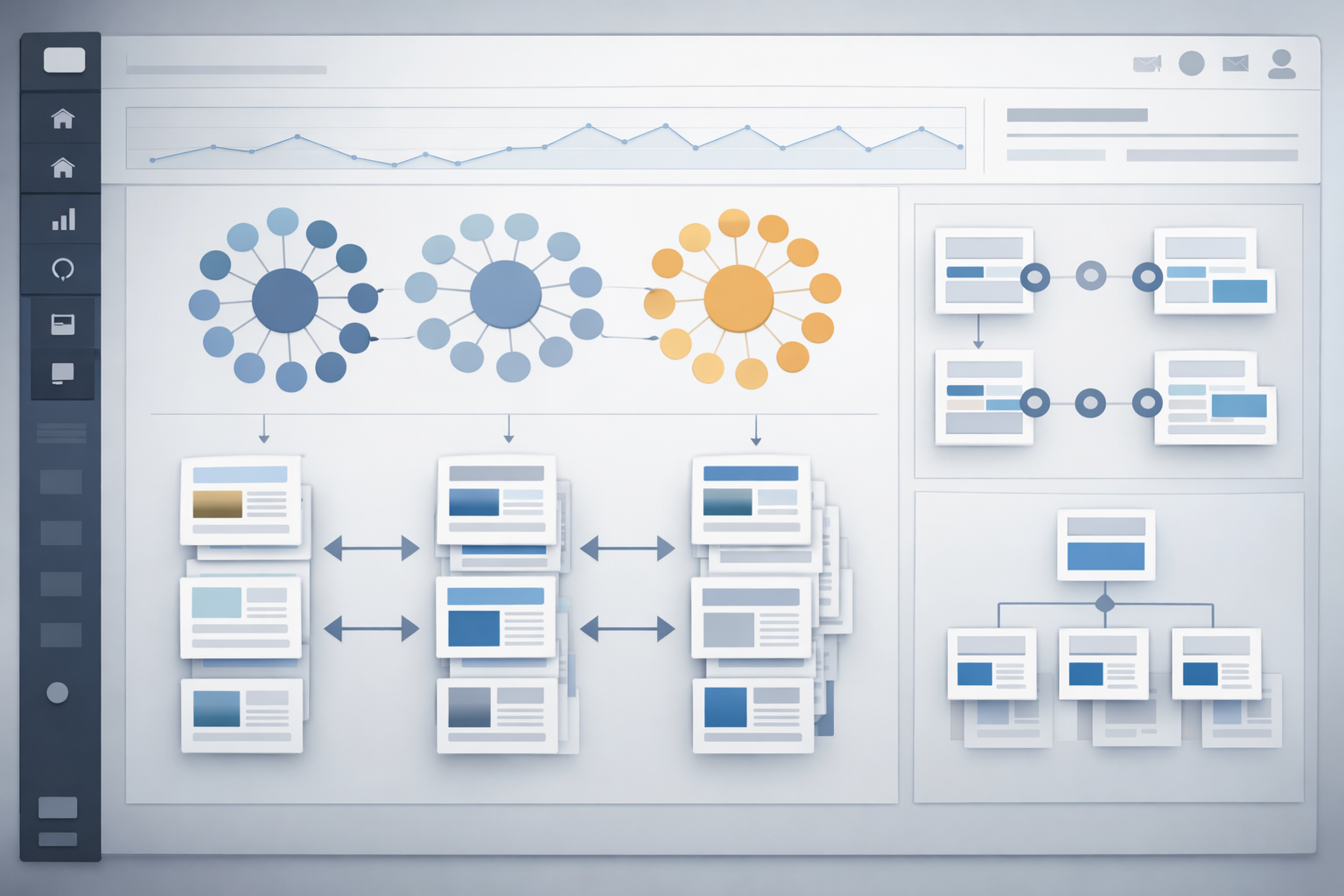
Topical authority development requires systematic content organization and strategic link placement. Local businesses can build subject matter expertise faster than national competitors by focusing on geographic and service-specific topic clusters.
Map your existing content into topic clusters by grouping related pages and identifying coverage gaps. Create clusters around your main services, locations, and customer needs. The restaurant identified three clusters: menu categories, dining experience, and location information, then found they needed more content about dietary restrictions and special events.
Establish hub pages for each topic cluster using comprehensive, authoritative content that links to all related subtopic pages. Your main “Plumbing Services” page becomes the hub linking to drain cleaning, pipe repair, bathroom installation, and emergency services. Hub pages should target broad, high-volume keywords while subtopic pages target specific, long-tail variations.
Create contextual linking opportunities by adding relevant internal links during content creation rather than retrofitting links afterward. Write new content with linking intentions planned from the outline stage. When creating a “Wedding Venue Checklist” blog post, plan links to your event photography, catering coordination, and venue rental pages.
Monitor authority flow using tools that track internal link equity distribution and identify pages receiving insufficient link support. Pages ranking below expectations often lack internal link support from your site’s strong pages. The restaurant discovered their lunch menu page received no internal links despite being a key revenue driver.
Update linking patterns quarterly to reflect content additions, seasonal changes, and performance data insights. Local SEO Israel strategies require ongoing refinement as competition and user behavior evolve. Add internal links from established pages to new content, and remove links to underperforming pages that drag down cluster authority.
Websites with strong topical authority show 23% higher local rankings on average. The restaurant’s systematic approach to building food expertise through content clusters and strategic internal linking moved them from local search invisibility to consistent first-page rankings for their target keywords.
Frequently Asked Questions
How many internal links should each page have on a local business website?
Service pages need 3-5 internal links minimum to distribute authority effectively. Location pages require 2-3 contextual links to related services. Homepage should link to 8-12 key pages maximum to avoid diluting link equity.
Should Hebrew and English pages link to each other on Israeli business websites?
Hebrew and English versions should cross-link using hreflang tags but avoid excessive cross-language internal linking. Focus internal links within the same language version to maintain topical relevance and user experience.
How long does it take to see results from internal linking improvements?
Most local businesses see ranking improvements within 2-3 months of implementing strategic internal linking. Traffic increases typically appear within 4-6 months as Google recrawls and reassesses page authority distribution.