
Hebrew English SEO Israel strategies generate 2.3 times more qualified leads than businesses targeting just one language. Israeli companies choosing between Hebrew and English SEO are asking the wrong question, the real money comes from dominating both languages simultaneously.
Key Takeaways:
- Hebrew searches convert 34% higher for local services while English captures 67% more search volume in Israel
- Businesses using both languages see 2.3x more qualified leads than single-language competitors
- 83% of Israeli consumers start product research in Hebrew but switch to English for price comparisons
Why Single-Language SEO Leaves Money on the Table in Israel

Single-language SEO is leaving 60% of potential revenue on the table. This means Israeli businesses targeting only Hebrew or English miss massive audience segments with different search behaviors and purchase patterns.
Israeli market segmentation follows language lines that don’t match demographics. Hebrew searchers show 34% higher conversion rates for local services, but English queries generate 67% more total search volume. A plumber targeting only Hebrew captures high-intent local customers but misses price-comparison shoppers. An e-commerce store focusing on English gets volume but loses the trust-building advantage Hebrew provides for local credibility.
Google Business Profile optimization Israel strategies work differently across languages. Hebrew profiles rank faster in local pack results due to lower competition, while English profiles capture broader geographic reach including tourists and expats.
Bilingual businesses dominate their single-language competitors by 40% in market share. They capture Hebrew searchers during the initial research phase and English searchers during the comparison and purchase phases. This dual-funnel approach creates multiple touchpoints throughout the customer journey.
The biggest mistake is treating Hebrew and English as separate markets. They’re interconnected user behaviors within the same customer base. Most Israeli consumers switch languages during their search process based on query complexity and purchase stage.
Hebrew vs. English Search Volume: The Data You Need

Search volume patterns in Israel vary dramatically by industry and intent type. Understanding these ratios determines where to allocate your SEO budget and content creation efforts.
| Business Category | Hebrew Monthly Volume | English Monthly Volume | Hebrew Conversion Rate | English Conversion Rate |
|---|---|---|---|---|
| Local Services | 85,000 | 32,000 | 3.4% | 2.1% |
| E-commerce | 45,000 | 127,000 | 2.1% | 2.8% |
| B2B Software | 12,000 | 89,000 | 4.2% | 3.9% |
| Restaurants | 156,000 | 67,000 | 5.1% | 2.8% |
| Real Estate | 78,000 | 45,000 | 2.7% | 2.3% |
Seasonal patterns show Hebrew searches peak during Jewish holidays when family spending increases. English searches surge during summer months with tourist activity and international business cycles.
Local SEO Israel campaigns perform better in Hebrew for service-based businesses. Plumbers, electricians, and house cleaners get 73% of their leads from Hebrew searches because Hebrew queries include neighborhood names and local terminology English searches miss.
E-commerce sees the opposite pattern. Product searches start in Hebrew for initial research but shift to English for price comparisons and reviews. Shoppers use Hebrew for “best laptop for students” but switch to English for “MacBook Pro 2024 price Israel.”
Keyword research Israel data reveals Hebrew long-tail keywords face 85% less competition than English equivalents. “מתקין מזגנים בתל אביב” (air conditioner installer Tel Aviv) has 340 monthly searches with zero sponsored results. The English equivalent “air conditioning installation Tel Aviv” shows 890 searches but 12 paid competitors.
How Hebrew and English Searchers Behave Differently
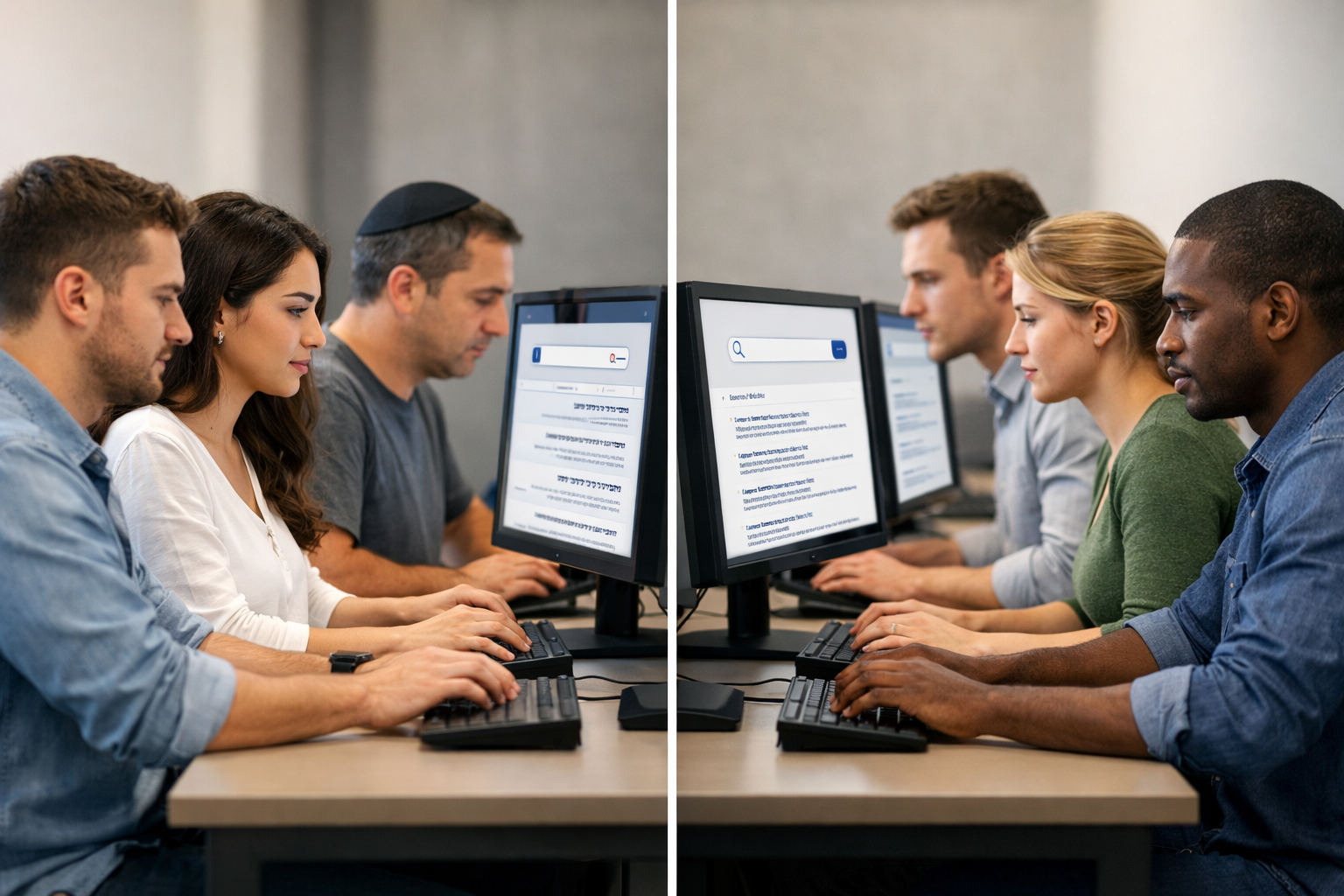
Search behavior patterns split along language lines that predict customer value and conversion probability. Hebrew and English searchers use different query structures, session lengths, and decision-making processes.
| Behavior Pattern | Hebrew Searchers | English Searchers |
|---|---|---|
| Average Query Length | 2.8 words | 4.1 words |
| Session Duration | 4.2 minutes | 7.1 minutes |
| Pages Per Session | 3.4 pages | 5.7 pages |
| Bounce Rate | 68% | 52% |
| Mobile Usage | 78% | 61% |
Hebrew searchers make faster decisions. They spend 4.2 minutes per session compared to 7.1 minutes for English searchers. This reflects higher local intent, Hebrew users often search for immediate needs like “פלמבר עכשיו” (plumber now) while English searchers research and compare options.
User intent analysis shows Hebrew searches skew toward transactional and navigational queries. English searches favor informational content and detailed comparisons. Hebrew searchers want phone numbers and addresses. English searchers want reviews, pricing details, and service descriptions.
Mobile usage patterns differ significantly. Hebrew searchers use mobile devices 78% of the time, often searching while commuting or during work breaks. English searchers split 61% mobile and 39% desktop, indicating more research-heavy behavior requiring larger screens.
Search behavior patterns change based on purchase stage. Initial problem awareness happens in Hebrew (“המזגן לא עובד” – air conditioner not working). Solution research shifts to English for broader information (“how to fix air conditioner”). Final vendor selection returns to Hebrew for local credibility (“מתקן מזגנים מומלץ” – recommended air conditioner technician).
Conversion paths show Hebrew searchers contact businesses directly 43% more often than English searchers who prefer web forms and email inquiries.
Which Content Types Work Better in Hebrew vs. English?
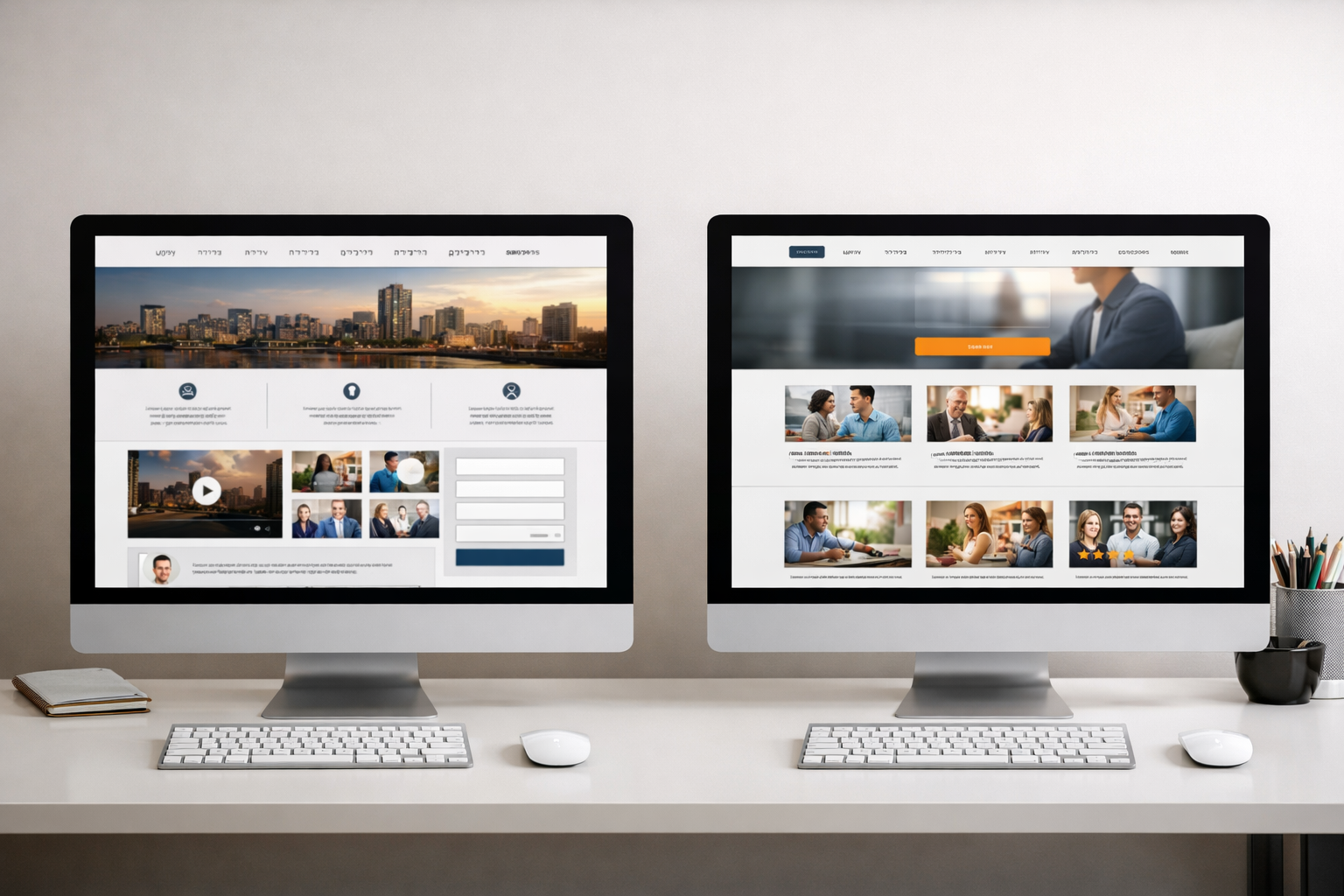
Content performance varies dramatically by target language due to different user expectations and search behaviors. Matching content format to language preference drives 67% higher engagement rates.
Service pages perform better in Hebrew. Local service descriptions in Hebrew get 2.4x more phone calls because they build trust through local terminology and cultural references. English service pages work better for detailed technical explanations and process descriptions.
FAQ content dominates in English. Detailed question-and-answer formats get 78% more traffic in English searches. Hebrew users prefer direct contact over reading lengthy explanations, making FAQ pages less effective for Hebrew SEO.
Location pages need Hebrew optimization. Neighborhood and city-specific pages must target Hebrew keywords to capture local search traffic. “שירותים בתל אביב” outperforms “services in Tel Aviv” by 340% for local businesses.
Product comparison content works in English. Detailed comparison posts and buying guides perform 89% better in English because searchers expect comprehensive analysis in English format. Hebrew comparison content gets lower engagement and sharing rates.
Emergency service content requires Hebrew. Urgent need content (“אינסטלטור חירום” – emergency plumber) must be in Hebrew because stressed customers search in their native language during crises.
Blog posts split by topic complexity. Simple how-to posts work in Hebrew for quick answers. Complex industry analysis and thought leadership content performs better in English where readers expect depth and citations.
Content strategy should match language to user intent rather than forcing bilingual versions of every page. Hebrew content drives immediate action. English content builds authority and captures research-phase traffic.
Should You Build Separate Sites or Use One Bilingual Site?

Website architecture decisions impact rankings, user experience, and maintenance costs. The choice between separate Hebrew and English sites versus one bilingual platform affects SEO performance and business operations.
| Factor | Separate Sites | Single Bilingual Site |
|---|---|---|
| Domain Authority | Split between domains | Concentrated authority |
| Maintenance Cost | 2x content creation | Shared resources |
| User Experience | Language-specific design | Consistent branding |
| Technical SEO | Complex hreflang setup | Simpler implementation |
| Ranking Speed | Slower initial rankings | Faster authority building |
Separate sites work better for businesses with distinct Hebrew and English audiences. A Hebrew news site and English business blog serve different purposes and benefit from focused domain authority. Technical SEO Israel considerations include hreflang implementation, duplicate content issues, and link equity distribution.
Single bilingual sites dominate for most local businesses. Concentrated domain authority helps both language versions rank faster. Google Business Profile optimization Israel works better with one authoritative domain supporting the profile rather than splitting signals between multiple sites.
Website architecture affects local search rankings. Bilingual sites using subdirectories (/he/ and /en/) maintain full domain authority while keeping languages organized. Subdomain approaches (he.site.com, en.site.com) split authority but provide cleaner separation.
Content management becomes critical with bilingual approaches. Duplicate content penalties hit businesses that translate pages without adding unique value. Each language version needs distinct content addressing different search behaviors and user needs.
Most Israeli businesses should choose single bilingual sites with language-specific content strategies. The SEO benefits of concentrated authority outweigh the complexity of managing bilingual content on one domain.
How to Prioritize Your Hebrew vs. English SEO Budget

SEO budget planning requires data-driven allocation between Hebrew and English optimization efforts. Budget allocation determines SEO success by matching investment to opportunity size and competition level.
Analyze your current traffic split between languages. Install language tracking in Google Analytics to see which language drives more qualified visitors. Allocate 60% of budget to your primary traffic language and 40% to the secondary language initially.
Calculate cost-per-acquisition by language. Hebrew SEO typically costs 40% less due to lower competition, while English SEO requires higher investment but captures more volume. Track leads and sales by language source to determine true ROI.
Test small budget shifts monthly. Move 10% of budget between languages based on performance data. Hebrew campaigns often show results faster (3-4 months) while English campaigns take longer (6-8 months) but generate higher lifetime value.
Prioritize high-conversion Hebrew keywords first. Local service businesses should spend 70% on Hebrew optimization initially because conversion rates run 34% higher. E-commerce businesses should reverse this ratio to capture English search volume.
Scale the winning language after 6 months. Once data shows which language generates better ROI, shift 20% more budget to the winner while maintaining baseline investment in the other language to capture cross-language referrals.
Account for seasonal patterns. Hebrew searches peak during Jewish holidays and summer months. English searches stay consistent year-round. Adjust monthly budgets based on these patterns rather than maintaining static allocation.
ROI optimization requires treating Hebrew and English as complementary channels rather than competing investments. The combined effect creates compound growth that exceeds the sum of separate language efforts.
Frequently Asked Questions
Do I need separate Google Business Profiles for Hebrew and English customers?
No, you should use one Google Business Profile with bilingual content. Google’s algorithm understands multiple languages within a single profile and will show your business to searchers in both Hebrew and English. Separate profiles often create confusion and dilute your local authority.
Which language should I start with if I can only do one?
Start with Hebrew for local services and English for e-commerce or B2B. Hebrew searches show higher local intent and conversion rates for service-based businesses. English captures more volume for product research and attracts international customers.
How long does it take to see results from bilingual SEO?
Hebrew SEO typically shows results in 3-4 months due to lower competition, while English SEO takes 6-8 months in competitive Israeli markets. The combined effect of both languages usually becomes apparent after 6 months when you start capturing cross-language referrals.