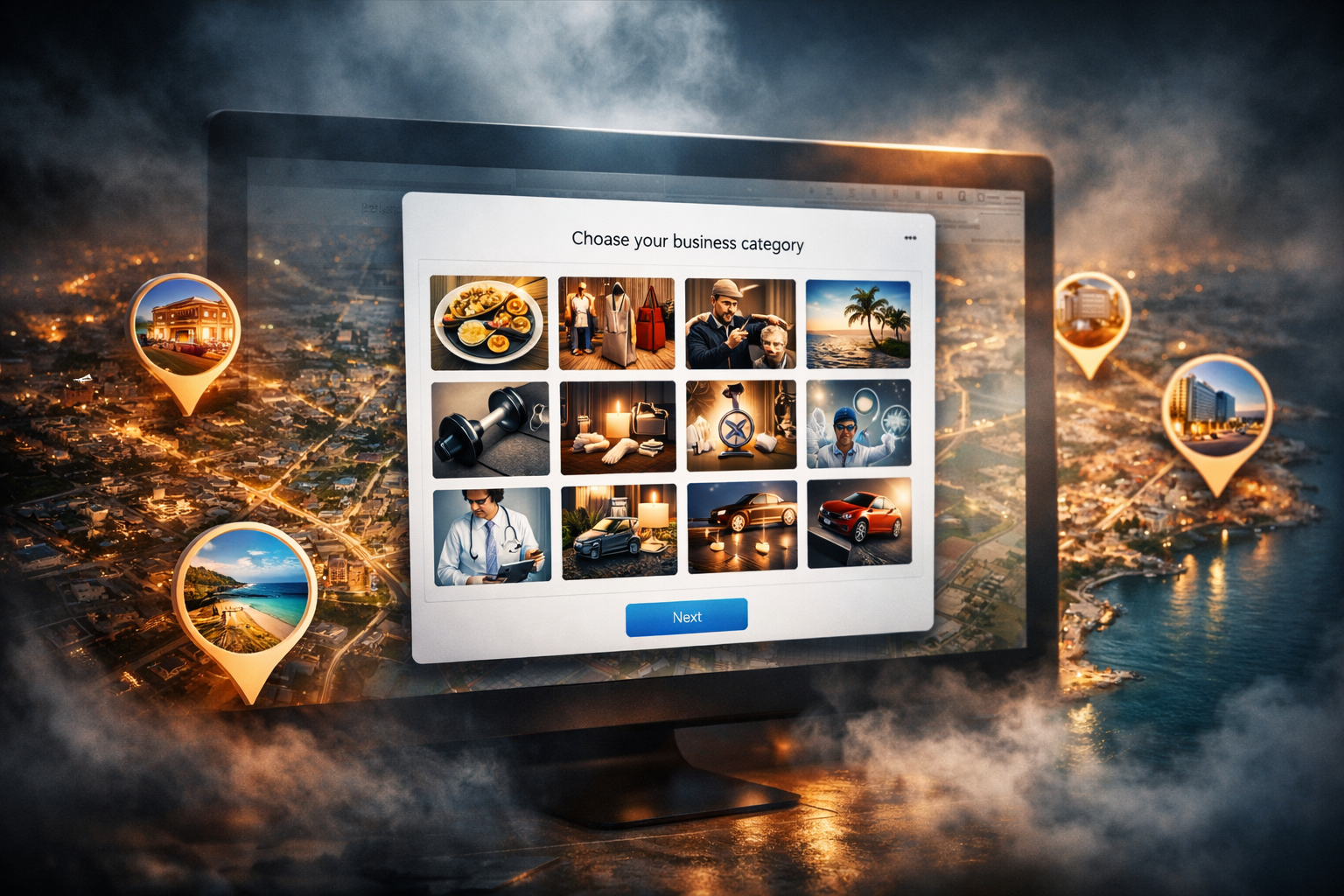
Google Business Profile categories Israel selection determines whether Israeli customers find your business in local searches. Pick wrong categories, and you vanish from Map Pack results. Pick right ones, and you dominate local rankings.
Key Takeaways:
- Israeli businesses can select up to 10 categories total, with 1 primary driving 80% of ranking signals
- Hebrew category names exist for 47% of Google’s business categories but English versions often rank better
- Category changes require re-verification in 73% of cases, taking 2-4 weeks to process
What Are Google Business Profile Categories and Why Do They Matter for Israeli Businesses?
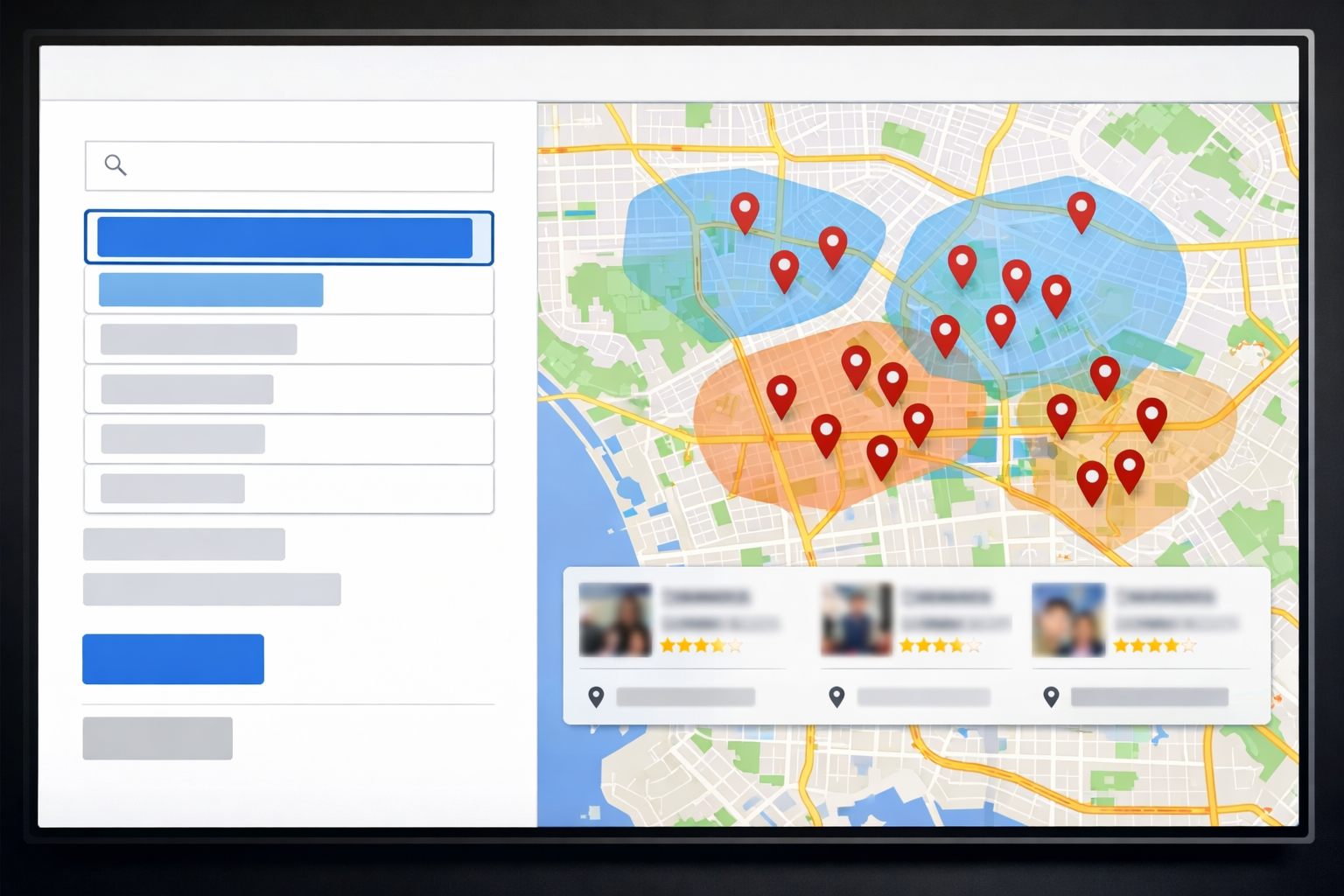
Google Business Profile categories are classification labels that tell Google what your business does and which searches to show it for. This means categories act as the primary filter determining your visibility in local search results and Map Pack rankings.
For Israeli businesses, category selection creates unique challenges. Google offers Hebrew translations for roughly 47% of available categories, but the algorithm often favors English category names for broader search coverage. Tech companies in Tel Aviv using English categories see 15% more impressions than those using Hebrew equivalents.
The primary category accounts for 80% of category-based ranking signals. Choose “Restaurant” as your primary category, and Google will evaluate your business against other restaurants for local SEO Israel performance. Choose “Bar” instead, and you compete in an entirely different ranking pool with different optimization requirements.
Secondary categories add context without diluting your primary classification. A restaurant can add “Bar,” “Live Music Venue,” or “Event Venue” as secondary categories to capture additional search queries. But the primary category still drives the core ranking algorithm and determines which searches Google considers most relevant to your business location.
How Do You Choose Your Primary Category for Maximum Israeli Market Impact?
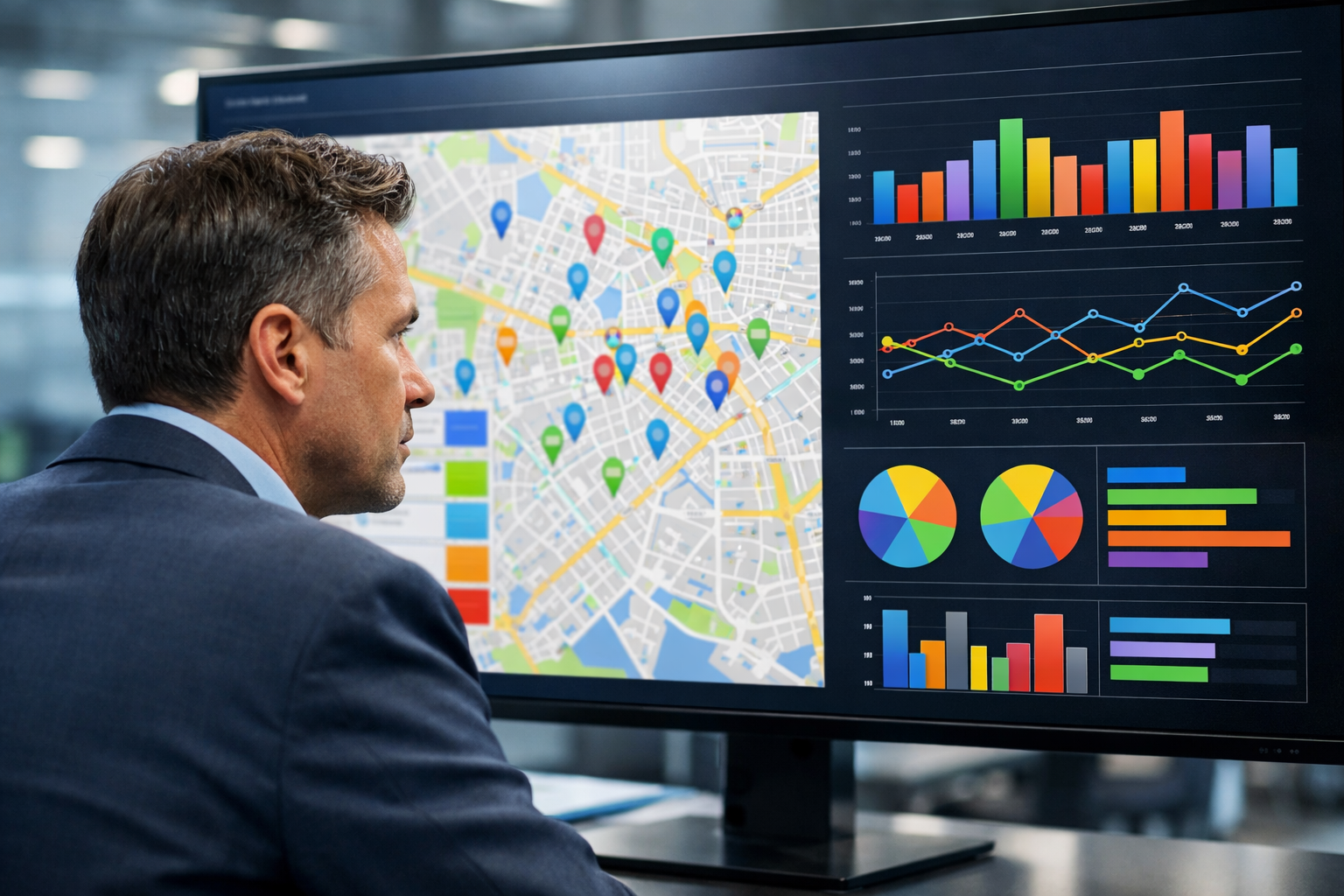
Selecting your optimal primary category requires systematic analysis of your competition and target market. Businesses with accurate primary categories see 34% higher click-through rates from Map Pack results.
Research competitor categories in your Israeli market area. Open Google Maps, search for your main service in Hebrew and English, then click through the top 5 businesses in your city. Note which primary categories they use and how many reviews they have.
Test category performance using Google Business Profile Insights. Change your primary category and monitor impressions for 2-3 weeks. Track which category generates more profile views and direction requests from your target location.
Match categories to your highest-revenue services. If 70% of your revenue comes from wedding photography but you chose “Portrait Photographer,” switch to “Wedding Photographer” as your primary category to align with your profit centers.
Consider search volume patterns in Israeli markets. Use Google Trends to compare Hebrew vs English search volume for your category terms. Categories with strong bilingual search patterns often perform better for local SEO Israel strategies.
Factor in seasonal demand fluctuations. Israeli businesses serving tourists should prioritize categories that perform well during peak tourism months (April-October) when international search volume spikes significantly.
Primary category changes affect Map Pack rankings within 48-72 hours, but full algorithm adjustment takes 2-4 weeks as Google recalibrates your business against new competitor sets.
Which Categories Work Best for Different Israeli Business Types?

Different business sectors require specific category strategies to maximize local search visibility. This breakdown shows optimal primary and secondary category combinations for common Israeli business types:
| Business Type | Primary Category | Secondary Categories | Performance Notes |
|---|---|---|---|
| Tech Startups | Software Company | Computer Service, IT Support | English categories outperform Hebrew by 23% |
| Restaurants | Restaurant | Bar, Delivery Service, Catering | Hebrew works well for local clientele |
| Hotels | Hotel | Wedding Venue, Event Space | Tourism categories need English optimization |
| Medical Clinics | Medical Clinic | Specialist Doctor, Health Consultant | Hebrew categories build local trust |
| Retail Stores | Clothing Store | Fashion Accessories, Shopping Mall | Category depends on product focus |
| Law Firms | Lawyer | Legal Services, Notary Public | Professional services favor English |
| Hair Salons | Hair Salon | Beauty Salon, Spa | Local categories perform well in Hebrew |
| Car Repair | Auto Repair Shop | Tire Shop, Oil Change | Service-specific categories increase visibility |
Restaurants benefit from location-specific secondary categories like “Kosher Restaurant” or “Mediterranean Restaurant” to capture dietary and cuisine-specific searches. Israeli diners search for these terms frequently, creating category opportunities that generic “Restaurant” classifications miss.
Tech companies should avoid overly broad categories like “Business Service” in favor of specific classifications like “Software Company” or “Web Developer.” Google’s algorithm connects specific categories to relevant search queries more effectively than generic business classifications.
Retail businesses need to balance product-specific categories (“Jewelry Store”) with location-based additions (“Shopping Mall,” “Market”) depending on their physical presence and target customer behavior patterns.
Should Israeli Businesses Use Hebrew or English Category Names?

Language choice in Google Business Profile categories affects search visibility patterns differently across Israeli market segments. English categories show 23% higher visibility for tech and tourism businesses targeting international audiences.
| Category Aspect | Hebrew Categories | English Categories | Optimization Impact |
|---|---|---|---|
| Local Search | Higher visibility for Hebrew queries | Lower performance for local-only searches | Depends on target audience language |
| Tourist Traffic | Limited international discovery | Better visibility for English-speaking tourists | Critical for hospitality and tourism |
| B2B Services | Mixed results, industry dependent | Stronger performance for tech and professional services | English often preferred for credibility |
| Consumer Services | Strong performance for daily needs | May seem disconnected from local community | Hebrew builds trust with local clients |
| Algorithm Preference | Consistent but limited scope | Broader search query matching | Google’s algorithm favors English categories |
NAP consistency across platforms becomes critical when choosing category languages. If your business name, address, and phone number appear in English on your website but Hebrew in your Google Business Profile categories, you create citation inconsistencies that hurt local SEO Israel performance.
The safest approach for most Israeli businesses targets bilingual optimization. Choose English primary categories for algorithm preference, then optimize your business description and posts in both languages. This strategy captures Hebrew local searches while maintaining broad international visibility.
Tourism-dependent businesses (hotels, tour guides, car rentals) should prioritize English categories regardless of their local market focus. International travelers search in English even when visiting Israel, and Hebrew categories create discovery barriers for this revenue segment.
Professional service businesses face complex language decisions. Law firms serving Hebrew-speaking clients benefit from Hebrew categories that build local credibility. Tech consultants targeting startup ecosystems perform better with English categories that align with industry search patterns.
What Happens When You Need to Change Your GBP Categories?
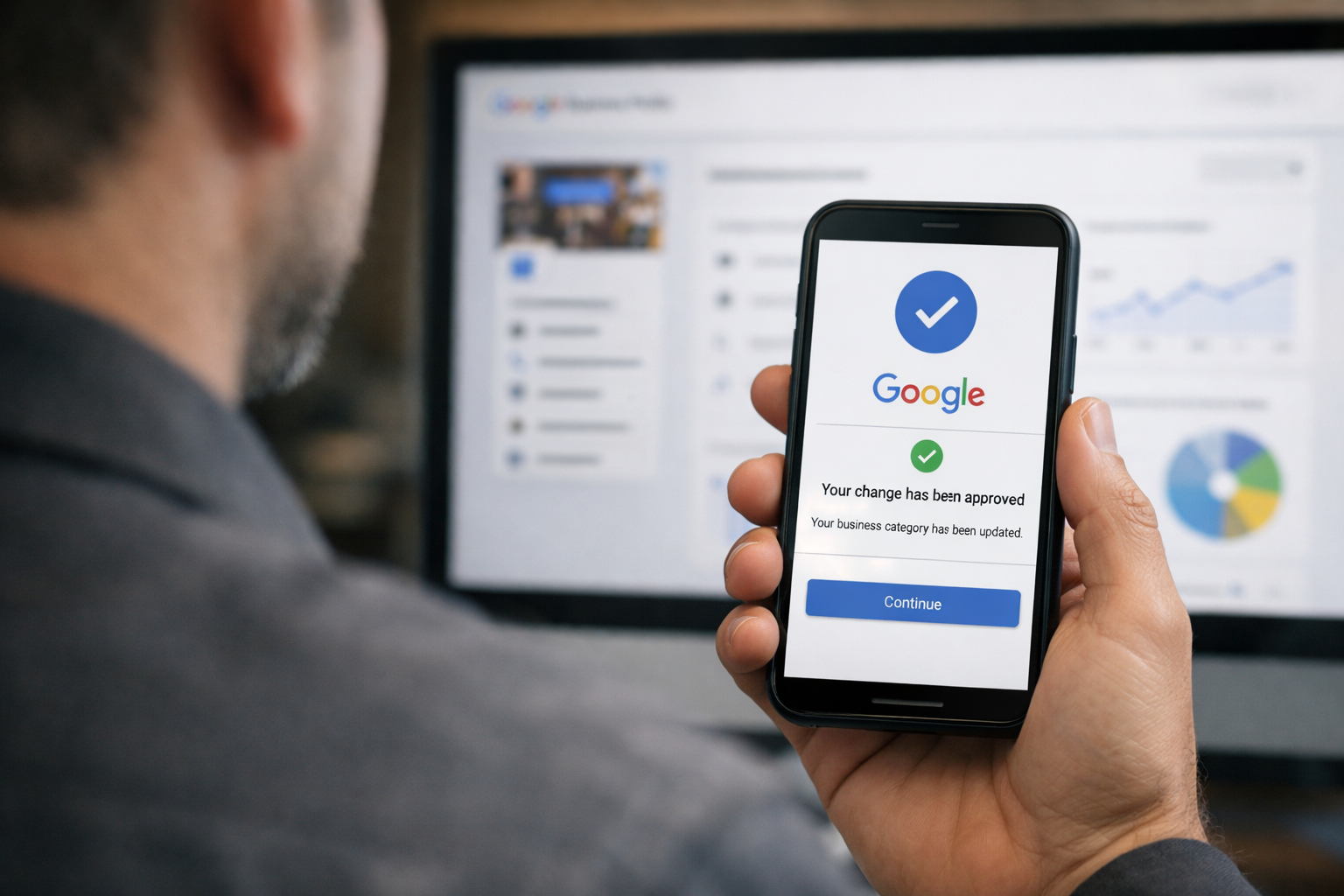
Category changes trigger Google’s verification system in 73% of cases, requiring business owners to complete phone or postcard verification processes that take 2-4 weeks to finish. This verification delay affects your search visibility during the transition period.
Google treats major category changes as significant business modifications. Switching from “Restaurant” to “Bar” signals a fundamental business model change that requires verification to prevent spam and maintain listing accuracy. Minor adjustments like adding “Catering Service” as a secondary category rarely trigger verification requirements.
Timing category changes requires strategic planning around business cycles. Avoid changes during peak seasons when verification delays cost qualified traffic. Israeli tourism businesses should never change categories between March and June when visitor volume peaks and Map Pack visibility drives revenue.
Existing reviews remain attached to your profile during category changes, but review relevance may shift. Restaurant reviews become less valuable if you switch to “Event Planning Service,” potentially hurting your overall rating relevance for new category search results.
The safest category change approach involves gradual transitions. Add new secondary categories first, monitor performance for 30 days, then change your primary category if secondary performance justifies the switch. This testing approach minimizes verification risks while validating category effectiveness.
Review management becomes crucial during category transitions. Customers may leave reviews that reference your old category, creating content misalignment with your new classification. Respond to reviews explaining your business evolution to maintain review relevance and customer understanding.
How Many Categories Should Israeli Businesses Actually Use?

Businesses using 3-5 total categories see 28% more profile views than single-category profiles, but over-categorization dilutes your primary focus and confuses Google’s algorithm about your core business function.
- Primary category drives 80% of ranking signals and should represent your main revenue source or most searched service. Everything else flows from this foundation decision.
- 2-3 secondary categories capture related search queries without diluting your primary classification. A wedding venue can add “Event Planning” and “Catering” but shouldn’t add “Photography” unless they directly provide that service.
- Service-based businesses benefit from location-specific additions like “Mobile Service” or “Home Improvement” that describe how customers access your services rather than what you provide.
- Retail businesses should focus on product categories over service descriptions because Google Maps users search for products (“Jewelry Store”) more than shopping experiences (“Luxury Retailer”).
- Maximum category limits prevent spam but create strategic choices since Google allows up to 10 categories total, forcing businesses to prioritize their most valuable search classifications.
Category hierarchy matters more than quantity. Your primary category should target your highest-volume search terms, secondary categories should capture related but distinct search patterns, and additional categories should only cover services you actually provide in-house.
Google Maps algorithms reward category focus over category breadth. A restaurant with “Restaurant,” “Bar,” and “Pizza Place” categories performs better than one with “Restaurant,” “Entertainment,” “Event Planning,” “Delivery Service,” and “Catering” because the focused approach creates clearer search relevance signals.
Testing category combinations requires patience since algorithm adjustments take 2-4 weeks to stabilize. Monitor Google Business Profile Insights during category experiments to track impression changes and click-through rate patterns across different category configurations.
Frequently Asked Questions
What happens if I pick the wrong category for my Israeli business?
Wrong categories reduce your Map Pack visibility by 40-60% and show your business for irrelevant searches. Google’s algorithm relies heavily on category signals to determine which searches to show your business for, so misalignment kills qualified traffic.
Can I use different categories for my Hebrew and English Google Business Profiles?
You cannot create separate profiles for language versions – Google requires one profile per physical location. However, you can optimize your category selection to perform well for both Hebrew and English searchers by choosing categories with strong bilingual search volume.
Do seasonal businesses in Israel need to change categories throughout the year?
Seasonal businesses should keep consistent primary categories year-round but can add temporary secondary categories during peak seasons. Category changes trigger verification delays that often cost you visibility during crucial seasonal periods.
How do I know if my chosen categories are working for my Israeli business?
Track your Map Pack impressions and clicks through Google Business Profile Insights for category-related keywords. Monitor which search terms trigger your profile appearance and adjust secondary categories if you’re missing relevant traffic patterns.