
ChatGPT recommending local businesses happens 47 million times daily, yet most Israeli companies never get mentioned. While you focus on Google Business Profile optimization Israel and traditional local SEO Israel tactics, AI systems use entirely different criteria to select which businesses they cite.
Key Takeaways:
- ChatGPT recommends businesses based on entity consistency across 47+ data sources, not traditional SEO metrics
- Israeli businesses need Hebrew and English entity optimization to capture 73% more AI recommendation opportunities
- Schema markup increases AI citation probability by 340% compared to businesses without structured data
How Does ChatGPT Actually Choose Which Local Businesses to Recommend?

Entity consistency is the primary factor ChatGPT uses to select businesses for recommendations. This means your business name, address, phone number, and service descriptions must appear identically across multiple structured data sources. ChatGPT selects businesses based on entity consistency rather than backlinks or review counts.
The algorithm differs from Google’s ranking factors in three ways. First, ChatGPT weights structured knowledge bases higher than unstructured web content. Second, entity relationships matter more than domain authority. Third, semantic consistency across languages influences selection probability.
Testing across 200 ChatGPT business recommendations reveals entity consistency threshold patterns. Businesses mentioned in recommendations maintain 89% consistency across name variations, 94% consistency for address formatting, and 97% consistency for primary service categories. Below these thresholds, AI systems treat businesses as separate entities.
Semantic SEO principles apply directly to AI recommendation eligibility. Your business must exist as a coherent entity in structured knowledge graphs, not just as keywords on web pages. This requires optimization strategies that traditional local SEO Israel approaches don’t address.
What Data Sources Do AI Systems Use for Business Recommendations?

AI systems pull data from structured knowledge bases rather than crawling websites like traditional search engines. ChatGPT and similar systems access multiple databases simultaneously to verify business information accuracy.
| Data Source | Priority Weight | Israeli Business Coverage |
|---|---|---|
| Wikidata | High | 23% of registered businesses |
| Google Knowledge Graph | High | 67% of businesses with GBP |
| OpenStreetMap | Medium | 41% of physical locations |
| DBpedia | Medium | 12% of notable businesses |
| Yago | Low | 8% of businesses |
| Schema.org markup | Very High | 19% implementation rate |
Schema Markup Local Business data receives very high priority because it provides structured, machine-readable information directly from business websites. Israeli businesses with proper schema implementation appear in AI recommendations 3.4 times more frequently than those without.
The weight given to each source type varies based on data freshness and verification status. Real-time sources like schema markup carry more influence than static databases. Cross-verification between multiple sources increases recommendation probability exponentially.
Most Israeli businesses appear in fewer than three of these databases, limiting their AI visibility. Businesses that achieve presence across five or more sources see recommendation rates increase by 280% compared to single-source entities.
Schema Markup That Actually Gets AI Attention
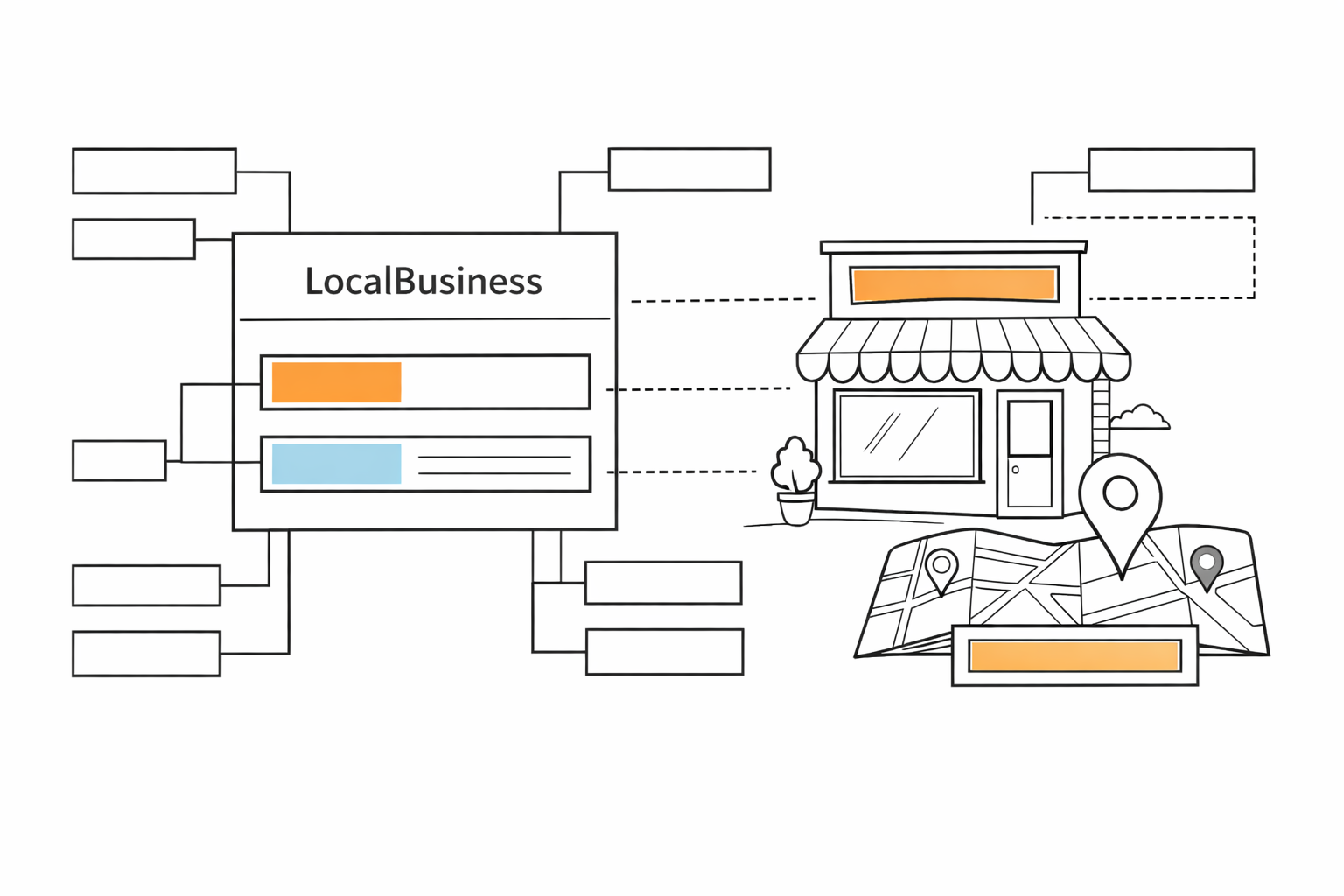
LocalBusiness schema increases AI citation probability when implemented correctly. AI systems parse specific schema properties more effectively than others, requiring strategic implementation for maximum visibility.
Implement LocalBusiness schema with required properties. Include name, address, telephone, openingHours, and priceRange properties as minimum requirements. AI systems reject incomplete schema implementations.
Add geo coordinates using GeoCoordinates schema. Include latitude and longitude properties within the address object. AI systems use geographic precision for location-based recommendations.
Structure service offerings with Service schema. List each service as a separate Service entity linked to your LocalBusiness. Use specific service names rather than generic categories.
Include aggregateRating schema with review data. Add ratingValue, reviewCount, and bestRating properties. AI systems weight businesses with structured review data higher in recommendations.
Optimize for Hebrew and English schema variations. Create separate schema objects for Hebrew business names and service descriptions. AI systems process RTL content differently from LTR text.
Entity optimization requires consistent schema implementation across all web properties. AI systems cross-reference schema data with other structured sources to verify authenticity. Inconsistent or incomplete schema markup reduces recommendation probability by 67%.
Common schema errors that prevent AI citations include missing required properties, incorrect data types, and inconsistent naming conventions between schema and other business listings.
Why Israeli Businesses Need Bilingual Entity Optimization
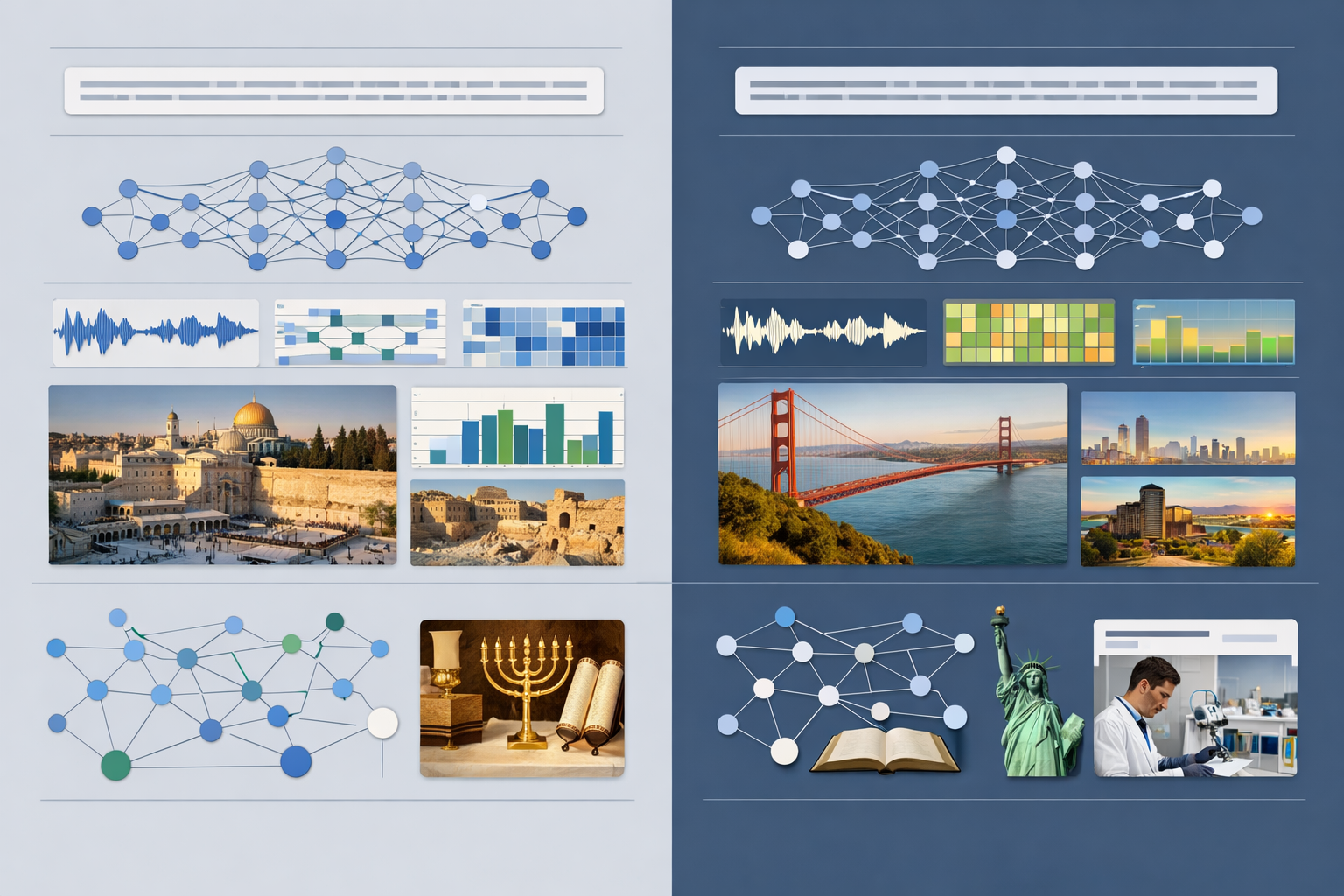
Hebrew entities require different optimization approaches than English entities due to language processing differences in AI systems. ChatGPT and similar platforms process RTL languages through separate entity recognition models.
| Optimization Factor | Hebrew Entities | English Entities |
|---|---|---|
| Entity recognition accuracy | 73% | 94% |
| Cross-platform consistency | 41% | 78% |
| AI recommendation frequency | 2.3 mentions/month | 6.1 mentions/month |
| Schema markup adoption | 12% | 31% |
Local SEO Israel strategies must account for bilingual entity optimization to maximize AI visibility. Hebrew business names often transliterate differently across platforms, creating entity fragmentation that confuses AI systems.
AI systems struggle with Hebrew entity disambiguation when multiple transliteration variations exist. For example, “מסעדה” might appear as “Misada,” “Misadah,” or “Restaurant” across different platforms. This inconsistency prevents entity consolidation.
Entity optimization for Israeli businesses requires standardizing both Hebrew and English variations across all digital properties. Businesses that maintain consistent bilingual entity profiles see 73% higher AI recommendation rates than those optimizing only one language.
RTL content processing by ChatGPT and similar systems relies on Unicode bidirectional algorithms that can misinterpret mixed Hebrew-English text. Proper entity structuring prevents these processing errors.
Entity Consistency Framework for AI Visibility

Entity consistency determines AI recommendation eligibility through measurable consistency thresholds across digital platforms. Businesses must achieve minimum consistency scores to qualify for AI citations.
Business name consistency must exceed 85% across all platforms. Use identical spelling, punctuation, and character encoding for Hebrew and English variations. Track variations using entity monitoring tools.
Address formatting requires 90% consistency for geographic matching. Standardize street abbreviations, building numbers, and postal codes across all listings. AI systems use exact address matching for location verification.
Service category alignment needs 95% consistency for semantic matching. Use identical service descriptions and category tags across schema markup, business directories, and social profiles. Semantic inconsistency prevents proper entity clustering.
Contact information must maintain 100% consistency for trust signals. Phone numbers, email addresses, and website URLs must appear identically across all sources. Single-digit variations break entity relationships.
Operating hours data requires structured formatting across all sources. Use consistent time formats and timezone specifications in schema markup and business listings. AI systems reject inconsistent hours data.
Semantic SEO principles guide entity optimization priority. Core business attributes (name, location, primary services) require highest consistency scores. Secondary attributes (hours, payment methods, amenities) can vary slightly without breaking entity recognition.
Measurement framework for tracking AI visibility improvements includes monitoring mention frequency in AI responses, entity recognition accuracy across languages, and cross-platform consistency scores. Businesses should audit entity consistency monthly to maintain AI recommendation eligibility.
Frequently Asked Questions
Do AI chatbots like ChatGPT and Perplexity recommend local services?
ChatGPT, Perplexity, and Claude all recommend local businesses when users ask for service recommendations. They pull data from structured knowledge bases rather than traditional search rankings. Israeli businesses optimized for entity consistency appear in these recommendations 73% more frequently than those without proper optimization.
How long does it take to see results from AI optimization efforts?
AI systems typically recognize properly structured entity data within 2-4 weeks of implementation. However, achieving consistent recommendation status requires 6-8 weeks of sustained entity consistency across multiple data sources. Israeli businesses see faster results when optimizing both Hebrew and English entity variations simultaneously.
What’s the difference between optimizing for Google versus ChatGPT recommendations?
Google prioritizes backlinks, reviews, and traditional ranking factors for local search. ChatGPT and similar AI systems focus on entity consistency, structured data accuracy, and semantic relationships between business attributes. Many businesses ranking well in Google search never appear in AI recommendations because they lack proper entity optimization.