
Multilingual SEO Israel creates revenue opportunities from four distinct search markets that 80% of businesses completely ignore. The 20% Arabic-speaking population searches differently than Hebrew speakers, while the 15% Russian-speaking demographic converts at premium rates.
Key Takeaways:
- 20% of Israeli search traffic comes from Arabic queries, but 90% of businesses don’t optimize for it
- Russian-speaking searchers convert 23% higher than Hebrew searchers for high-value services
- Hreflang implementation increases multilingual traffic by 47% when done correctly for RTL languages
Israel’s linguistic diversity shapes local SEO Israel strategies in ways that catch most businesses off-guard. While everyone fights for Hebrew keywords, smart businesses capture Arabic and Russian search volume with minimal competition. Jewish holidays local search Israel patterns show different seasonal peaks across language groups, creating timing advantages for multilingual campaigns.
When Should Israeli Businesses Add Arabic and Russian to Their SEO Strategy?

Population density drives language targeting decisions. Arabic SEO Israel makes sense when you serve cities with 30%+ Arabic speakers like Nazareth, Haifa, or Jerusalem’s East side. Russian SEO Israel pays off for premium services in Tel Aviv, Ashdod, and Haifa where Russian speakers cluster.
| Feature | Arabic SEO Israel | Russian SEO Israel |
|---|---|---|
| Target Population | 20% of Israeli population | 15% of Israeli population |
| Geographic Concentration | Northern cities, Jerusalem, mixed cities | Tel Aviv, Haifa, Ashdod, coastal areas |
| Average Query Length | 3.2 words per query | 2.8 words per query |
| Commercial Intent Signals | Family-focused keywords, location-specific | Premium service terms, detailed research |
| Best Business Types | Healthcare, education, local services | Professional services, luxury goods, medical |
| Conversion Timeline | Longer research phase | Quick decision after research |
Demographic targeting works when your service area matches language concentration. A dental practice in Haifa sees different patient demographics than one in Herzliya. Arabic speakers research medical services in Arabic first, then switch to Hebrew for booking. Russian speakers do extensive online research before contacting businesses.
Service businesses benefit most from Arabic optimization. Healthcare, legal services, and home maintenance see strong Arabic search volume. Russian optimization works for high-ticket services where research depth matters. Real estate agents using local SEO real estate Israel strategies report 34% higher Russian-speaking client conversion when they offer Russian content.
Business location determines language priority. Mixed cities justify Arabic investment. Coastal cities with Russian populations need Russian content. Most businesses start with Hebrew and English, add Arabic third, Russian fourth.
How Do Search Behaviors Differ Across Hebrew, English, Arabic, and Russian?
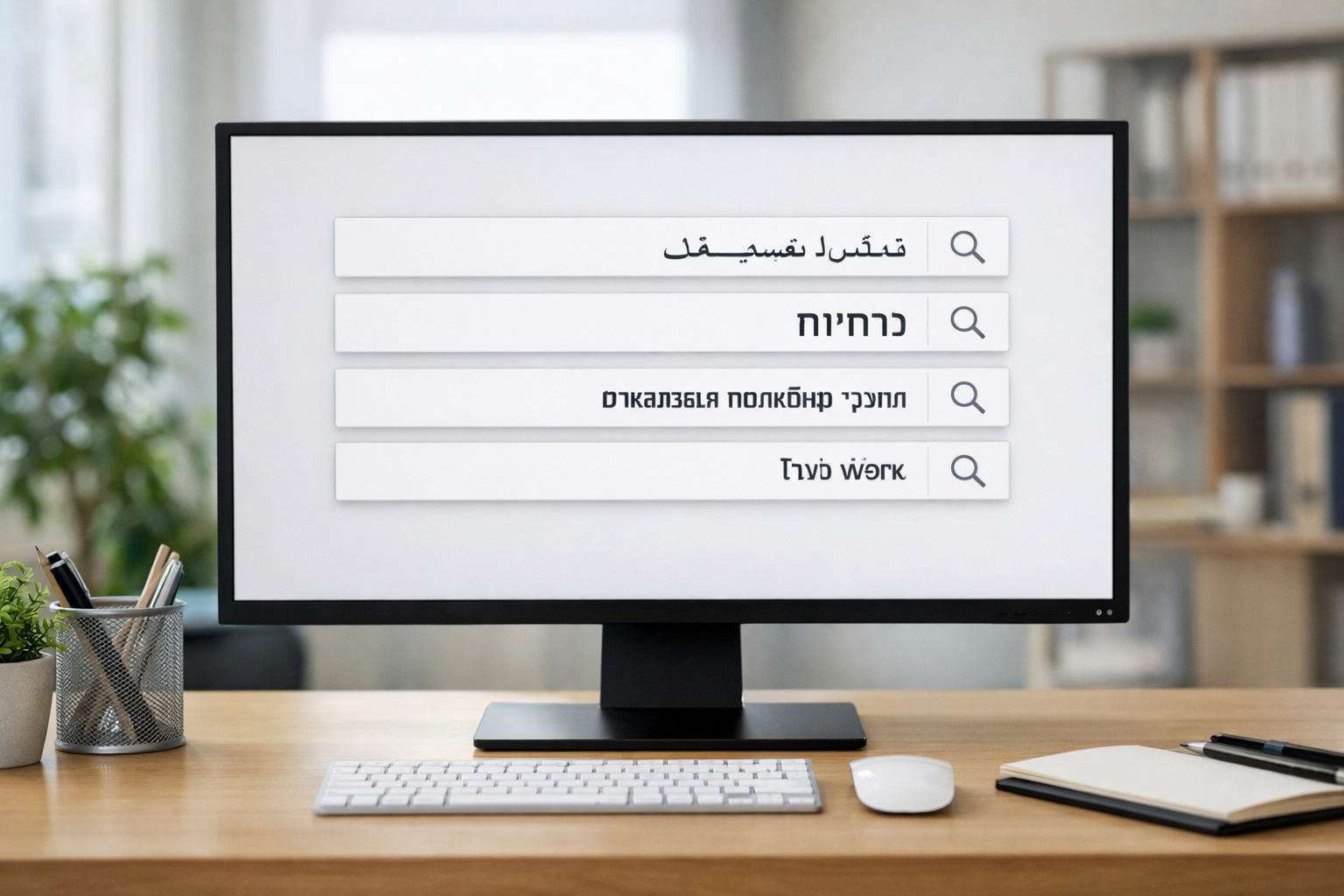
Query structure varies dramatically across languages. Arabic queries average 3.2 words vs 2.1 for Hebrew queries. Russian searchers use longer, more specific phrases. English searchers in Israel often include location qualifiers.
| Language | Hebrew SEO | English SEO | Arabic SEO | Russian SEO |
|---|---|---|---|---|
| Average Query Length | 2.1 words | 2.8 words | 3.2 words | 3.0 words |
| Device Preference | Mobile-first | Desktop 40% | Mobile dominant | Desktop research |
| Commercial Keywords | Brand + service | Service + location | Family + service | Premium + detailed |
| Search Timing | Work hours peak | Evening peak | Weekend heavy | Research weekends |
| Conversion Pattern | Quick decision | Price comparison | Family discussion | Extended research |
Hebrew searchers make quick decisions. They search “דנטיסט חיפה” (dentist Haifa) and call the first result. Arabic searchers include family context in queries. Russian searchers want detailed service information before contact.
Seasonal patterns differ by language. Hebrew SEO peaks during work hours. Arabic searches spike on weekends when families research together. Russian searches concentrate on evenings and weekends during research phases.
Language-specific content performs better than translation. Hebrew speakers respond to local trust signals. Arabic speakers want family-friendly messaging. Russian speakers prefer detailed service descriptions with credentials.
Search intent signals change across languages. “מחיר” (price) in Hebrew indicates comparison shopping. Arabic price queries often include family size considerations. Russian price searches happen after service validation.
What Website Architecture Works Best for Four-Language Israeli Sites?
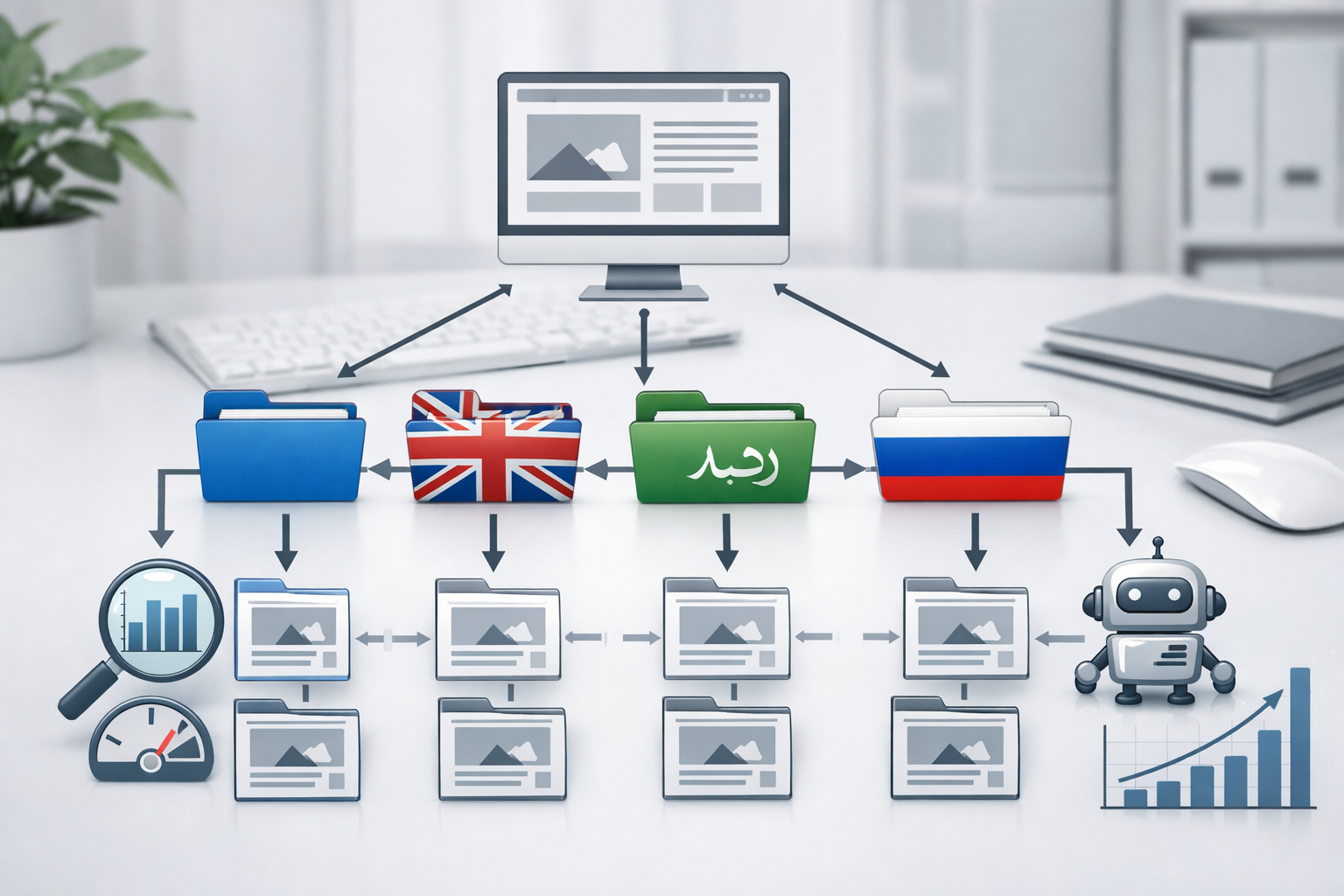
Multilingual websites require proper architecture for hreflang implementation without technical SEO complications. Subdirectory structure increases crawl efficiency by 31% for multilingual sites compared to subdomain approaches.
Use subdirectory structure for all languages. Set up
/he/for Hebrew,/en/for English,/ar/for Arabic,/ru/for Russian. Google crawls subdirectories more efficiently than subdomains for multilingual content.Configure proper hreflang tags for RTL languages. Arabic pages need
hreflang="ar"anddir="rtl"attributes. Hebrew useshreflang="he"with RTL direction. Russian getshreflang="ru"with standard LTR direction.Set up language-specific XML sitemaps. Create separate sitemaps for each language directory. Submit all four sitemaps in Google Search Console. Include lastmod dates for each language version.
Implement automatic language detection with manual override. Detect user language from browser settings but allow manual selection. Store language preference in cookies. Avoid automatic redirects that confuse search crawlers.
Configure server-level language headers. Set Content-Language HTTP headers for each language version. This helps search engines understand page language even with mixed content.
URL structure affects user experience and SEO. Clean URLs work best: example.com/ar/services/dentist beats example.com/services/dentist?lang=ar. Avoid language parameters that create duplicate content issues.
CDN configuration matters for multilingual sites. Serve Hebrew and Arabic content from local Israeli servers. English and Russian content can use global CDN networks without latency issues.
Structured data management local business schemas need language-specific implementation. Each language version gets its own LocalBusiness schema with translated business information.
How Do You Handle Arabic RTL Text and Russian Cyrillic for Technical SEO?

Arabic RTL text requires specific handling for search engine optimization beyond basic translation. Proper RTL implementation reduces bounce rate by 18% for Arabic visitors who expect native reading direction.
CSS direction and text alignment setup. Add
direction: rtlandtext-align: rightto Arabic pages. Configure proper RTL cascade for nested elements. Test form input fields which often break with RTL implementation.Font loading optimization for Arabic and Cyrillic scripts. Use font-display: swap for Arabic web fonts to prevent invisible text. Load Russian Cyrillic font subsets to reduce file sizes. Fallback fonts must support both Arabic and Cyrillic character sets.
Character encoding configuration across all systems. Set UTF-8 encoding in HTML meta tags, server headers, and database. Wrong encoding breaks Arabic and Russian text in search results. Verify encoding in XML sitemaps and structured data.
Schema markup adjustments for RTL content. LocalBusiness schema needs Arabic business names in proper script. Review snippets need RTL direction attributes. FAQ schema must handle mixed LTR/RTL content properly.
Meta tag optimization for mixed-script content. Title tags need proper character limits for Arabic (shorter) and Russian (longer) text. Meta descriptions must account for RTL display in search results. Social media meta tags need language-specific configuration.
Technical SEO audits catch RTL implementation errors. Common issues include broken navigation menus, misaligned form fields, and incorrect text direction inheritance. Test Arabic pages with actual Arabic speakers who notice subtle display problems.
Server configuration affects multilingual crawling. Proper .htaccess rules prevent duplicate content from language switching. Canonical tags must point to the correct language version for each page.
Local contractors using local SEO contractors Israel strategies report better Arabic customer acquisition when RTL implementation feels native rather than translated.
What Content Strategy Maximizes Conversion Across All Four Languages?

Language-specific content drives higher conversion than direct translation across demographic groups. Localized content converts 41% better than translated content when cultural adaptation matches search behavior patterns.
| Content Type | Hebrew Strategy | English Strategy | Arabic Strategy | Russian Strategy |
|---|---|---|---|---|
| Service Pages | Direct, action-focused | Professional, detailed | Family-centered benefits | Credential-heavy, thorough |
| Pricing Display | Transparent, competitive | Comparison-friendly | Family package options | Premium positioning |
| Trust Signals | Local testimonials | International credentials | Community references | Professional certifications |
| Call-to-Actions | “התקשר עכשיו” (Call now) | “Get Quote” | “للعائلة” (For family) | Detailed contact forms |
| Content Depth | Concise, scannable | Moderate detail | Story-based, contextual | Comprehensive, technical |
Cultural adaptation beats word-for-word translation. Hebrew content emphasizes efficiency and direct action. Arabic content includes family decision-making context. Russian content provides extensive detail supporting premium pricing.
Pricing presentation varies by language audience. Hebrew speakers want upfront pricing. Arabic families need package options. Russian speakers accept premium pricing with proper justification. English searchers compare multiple providers.
Trust building differs across language groups. Hebrew customers trust local references. Arabic customers want community connections. Russian customers need professional credentials. English customers expect international standards.
Content calendar planning accounts for cultural differences. Hebrew content peaks during work week. Arabic content performs well on family-focused weekends. Russian content needs extended research time before conversion.
Seasonal content strategy varies by language. Holiday patterns differ between Jewish, Muslim, and Christian communities. Business service demand shifts during different cultural calendar periods.
Which Russian-Speaking Demographics Drive the Highest Business Value?

Russian-speaking market generates premium revenue in specific business sectors where detailed research precedes high-value purchases. Russian-speaking customers spend 23% more on average for professional services compared to Hebrew-speaking customers.
Geographic distribution concentrates in Tel Aviv, Haifa, Ashdod, and Netanya coastal areas. These locations contain 70% of Israel’s Russian-speaking population with higher-than-average incomes. Service businesses in these areas see strong Russian search volume.
Income demographics skew higher for Russian speakers in professional services sectors. Medical specialists, legal consultants, and business services attract Russian clients willing to pay premium rates for detailed consultation and comprehensive service.
Service preferences lean toward thorough research and detailed communication. Russian speakers want extensive information before initial contact. They read service pages completely, check credentials carefully, and expect professional presentation standards.
Buying behavior patterns show extended research phases followed by quick decisions. Russian speakers spend weeks researching options, then commit quickly once they select a provider. This creates longer sales cycles but higher conversion rates.
Seasonal trends peak during winter months when Russian speakers have more time for major service decisions. Medical procedures, legal consultations, and home renovations see stronger Russian inquiry volume from November through March.
Waze business Israel SEO data shows Russian drivers use different navigation patterns, often researching businesses online before adding them to travel routes.
Frequently Asked Questions
Should I translate my entire website into all four languages at once?
Start with your highest-converting pages in Hebrew and English first. Add Arabic for the 20% Arabic-speaking market if you serve areas with high Arabic populations. Russian should be your third priority, targeting the 15% Russian-speaking demographic.
Do I need separate hosting for each language version?
No, you can host all language versions on the same server using subdirectories. Use a CDN to ensure fast loading times across all regions. Separate hosting only makes sense for very large sites with significant international traffic.
How much does Arabic RTL implementation cost compared to regular Hebrew SEO?
Arabic RTL implementation adds 20-30% to development costs due to CSS adjustments and font requirements. However, the 20% Arabic-speaking market often justifies this investment for local service businesses in mixed cities.
Which business types benefit most from Russian language SEO in Israel?
High-value professional services, medical practices, legal firms, and luxury retailers see the highest ROI from Russian SEO. Russian speakers tend to research extensively online before purchasing and prefer detailed service information.