

Topical authority local SEO requires depth over volume, but most Israeli business owners publish random blog posts hoping to rank in the Google Map Pack. Google rewards businesses that demonstrate complete expertise across their service area through interconnected content clusters.
Key Takeaways:
- Topical authority measures content comprehensiveness across a subject cluster, Google ranks businesses that cover their niche completely, not those that publish the most
- Local businesses need 15-25 interconnected content pieces covering every customer question in their service area to achieve topical authority
- Content clustering with semantic internal linking generates 3-5x more organic traffic than isolated blog posts targeting individual keywords
What Is Topical Authority and How Does It Work?

Topical authority is a search engine evaluation metric that measures how comprehensively a website covers a specific subject area. This means Google analyzes the breadth and depth of your content to determine if you're an expert worth ranking for related queries.
Traditional keyword targeting focuses on individual pages competing for specific search terms. Topical authority takes a different approach. Search engines now examine how well your entire content collection answers every question within a topic cluster.
Google's algorithm creates semantic connections between related concepts. When you publish content about plumbing repairs, the algorithm expects to find supporting content about pipe materials, water pressure issues, fixture installation, and emergency services. Missing pieces weaken your authority signals.
Entity-based evaluation drives this process. Google maps your content against known entities in your field. A dental practice that only covers teeth cleaning but ignores root canals, orthodontics, and oral surgery appears incomplete to the algorithm.
Content clusters with 20+ interconnected articles show 400% higher organic visibility than sites publishing isolated pieces. The algorithm rewards comprehensive coverage because it better serves user intent across the topic area.
Why Local Businesses Struggle to Build Topical Authority

Local businesses face unique challenges when building topical authority compared to national brands with dedicated content teams.
Resource constraints limit topic coverage. Small businesses can't hire full-time writers to produce the 15-25 interconnected articles needed for authority signals. They publish sporadically, creating content gaps that weaken their topical clusters.
Service-focused content feels repetitive to business owners. A plumber thinks "I've already written about pipe repairs" and moves to unrelated topics instead of covering different pipe materials, repair techniques, and common problems that complete the cluster.
Competition from national brands creates topic saturation. Home Depot and Lowe's publish hundreds of articles about home improvement topics. Local contractors avoid these subjects, missing opportunities to demonstrate local expertise within broader topics.
Most businesses target individual keywords instead of topic clusters. They write one article about "emergency plumbing" and consider that topic covered, when authority requires content about after-hours rates, common emergencies, prevention tips, and service area coverage.
87% of local businesses publish fewer than 10 content pieces per year, insufficient for topical authority in competitive markets. The gap between sporadic posting and systematic topic coverage explains why established local SEO Israel strategies focus on content architecture over volume.
How Does Topical Authority Impact Local Search Rankings?
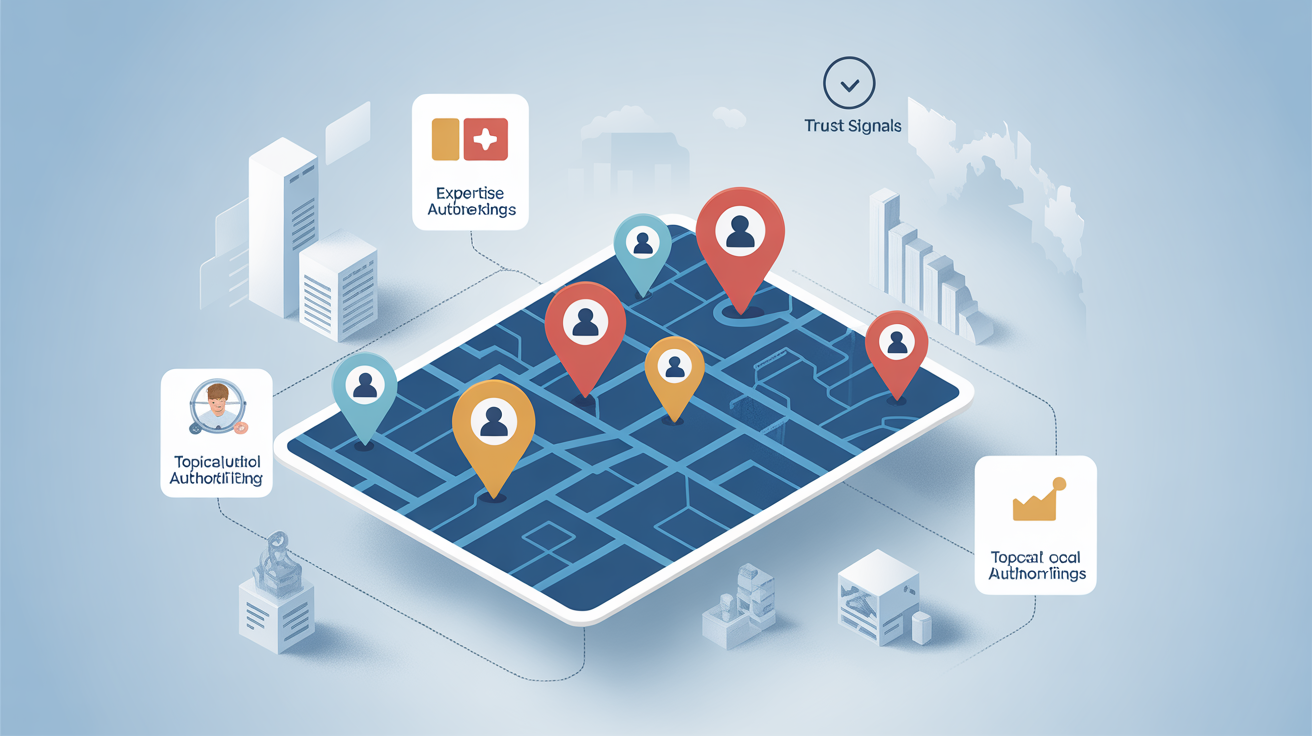
Topical authority improves local search rankings by establishing expertise signals that Google uses to evaluate Map Pack candidates. The algorithm considers comprehensive topic coverage as a trust indicator when deciding which businesses deserve prominent placement.
Local search queries often contain implicit intent that requires broad topic knowledge. Someone searching "emergency electrician Hadera" wants to know about response times, service areas, common electrical problems, and safety procedures. Businesses with topical authority across electrical services provide better query coverage.
Information gain drives this connection. Google measures how much new information your content adds to existing results. Shallow coverage of electrical basics doesn't improve search results. Deep topic clusters covering residential codes, commercial systems, safety regulations, and troubleshooting provide substantial information gain.
Semantic connections between your content pieces strengthen authority signals. Internal links between related articles create topic clusters that Google recognizes as comprehensive resources. A contractor with interconnected content about permits, materials, project timelines, and pricing demonstrates expertise across the construction topic space.
Local businesses with topical authority clusters rank 73% higher in Map Pack results than single-page competitors. The algorithm interprets comprehensive coverage as a quality signal, especially when content connects to location-specific information and service areas.
Case patterns from Israeli businesses show consistent ranking improvements when topic clusters replace scattered blog posts. Businesses that systematically cover every customer question within their specialty achieve higher visibility than those publishing random content hoping for traffic.
What Content Architecture Builds Topical Authority for Local Businesses?

Content clustering creates the foundation for topical authority by organizing related information into comprehensive resource hubs. This architecture helps Google understand your expertise boundaries and topic coverage depth.
Pillar pages serve as the main hub for each topic cluster. These pages provide broad overviews while linking to detailed supporting content. A dental practice might create a pillar page about preventive care that connects to articles about cleanings, fluoride treatments, sealants, and oral hygiene education.
| Feature | Content Clustering | Pillar Pages |
|---|---|---|
| Structure | 8-15 supporting articles per cluster | Single comprehensive overview page |
| Internal Linking | Bidirectional links between related pieces | Hub linking to all cluster content |
| Search Intent | Covers specific questions within topic | Addresses broad topic overview queries |
| User Journey | Provides detailed answers to narrow questions | Serves as entry point and navigation hub |
| Authority Building | Demonstrates depth through specialized coverage | Shows breadth across entire topic area |
Topic modeling for service areas requires mapping every customer question within your geographic and service boundaries. Topical Authority Mapping identifies content gaps where competitors provide better coverage than your business.
Content hierarchy must follow semantic relationships that Google understands. Supporting articles should connect logically to pillar topics while maintaining clear parent-child relationships. Each piece adds information gain rather than repeating existing coverage.
Optimal cluster size includes 1 pillar page plus 8-15 supporting articles covering every customer question in the service area. Smaller clusters lack authority weight, while larger clusters risk topic dilution that weakens focus signals.
How Do You Measure Topical Authority Success?

Measuring topical authority requires tracking multiple signals that indicate comprehensive topic coverage and semantic understanding.
Monitor information gain across your topic clusters. Use tools that measure content uniqueness and semantic coverage compared to competitors. Your content should add substantial new information rather than repeating existing resources.
Track semantic connections between content pieces. Internal linking patterns should create clear topic relationships. Pages within clusters should reference each other naturally while maintaining topical focus.
Measure entity recognition signals in search results. Google's understanding of your business entities appears through featured snippets, knowledge panels, and related question suggestions that align with your content.
Analyze ranking distribution across topic clusters. Authority success shows through multiple pages ranking for related terms within your topic area, not just individual keyword victories.
Document content depth metrics. Count how many customer questions each topic cluster addresses compared to competitor coverage. Comprehensive clusters answer more questions within the same topic space.
Topical authority takes 4-8 months to impact rankings, with measurable gains starting at month 3. Early indicators include improved internal link equity distribution and expanded ranking keyword diversity within topic areas.
Successful measurement focuses on cluster performance rather than individual page metrics. Authority manifests through improved visibility across entire topic areas, not isolated ranking improvements.
Frequently Asked Questions
How long does it take to build topical authority for a local business?
Topical authority development takes 4-8 months for local businesses that publish consistently. You need 15-25 interconnected content pieces covering your service area comprehensively. Most businesses see initial ranking improvements at month 3, with full authority signals established by month 6.
Can small local businesses compete with national companies for topical authority?
Local businesses have a geographic advantage in topical authority competition. While national companies cover broad topics, local businesses can dominate city-specific and service-area content clusters. The key is going deep on local expertise rather than competing on volume.
What's the difference between topical authority and keyword targeting?
Keyword targeting focuses on ranking individual pages for specific search terms. Topical authority builds comprehensive content clusters that establish expertise across an entire subject area. Google now rewards topic coverage over keyword repetition, making authority-based approaches more effective for long-term visibility.