
Local SEO vs regular SEO confusion causes Israeli business owners to waste thousands of shekels targeting the wrong search results. Most local businesses chase organic rankings while their customers click the Google Map Pack above them. The difference determines which customers find you first.
Key Takeaways:
- Local SEO targets Map Pack results that capture 47% of local business clicks, while regular SEO targets organic results below the map
- Service-based businesses with physical locations need local SEO first, regular SEO delivers results 3-6 months later than Map Pack optimization
- E-commerce and SaaS companies serving national markets should prioritize regular SEO over local optimization for maximum ROI
What's the Actual Difference Between Local SEO and Regular SEO?

Local SEO is the optimization process that targets Google's Map Pack results for location-based searches. This means your business appears in the top 3 map listings when customers search "dentist near me" or "plumber Tel Aviv." Regular SEO targets the organic blue links below the map section.
The intent difference matters more than the technique difference. Local SEO captures customers ready to visit, call, or hire someone in their area. Regular SEO attracts people researching topics, comparing options, or seeking information. A customer searching "emergency locksmith Haifa" wants immediate service. Someone searching "how door locks work" wants education.
Google treats these searches differently because user behavior is different. Map Pack results get clicked 93% of the time when they appear according to BrightLocal research. The algorithm weighs proximity and Google Business Profile signals higher than traditional ranking factors. Your website might rank position 50 for competitive keywords, but your GBP profile can hit position 1 in the Map Pack within 60 days.
Regular SEO follows traditional ranking factors. Domain authority, backlinks, content depth, and keyword optimization determine where your pages rank in organic results. This takes months or years to show results for competitive terms. Local SEO ranking depends more on your business address, review count, and profile completeness.
Where Do Local vs Regular SEO Results Actually Appear in Israeli Search?

The search results layout determines which optimization strategy captures clicks. Google displays different result types based on search intent, and Israeli users follow predictable click patterns across both desktop and mobile.
| Feature | Map Pack | Organic Results |
|---|---|---|
| Position | Top 3 results with map | Below Map Pack, 10 blue links |
| Click Rate | 44% higher than organic position 1 | Standard declining CTR by position |
| Mobile Display | Takes 60% of screen space | Squeezed below map, ads, featured snippets |
| Search Triggers | "Near me", city names, local intent | Informational queries, national topics |
| Business Info | Address, phone, hours, photos | Title, description, URL only |
Position 1 in Map Pack gets 44% more clicks than position 1 in organic results for local queries. This click advantage exists because map results include business information that organic results lack. Customers see your address, phone number, star rating, and photos before clicking.
Mobile search makes the advantage larger. Map Pack results consume most of the screen on smartphones, pushing organic results far down the page. Since 88% of Israelis use smartphones for search, Map Pack visibility becomes crucial for local businesses. The Google Map Pack Israel market shows this pattern across all major cities.
Different search terms trigger different result types. "Local SEO Israel" triggers organic results because users want information about services. "SEO company near me" triggers the Map Pack because users want to hire someone local. Business owners need to understand which result type their customers actually click.
How Do You Know Which Type of SEO Your Israeli Business Needs?

Your business model determines which SEO strategy delivers better ROI. The decision comes down to where your customers are located and how they buy your products or services.
| Business Type | Local SEO Priority | Regular SEO Priority | Primary Focus |
|---|---|---|---|
| Service Area Businesses | High | Low | Map Pack rankings, GBP optimization |
| National E-commerce | Low | High | Product pages, category rankings |
| Multi-location Retail | High | Medium | Both strategies, local first |
| Professional Services | High | Medium | Map Pack + authority content |
| SaaS/Software | Low | High | Feature pages, comparison content |
Businesses serving customers within 30km radius see 68% better ROI from local SEO than national strategies. This includes dentists, plumbers, restaurants, law firms, medical clinics, and contractors. Customers search for these services with geographic intent. They want someone nearby who can visit their location or office.
National businesses selling products online need regular SEO first. E-commerce stores, SaaS companies, and digital service providers compete for customers across Israel or internationally. Geographic proximity provides no advantage when customers buy products shipped nationwide.
Hybrid businesses need both approaches with local SEO taking priority. Multi-location retailers, regional service companies, and franchises need Map Pack visibility for local customers plus organic rankings for broader topics. Start with local SEO because it delivers results faster, then add regular SEO for authority building.
The mobile SEO local business Israel market shows this pattern clearly. Service businesses get more mobile traffic from Map Pack results than desktop organic traffic. Product businesses get more desktop research traffic before mobile purchasing decisions.
What Ranking Factors Actually Control Each Type of SEO?
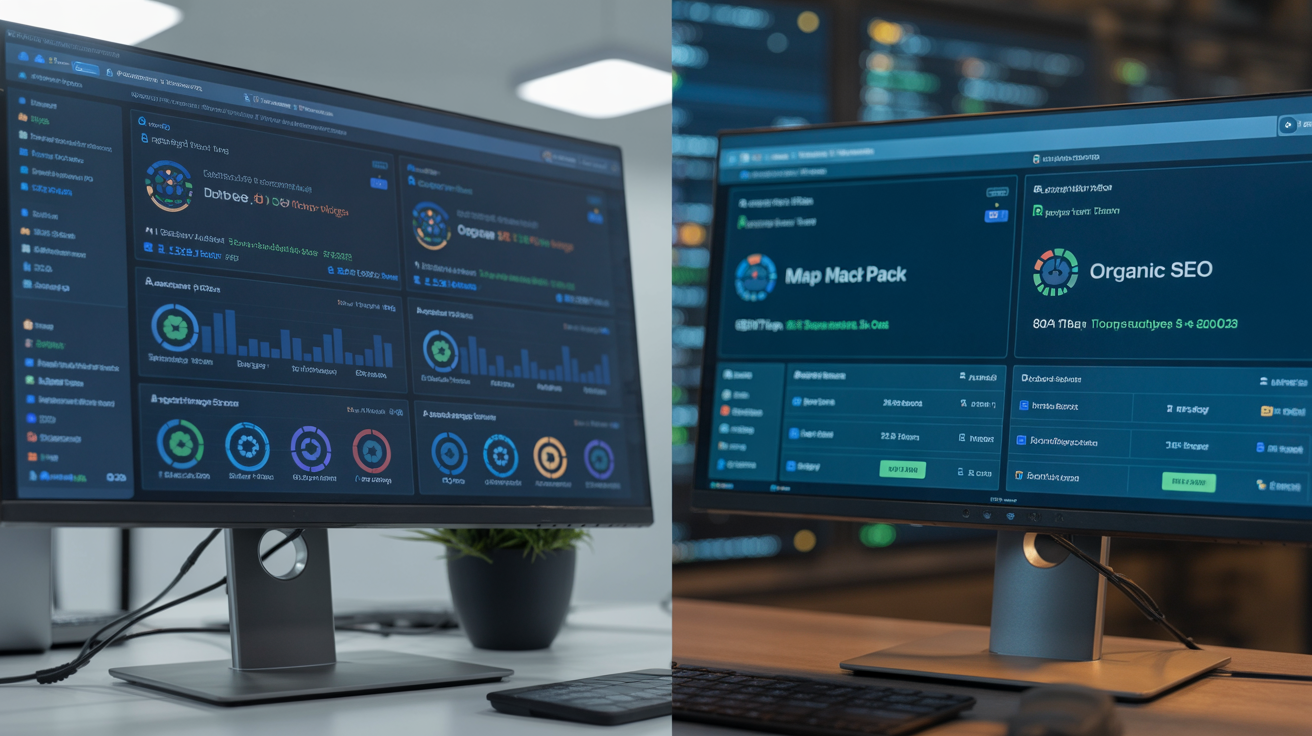
Different algorithms control Map Pack rankings versus organic search results. Google uses separate ranking systems with different signal weights and success metrics.
| Ranking Factor | Local SEO Weight | Regular SEO Weight | Impact on Results |
|---|---|---|---|
| Google Business Profile | 47% | 0% | Categories, reviews, photos |
| Proximity to Searcher | 35% | 0% | Distance from business address |
| Traditional Backlinks | 12% | 65% | Authority signals, link quality |
| On-page Content | 18% | 45% | Keywords, relevance, depth |
| Domain Authority | 8% | 30% | Overall site credibility |
Google Business Profile signals account for 47% of local ranking factors vs 12% weight for traditional backlinks. Your business category selection, review count, photo quality, and profile completeness matter more than your website's domain authority for Map Pack rankings.
Proximity beats authority in local search. A 2-year-old plumbing company with a complete GBP profile will outrank a 20-year-old company with an incomplete profile if they're located closer to the searcher. Geographic distance cannot be overcome by traditional SEO tactics.
Regular SEO follows established ranking factors that favor established websites. Content depth, backlink quality, domain age, and technical optimization carry more weight. These signals take months to build and require ongoing content creation and link building efforts.
Review signals impact local rankings more than regular rankings. A business with 50+ recent reviews gets ranking preference over competitors with fewer reviews, even if the competitor has stronger backlink profiles. This creates opportunities for newer businesses to outrank established competitors through review generation strategies.
What Does Each SEO Strategy Actually Cost Israeli Businesses?

Cost and timeline differences between local and regular SEO affect which strategy makes financial sense for different business types.
Local SEO delivers measurable results in 45-90 days with Google Business Profile optimization, citation building, and review generation. Initial investment ranges ₪2,000-8,000 monthly depending on market competition and service area size.
Regular SEO requires 120-180 days for meaningful traffic increases in competitive Hebrew keyword markets. Content creation, link building, and technical optimization demand ₪5,000-15,000 monthly budgets for sustained growth.
Local SEO ROI appears faster because Map Pack rankings change weekly rather than monthly. Businesses see phone call increases and appointment bookings within the first month of optimization efforts.
Regular SEO builds compound value over time through content assets and domain authority growth. Initial costs are higher, but established organic rankings require less maintenance than local profiles.
Combined strategies cost 40% more than single-focus approaches but capture both immediate local traffic and long-term organic growth. Most successful businesses start with local SEO, then add regular SEO after Map Pack success.
The voice search local SEO Israel market adds urgency to local optimization. Voice searches show 58% local intent, making Map Pack visibility crucial for businesses targeting customers using Siri, Google Assistant, or Alexa for local business discovery.
Resource allocation matters more than total budget. Businesses spreading limited budgets across both strategies often fail at both. Focus on local SEO first if your customers search with geographic intent, then expand to regular SEO after achieving consistent Map Pack rankings in your primary service areas like local SEO Hadera, local SEO Beer Sheva, or local SEO Ashdod markets.
Frequently Asked Questions
Can I do both local SEO and regular SEO at the same time?
Yes, but local SEO should come first for service businesses. Map Pack optimization delivers faster results and captures higher-intent customers. Regular SEO builds long-term authority but requires 3-6 months longer to show measurable traffic increases.
Do e-commerce businesses in Israel need local SEO?
Not unless they have physical stores or service local pickup/delivery. E-commerce businesses serving customers nationwide should focus on regular SEO for product and category pages. Local SEO only makes sense if you're competing for 'near me' searches.
How long does each type of SEO take to work in Israel?
Local SEO shows Map Pack improvements in 45-90 days with proper Google Business Profile optimization. Regular SEO for competitive Hebrew keywords requires 120-180 days for meaningful organic ranking improvements. Local delivers faster ROI.